Monday, February 27, 2023

Contributions to the Science of Reading

 The Reading League Journal Multidisciplinary Contributions To The Science of Reading Volume 4 Issue 1 January/February 2023


This week, I received an unexpected gift as a principal, two snow days in a row, snuggled up next to a weekend! For those in education, you know what this means, rest and time. Whether it's mental health or numbness on the couch with ultimate control of the remote, your day is now a reprieve from the sense of urgency. 


That’s the first day. On the second day, you pick up speed and realize your list of to-dos is waiting and will not go away. So you dive in. My inbox held more than 100 items, with many needing immediate attention while just a few required a simple click of the archive stroke, immediately reducing the load. Knowing inbox zero is a myth (putting them into folders for another time doesn’t count), I narrowed it down to 17 urgent items that won't go away until responses are received. Which ultimately left me time to do what I love: read!


My rambling story has a point. I picked up the January/February 2023 The Reading League Journal, Multidisciplinary Contributions to the Science of Reading. I heard imaginary laughter, but I remained intrigued by each published article. Editor Emily Solari, Ph.D., encouraged readers to expand their knowledge of the many fields that contribute to the science of reading. 


As is my habit, I started from back to front. Many articles interested me and added to my understanding of the science of reading, but there were three favorites. Elana Gordon’s account, There’s Still Time: A Science of Reading Journey, was genuinely inspiring. Balanced literacy has been a pillar of instruction for many years, and asking teachers to make pedagogical shifts is difficult. Building teacher capacity is an investment in our future and will take time, but the alternative is no longer an option.” Knowing better and doing better for students requires a learning mindset, which Gordon demonstrates.


After reading, The  Best Practices for Improving Language and Literacy Outcomes for English Learners by NCIL (National Center on Improving Literacy), I made a mentai list of colleagues who would find it insightful too. The article opens with, “ As classrooms across the United States are becoming more diverse, it is critical that educators are able to successfully address the unique language and learning needs of English learners and provide efficient and high-quality support when gaps in achievement are identified.” 


NCIL then shares the research findings of instructional practices highly recommended for teachers to use and implement in their classrooms to support ELs to “acquire the language and literacy skills needed to succeed academically.” All students, especially our language learners, should receive the following:

  • Comprehensive, evidence-based language and literacy instruction as part of their core curriculum (PA, phonics, vocabulary, oral reading fluency, comprehension, and writing).

  • Carefully choose academic vocabulary that is revisited through a variety of activities. 

  • “Educators should provide ELs with opportunities to build content knowledge and language competence in tandem (Baker et al., 2014). Integrating reading, writing, speaking, and listening as they are learning.

  • Structured writing instruction should be a regular structured priority with multiple opportunities to “develop written language skills.”

  • For those students who struggle daily, small-group intervention teacher-directed instruction can provide scaffolds that make learning easier for ELs.

  • A student’s home language, prior knowledge, and cultural and linguistic knowledge are assets to be utilized as an area of strength for ELs. 


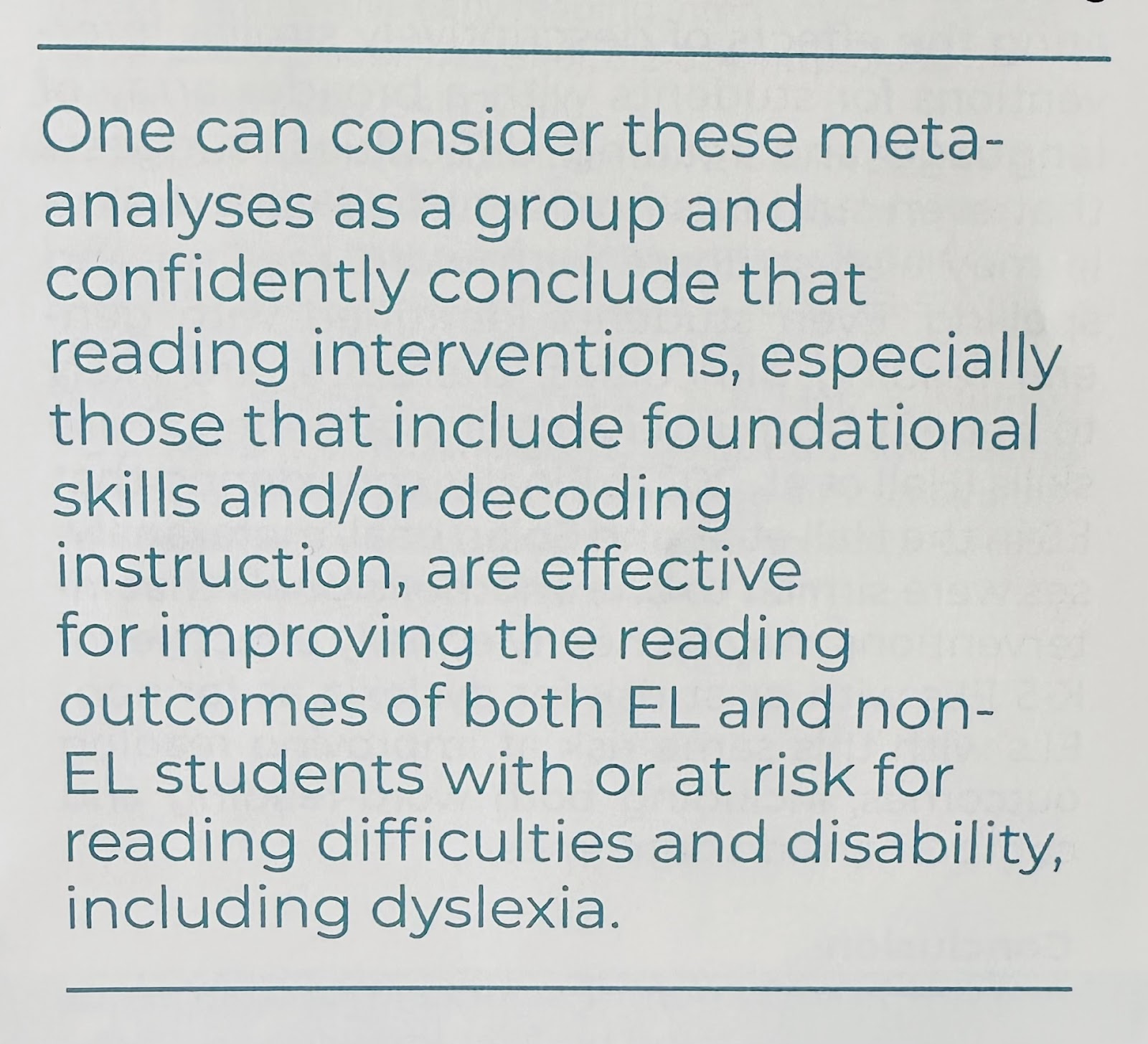
Lastly, I reviewed “Moving the Science of Reading Forward: A Review of Two Recent Meta-Analyses of Reading Intervention Research. The details are intricate and might require repeated readings to absorb, but it brought me back to my dissertation days and made me realize my EdD coursework was worthy. “The purpose of a systematic review is to understand the amount and quality of existing research on a topic, look for patterns across studies, and identify areas where more research is needed.” “As with any branch of science, the science of reading is not a fixed body of knowledge. Rather, researchers continue to break new ground such that ‘the accrual of scientific knowledge related to reading is ever evolving.’”


Solari closes the journal’s introduction with, “We hope you enjoy this special issue of The Reading League Journal. Happy reading!” I would agree after reading each article, and I felt more optimistic about where educators are headed as we learn more about the Science of Reading.


Sunday, January 29, 2023

Deepening Your PLC Leadership Reflections

 Jeanne Spiller & Karen Power LEADING BEYOND INTENTION 6 Areas to Deepen Reflection and Planning in Your PLC at Work

A few years back, my sister-in-law came for a visit to our beautiful new school. Admiring the light-infused windows and open shared spaces were a few of the highlights of our tour, but the real excitement occurred in our conversation. During her visit, teachers were on sight and working in clusters throughout the school. It was a non-student day, and she wanted to know what they were all working on so intentionally. 


It was then I began our ongoing Professional Learning Community conversation. I outlined the four essential questions of a PLC our teachers meticulously navigated to measure and monitor the impact of their instruction on student learning. What they did was critical to the process, but more importantly, how they navigated each step together was enthusiastically changing our school culture.


I remember the excitement of learning about the PLC cycle as a school leader and going through the process with teachers. I made more than a few missteps in my enthusiasm. The book I wish I had in hand was  Leading Beyond Intention, 6 Areas to Deepen Reflection and Planning in Your PLC at Work by Jeanne Spiler and Karen Power. Following their recommended approach would have greatly benefited my understanding and implementation of a PLC.


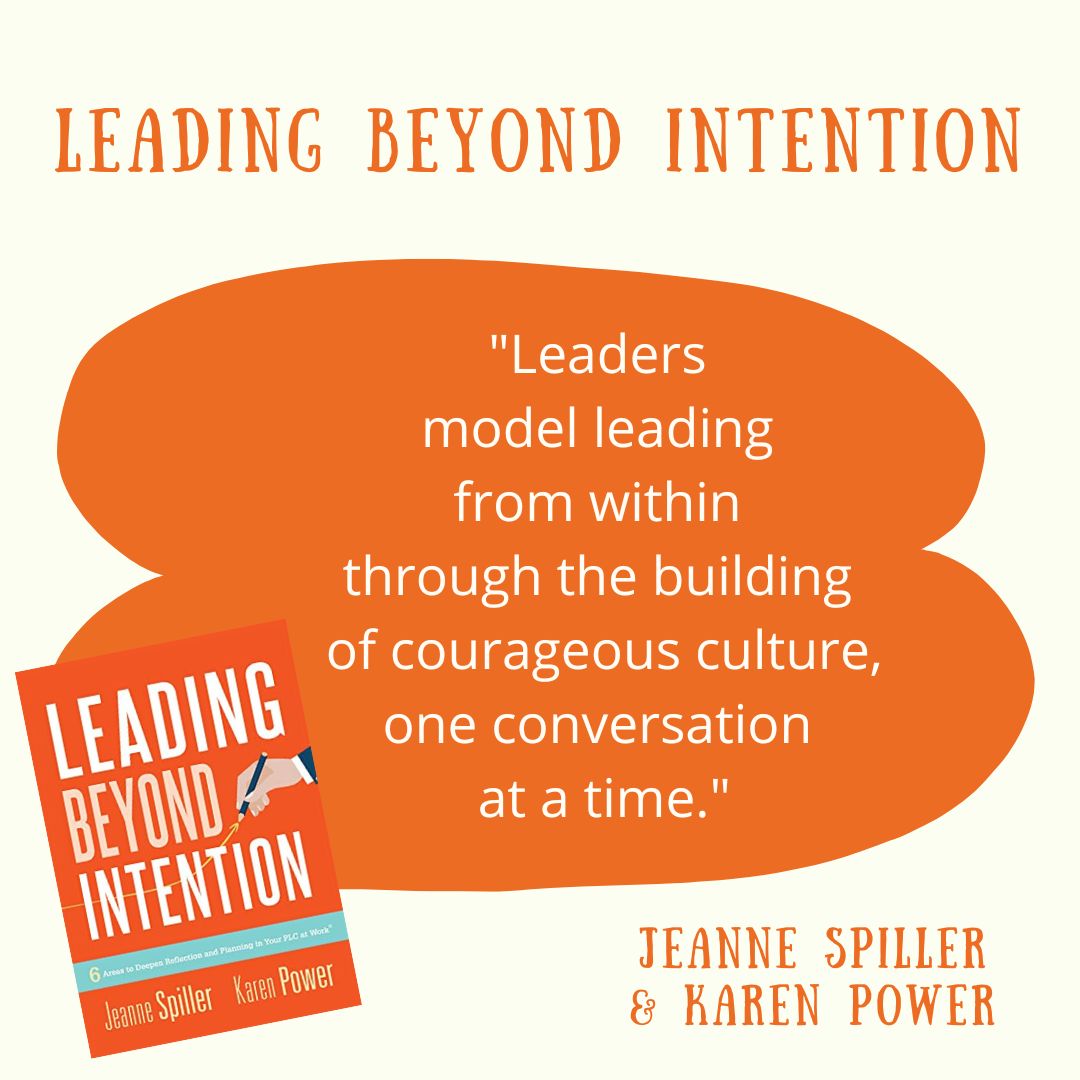
Spiller and Power remind the reader to; “Carefully consider how aligned your efforts are to what you truly believe and want to accomplish,” starting with bravely leading from within. “Brave leaders pay attention to what is happening in their schools and address it directly and honestly,“ “encourage constructive dissent and healthy debate,” and “listen more effectively and truly make connections.” Brave leaders,“Reflect carefully on the conversations and decisions you make throughout the day” and understand “you will not make everyone happy.” Still, the need to “get comfortable with leading change and getting messy” is instrumental to your school's growth as leaders and implementers of the PLC process. 


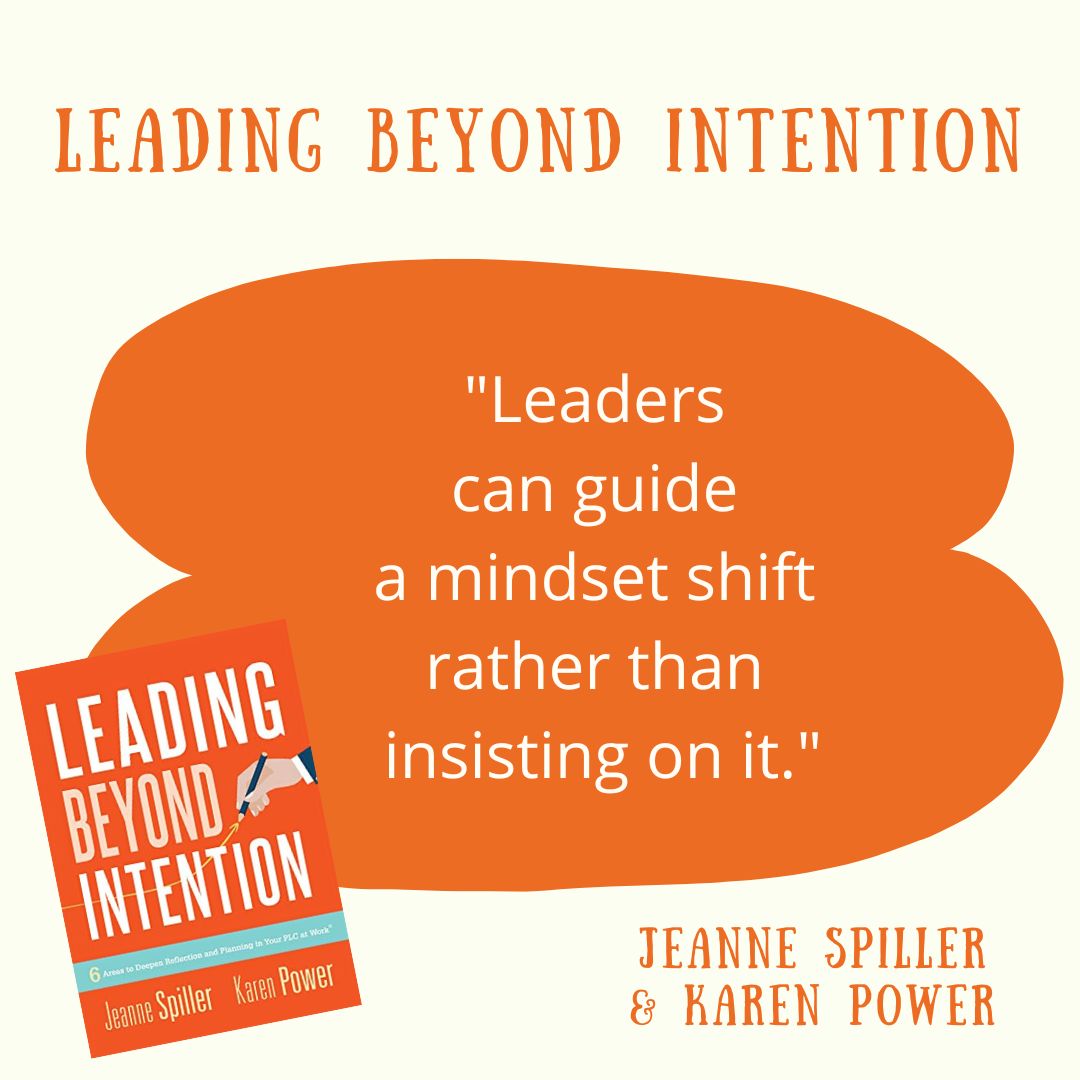
Asking strategic questions as a leader can unlock greater understanding and underutilized pathways. “The right question can be a catalyst for powerful reflection, problem-solving, and ultimately change. Learning to ask questions that will elicit self-exploration and unlock potential will help strengthen your practice as a leader and help set up others for success. Using questions demonstrates you are curious and want to know more about the situation and that you, the leader, seek to understand  the teacher’s challenge, problem, or concern.” Coaching through inquiry as a leader with those you serve and support is an intentional practice of leaders implementing change effectively. 


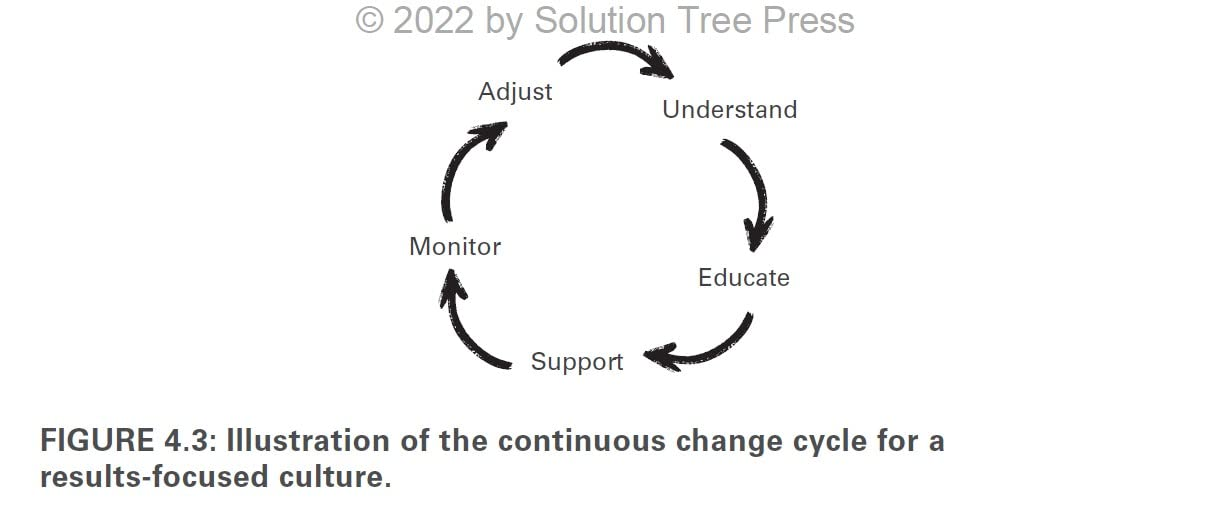
The authors share how using data to guide these conversations holds us all accountable for the equitable outcomes needed for each student. We can collectively have the best intentions, and cycle through the essential questions, but if there is no evidence of student learning, we have lost our way. “Understanding your staff’s current level of knowledge skill and will provide opportunities to develop, share, and empower expertise within your system.” Diving into what authors Spiller and Power refer to as “ the continuous change cycle for results-focused culture” is foundational the a highly effective PLC.


What makes Leading Beyond Intention meaningful to school leaders is the multiple caveats of experiences and lessons learned from schools and districts who continue to navigate their school improvement journey. Each of these school stories highlights the value of,’ leading from within to build strong accountability practices, deepening the PLC process as you take the time to build a shared understanding of the purpose of the work, and intentionally create opportunities for both skill and will to develop.” 


The story of my sister-in-law continues. Shortly after she left my state to travel back home to her family and school community she enthusiastically shared what she had seen and heard. It was at that time they began their own PLC story and slowly over time built great momentum to facilitate the change that needed to occur in their school and classrooms for a “result-focused culture.” Just recently I received a text from her where she excitedly shared their school was recently recognized as a Model PLC School. My heart soars! I was thrilled for her, the teachers, the principal and most importantly their students!  


“Leadership is hard, Really hard. Grueling, exhausting, bewildering, and complicated, just to name a few of the descriptive words that come to mind. On the flip side, it is also rewarding, worthwhile, necessary, and valuable.” Leading Beyond Intention is a recommend read for leaders who want to enrich their reflections for planning as you develop and refine your own Professional Learning Community practices. 


Monday, January 2, 2023

Captain D. Michael Abrashoff It’s Your Ship Management Techniques from the Best Damn Ship in the Navy


There is something about walking into a generously stocked bookstore. When you enter, take in the view of rows and walls of print, and wander about, it is an experience worth savoring. I imagine we all have our favorite sections that we unconsciously gravitate towards. My path includes books with lessons learned and experiences shared with those in leadership positions. I find them compelling and inspiring, and they often provide ideas to consider in my leadership journey. 


With multiple leadership books lining the shelves, I frequently seek guidance from close colleagues on what to read next. They rarely disappoint. Although, their recommendations sometimes are surprising, as was the case with It’s Your Ship, written by Captain D. Michael Abrashoff, former commander of USS Benfold. I know absolutely nothing about leadership in the United States military, but I was encouraged to study Abrashoff’s example and insights into my role as a school leader. 


“Exceptional leaders have always been rare, but they can be made as well as born, and the Benfold story is a case in point…The book's structure narrates episodes in Benfold’s two-year voyage through the unchartered water of leadership and is organized around the lessons learned. A chapter is given to each one: Lead by example; listen aggressively; communicate purpose and meaning; create a climate of trust; look for results, not salutes; take calculated risks; go beyond standard procedures; build up your people’s confidence; generate unity; and improve everyone’s quality of life as much as possible” (p. 5). Three of his universal leadership insights strongly stood out for me. 


My strategy while reading was every time I read the word Benfold, I mentally replaced it with the name of our school. It was simply uncanny how often it made sense. Abrashoff shared an important early leadership lesson. “When I took command of Benfold, I realized that no one, including me, is capable of making every decision. I would have to train my people to think and make judgments on their own. Empowering means defining the parameters in which people are allowed to operate and then setting them free” (p. 27). For my first insight, I found this to be profoundly true in our school community. When shared, leadership empowers teachers and staff to unleash their potential to learn, grow, and lead!


As he progressed in his role as Captain of the Benfold, he made a pivotal decision that solidified my second universal leadership insight. He stated, “I decided that my job was to listen aggressively and to pick up every good idea the crew had for improving the ship’s operation…After all, the people who do the nuts-and-bolts work on a ship constantly see things that officers don’t. It seemed to me only prudent for the captain to work hard at seeing the ship through the crew’s eyes: (p. 55). Yes, a school leader leans in, listens attentively, and builds connections that link you rather than widen a potential divide. It takes time you have little of, but it provides incredible insights into the strengths of staff. 


Abrashoff also relentlessly focused on the bottom line aligning with my last insight. “I was determined to turn the ship into an institution of continual learning, which entailed a systematic and methodical analysis of what worked and what didn’t” (p.104). Utilizing evidence-informed research and applying it to your daily teaching and learning practices is necessary as a school leader to ensure equitable outcomes for each student. Although one step forward often includes one step back as we incorporate new strategies into our routines. Abrashoff understood this, too, as a valuable leadership lesson. “I worked hard to create a climate that encouraged quixotic pursuits and celebrated the freedom to fail. I never once reprimanded a sailor for attempting to solve a problem or reach a goal. I wanted my people to feel empowered so they could think autonomously” (p. 105-106). 


Nine years ago, I was given the challenge to lead as a turnaround principal. I entered a school community where morale was low and student outcomes were even lower. Now I understand likening this to commanding a ship capable of defending our country in war does not compare. But when I read Captain Abrashoff’s following words and deeply felt the similarities between our experiences. “Previously, people were fighting to get off the ship. Now they were fighting to stay aboard. That kind of desire translates into performance. I am absolutely convinced that with good leadership, freedom does not weaken discipline–it strengthens it. Free people have a powerful incentive not to screw up” (p. 73). 


Wednesday, December 28, 2022

ASCD Educational Leadership Confronting POVERTY in Schools  Volume 80, December 2022/January 2023

I started my teaching career in 1999. Technically teaching was my second career, including treasured years at home raising two boys. When entering the teaching profession, it took me longer than most to land my first position. For the first year or two, I bounced around as a substitute teacher and even landed a few long-term opportunities teaching in my local school district. As hard as that was, it gave me incredible insights into what school communities I wanted to be a part of.


When the call finally came, offering my first position, I was extremely grateful I landed in a high-poverty Title I elementary school. It was exactly where my heart needed to be. It wasn’t with the mindset of saving them; looking into their eyes, I understood them. We were more similar than they knew. They taught me so much about the value of establishing high expectations, instilling a belief mindset, and celebrating and recognizing their efforts toward their goals.


Almost twenty-three years later, I am still highly engaged in a similar school community as a principal. When reading the recent ASCD Educational Leadership Magazine, Confronting Poverty in Schools, I couldn’t put it down. I read it from back to front. (Who else does that?). Many articles were my favorite, but a few spoke of what, over twenty years, I found to have the greatest impact on teaching and learning.


Jim Knight’s article, The Beautiful Question, reminded this school leader, “Our lives are lived in conversations, and when we ask better questions, we have better conversations.” As a principal, my number one responsibility is instructional leadership, which requires mastering the art of instructional coaching. Knight, an expert on creating positive change in teaching and learning through coaching, shared how effective questions can be empowering, authentic, respectful, and invitational. Good questions he shared include listening to others' options, showing genuine curiosity, building connections, and encouraging educators to think deeper.” 


When you read Jen Schwanke’s article Every Student Is a Firecracker, you can feel her advocacy for students living in poverty. Her personal experience reminded us, “Poverty isn’t the same thing as a lack of love…If a child is hungry, their parents must have failed at something. Right? Wrong.” I must admit my heart soared, and my eyes started to water. I wholeheartedly agree with her statement. I have witnessed the fierce love, devotion, and unwavering belief parents and families living in poverty have for their children. I’ve been humbled and inspired multiple times over the years. Schwanke mirrored my thoughts when she declared the following.  


Although the article that almost brought me to tears was the story of Butcher Greene Elementary, Learning from a School on the Path to High-Performing. As a turnaround principal, it could have been our story. A dedicated group of educators on the path to ‘yet’! “We have to remember, we’ve made so much growth. What we’re doing is working.” Their pursuit of providing high-quality instruction to each of their students, and developing their own belief mindset within a shared leadership framework was riveting. Respectfully, you can read the words of authors who write about the work. Still, those in the trenches often provide real-world examples of the influence school educators can have when they prioritize every initiative to change the trajectory of learning for each child they serve. 


There were many other articles in this issue that I read fervently with my red pen in hand, underlining, and note-taking, while building awareness and understanding. Discovering insights into What It Takes to Truly Leave No Child Behind, STOP Punishing Poverty in Schools, and, When Confronting Poverty, Think Abundance, Not Scarcity gave me greater hope knowing there are many educators across the country who are in pursuit of equitable outcomes each of our students deserve and need! This issue of ASCD Magazine provides research and examples of what is needed in our schools that confront the effect of poverty every day. A must-read for every educator.


Tuesday, July 26, 2022

Fearless Schools Build Trust & Resilience

 Douglas Reeves Fearless Schools Building Trust and Resilience for Learning Teaching and Leading


During a global pandemic, teaching and leading in 2021 will be unforgettable. As schools across the nation began to close, there was a genuine fear for our individual and collective health. We learned to teach and lead through a digital screen while managing our personal lives. Leaving our dwellings for food and care of close friends and family was a necessary risk fueled by fear.


Merriam-Webster dictionary defines fearless as free of fear, brave. Looking back over two years ago, we determined bravery as we navigated our new normal secluded existence. Our schools and classrooms are showing bravery as we reinvent our systems and schedules to reflect the nurture and focus needed for our students and staff. It’s exciting and exhausting because priorities continue to change.


Douglas Reeves published Fearless Schools in the middle of the health and safety crisis fueled by the COVID-19 virus. He writes, “Fear is nothing new to our students. They fear disapproval of adults, exclusion by peers, and their own sense of doubt and unworthiness. Add to the normal fears of childhood and adolescence the impact of the global pandemic of 2020 and the economic insecurity that follows for years afterwards, the loss of loved ones, and a continuing sense of uncertainty about the future—and the pervasive sense of fear in schools is understandable. The purpose of this book is to help educators, school leaders, parents, and policymakers create fearless schools despite a fearful environment” (xviii).


Reeves outlines how educators can move out of fear by enhancing their school communities with trust as their foundation, resilience as their mindset, and fearlessness as a critical component of their learning, teaching, and leading practices. “Being fearless in a fearful time” where “every mistake is an opportunity not for humiliation but for analysis, reflection, and learning” (p. XVI). 


In chapter 9, Fearless Leadership, and chapter 10, Fearless Change, Reeves suggests what does not need to change and considerations for change to positively impact our schools, classrooms, and teacher teams. “Even when facing the need for great changes, leaders must simultaneously identify and validate the practices and values that will endure and the people whose labor will be required to turn the page and get to the next level of success and recovery. 


  • Leadership does not require a regal presence. Rather, it requires the confidence and assurance that uncertainty and doubt are not our enemies but natural parts of the change process.

  • Fearless communication requires not oratory but plainspoken truth. 

  • Fearless decision-making requires a dependence upon the lessons of the past, with leaders around the globe who have risen to unimaginable challenges in the 21st century and in times past.

  • Fearless responsibility is not about recklessness without a hint of self-doubt but about the willingness to engage in imperfect decisions and then accept the blame and recrimination that inevitably result” (p. 127).


During the pandemic, we learned as educators that change is incredibly unsettling. Moving from frustration, resistance, and adaptation to learning requires “the organization must create an evidence-based culture in which a clear and compelling case for change leads to a sense of urgency by every stakeholder” (p. 137). Teachers and leaders can fearlessly lead change together in times of uncertainty by building trust, showing resilience, and selecting teaching and learning practices that have the highest impact on students. 


Sunday, July 24, 2022

Leveraging Leadership in 100-Days

Douglas Reeves - Robert Eaker 100-Day Leaders Turning Short-Term Wins Into Long-Term Success in Schools


Each year the first few months of school pass by so quickly for teachers and leaders. The anticipation of newness settles in as we get to know our students and each other as a school community. Systems are created, schedules are made, and routines are implemented to guide growth. What happens in between is what our students remember and teachers relentlessly plan for. 


Douglas Reeves and Robert Eaker's book, 100-Day Leaders, Turning Short-Term Wins Into Long-Term Success in Schools, provides “a system for focusing on the highest leverage leadership actions that will yield significant results in just one 100 days” (p. 3). The authors share research on the impact a school leader's decisions can have on “student achievement and educational equity” and propose a “new way of thinking about leadership” in 100-day increments. 


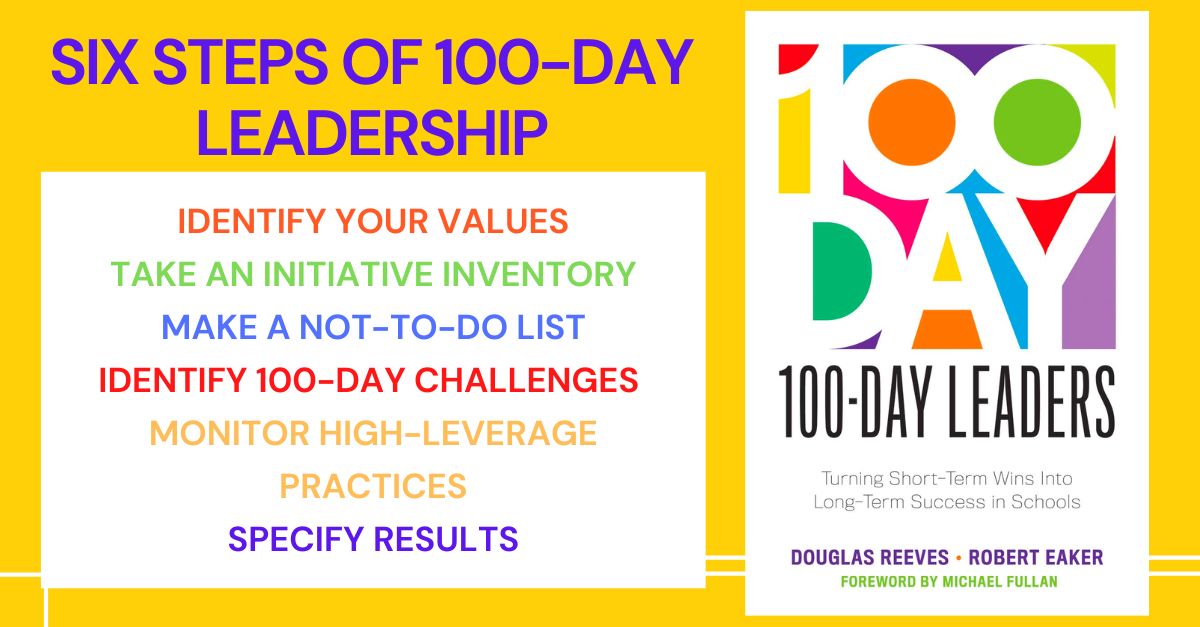
Reeves and Eaker frame the actions needed for school leaders, starting by addressing the “why” or moral imperative of Leadership “to improve student learning” (p. 5). Six action steps to implement during these 100 days are available to download as an accessible reproducible at go.SolutionTree.com/leadership. Relatable experiences and outcomes of school leaders are shared through each step connecting the reader to what is possible when relentless focus on improvement becomes what drives their work. 


Most school leaders know school improvement is a continuous process. Moving from a three to five-year time frame to a 100-day cycle simply makes more sense. It is an opportunity to model what we want our teachers to do in their classrooms—breaking the learning into meaningful chunks to refine and make corrections mid-course. It’s an ongoing process that requires educators to align their actions to their values. The power comes from making adjustments as you learn what works, what needs refining, and what we need to stop doing!


Most importantly, the practices Reeves and Eaker outline align with the PLC process to ensure higher levels of learning for each student. These essential questions have proven foundational for improvement in teaching and learning and include creating a school system that prioritizes collaboration. Moving out of isolation into a mindset where we get to do this together as teachers and leaders can be the fuel and catalyst that propels change and learning forward.


Many years ago, I was able to attend a two-day PLC conference featuring both Richard and Becky DuFour as keynote speakers. I can still see where I sat in the audience, thoroughly compelled by their powerful message on the impact a leader can have when following the PLC process consistently. Their message captivated us then, and Reeves and Eaker continue their work today. What we choose to do next can change the learning trajectory for the teachers we serve and the students we teach. Although now we have an opportunity using the guidance of Reeves and Eaker to do our important work in 100-day increments rather than wait years to determine our impact.


Saturday, July 16, 2022

Think Time

Adam Grant THINK AGAIN The Power of Knowing What You Don’t Know


As an elementary principal leading a school community through a pandemic for the past couple of years, I know I needed to slow down and reflect this summer. I purchased Adam Grant’s book, Think Again, The Power of What You Don’t Know to think more deeply about this experience and determine my next steps. Grant shared, “Our ways of thinking become habits that can weigh us down, and we don’t bother to question them until it’s too late” (p. 7). During this time of uncertainty, the actions we took became necessary habits, and questions were often a luxury with little time for reflection.


Grant stated, “Rethinking is a skill set, but it’s also a mindset. We already have many of the mental tools we need. We just have to remember to get them out of the shed and remove the rust” (p. 16). My mindset needed a reboot and my heart a jumpstart. Grant’s book did not disappoint. Through research and examples, he explored how thinking can be a tool for growth and change. First, how we can acquire this skill for ourselves, encourage others around us to think more deeply, and finally create a learning culture by conquering the art of rethinking together. As an educator, I thought about the Gradual Release of Responsibility framework. I do. (Modeling) We do. (Guiding) You do. (Collaborating) You alone. (Reflect).   


There is so much to unpack in Think Again, but three takeaways stand out as I return to school in the fall. Personally, as a school leader, I need to take it down a notch. I know my intensity can be an asset, and I’ll likely not shy away from that character trait. But what I can do is when I make mistakes, and I made plenty, I can model a more optimistic attitude and a bit of humor. Grant reminds us there is the opportunity to find joy when being wrong. "Laughing at ourselves reminds us that although we might take our decisions seriously, we don't have to take ourselves too seriously" (p.72). 


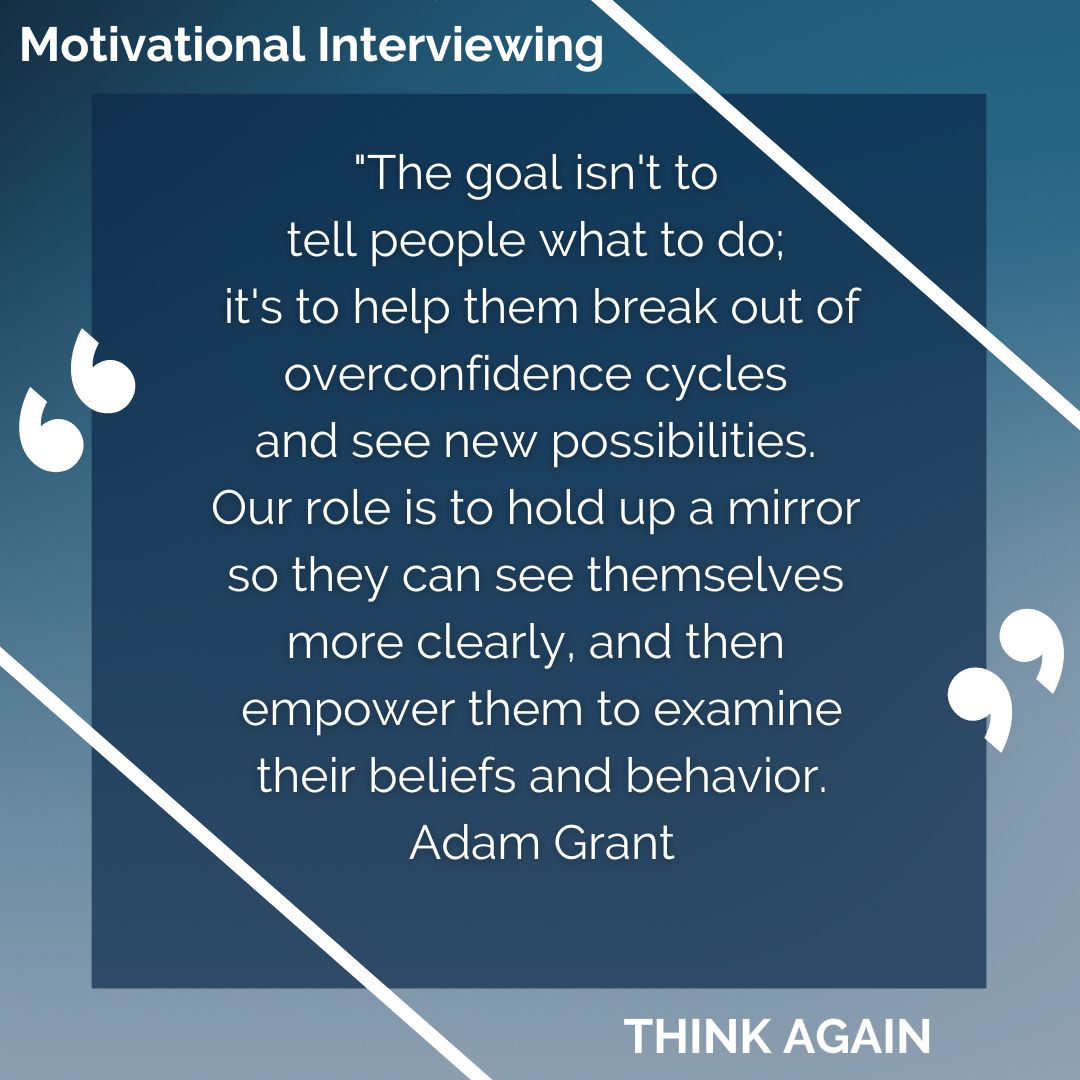
One of my responsibilities as a school leader is guiding others to think deeper about their decisions to positively impact their teaching and learning environments in their classroom. “When we try to convince people to think again, our first instinct is usually to start talking. Yet the most effective way to help others open their minds is often to listen” (p. 151). I smiled and thought to myself, yes, Grant, I’m guilty in that regard. Moving forward, I need to remember “...we can rarely motivate someone else to change. We’re better off helping them find their motivation to change” (p. 146), starting with talking less and listening more.


Collaboratively we can all learn to examine how we are thinking collectively in our decision-making process to keep us focused on what we value and prioritize as a school community. “Organizational learning should be an ongoing activity, but best practices imply it has reached an endpoint. We might be better off looking for better practices” (p. 216). “A bad decision process is based on shallow thinking. A good process is grounded in deep thinking and rethinking” (p. 217). 


Pushing out of a comfort zone to a learning zone requires me to normalize change for growth as a leader. What works research has the potential to be effective, but does it align with our beliefs and values as a school community? Grant proposes a Rethinking Scorecard for decisions that include processes and outcomes.


“Even if the outcome of a decision is positive, it doesn’t necessarily qualify as a success. If the process was shallow, you were lucky. If the decision process was deep, you can count it as an improvement; you’ve discovered a better practice. If the outcome is negative, it’s a failure only if the decision process was shallow. If the result was negative but you evaluated the decision thoroughly, you’ve run a smart experiment…The goal in a learning culture is to welcome these kinds of experiments, to make rethinking so familiar that it becomes routine” (p. 219). 


Summer for a school leader passes quickly. I have quite a few new challenges ahead of me, and I want to lead with joy, drive, and passion. Grant’s last thought is my most vital takeaway from Think Again “It takes humility to reconsider our past commitments, doubt to question our present decisions, and curiosity to reimagine our goals. What we discover along the way can free us from the shackles of our familiar surroundings and our former selves. Rethinking liberates us to do more than update our knowledge and opinions—it’s a tool for leading a more fulfilling life” (p. 243).