Wednesday, July 15, 2020

Read. Read. Read.

First Lady, Barbara Bush Narrated by Jean Becker PEARLS OF WISDOM—Little Pieces of Advice (That Go A Long Way)

When my sister shared the book Pearls of Wisdom, LIttle Pieces of Advice by First Lady Barbara Bush narrated and compiled by Jean Becker, I could feel her excitement over the phone. This compelling book is a collection of advice from First Lady Barbara Bush given throughout her lifetime to members of her large family, dear friends, political colleagues, and grateful employees. Her heartfelt and often direct counsel continues through the hearts and minds of those that knew her best but also can be appreciated by those who read her words and take to heart their meaning and message.


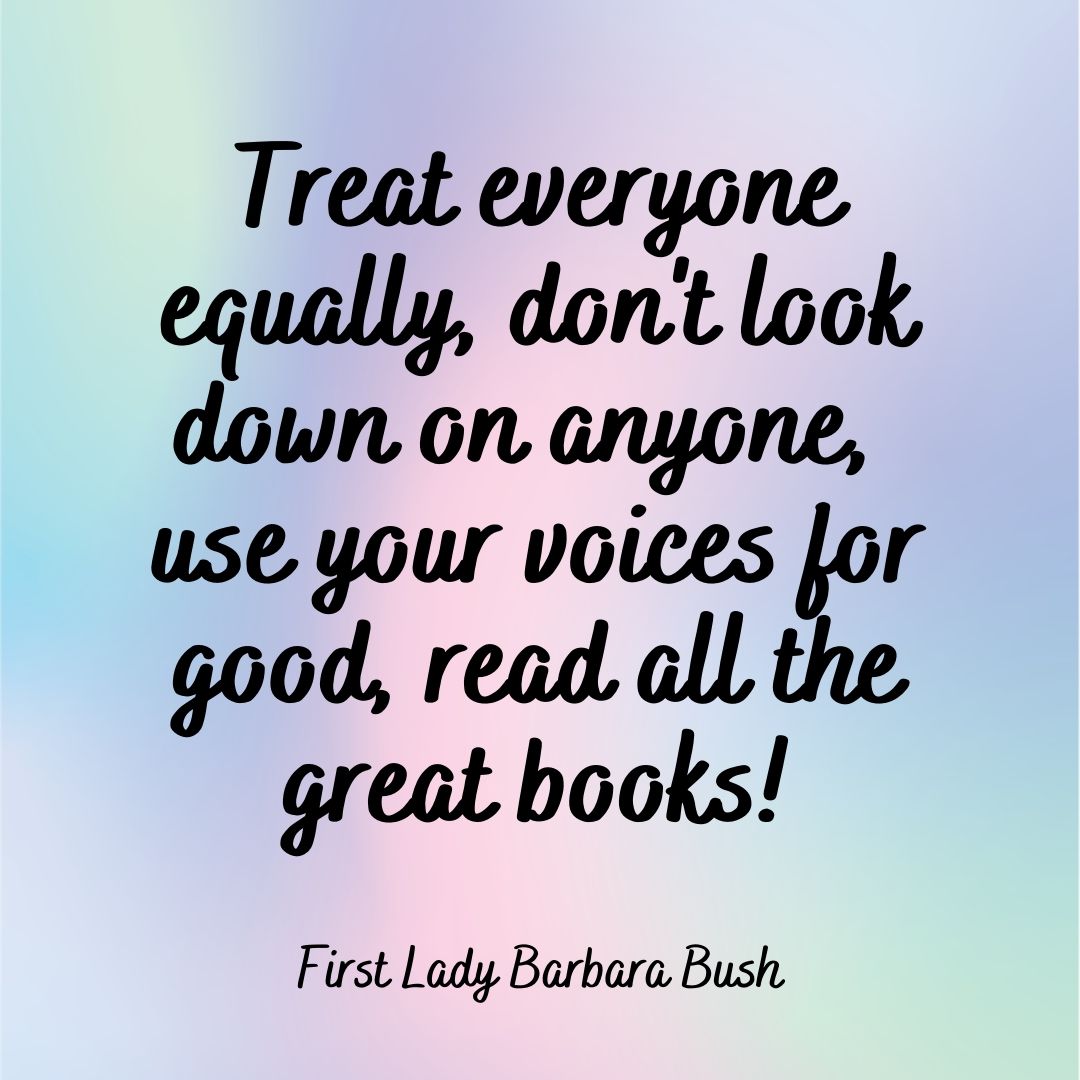
Readers will come away with more than a few ‘Pearls of Wisdom’ from First Lady Barbara Bush, but her drive for equity through literacy will be just as compelling. Her drive, her passion, her relentless pursuit to ensure each child and every adult has the opportunity to be readers was known by those who knew her best. She relentlessly shared this message with her children, grandchildren, colleagues, politicians, and those who came to listen to her speeches given world-wide. Read for fun. Read to others. Read to learn. Read.


There were many pieces of advice that will remain timeless including the real-life reminders hung on the back of each guest bedroom door for her visiting children and grandchildren. Notes that directed them to ”Please hang up damp towels and use twice if possible” and “Above all—have a great time.” Known as the Enforcer from those that knew her and loved her best she could also be quite direct with her counsel to  “Marry someone great!” and solemnly “If you can remain calm, you just don’t have all the facts.”

The tributes and memories shared by many of her closest and dearest friends, colleagues, and those who worked for her, included how the First Lady and her husband  President George H. W. Bush lived their life. “They led and taught by example—always living each day to the fullest with humor and dignity.”  Their love story started when she was 16 and continues in the hearts and minds of many after her death at the age of 92. Pearls of Wisdom include a written reflection from each of their children about their mom. Their son Governor Jed Bush thoughts mirror what his siblings shared about their mom and dad, “Our family has had a front seat to the most amazing love story….their love was the constant in our lives.”

The book was written to not only share her sometimes witty, sometimes direct, sometimes gracious words of wisdom but to continue to support programs and research for the Barbara Bush Foundation for Family Literacy. All the proceeds earned by the sale of this book will go towards promoting literacy for everyone. If the First Lady Barbar Bush was still alive today, one can imagine how pleased she would be with her life’s work continuing. Although ultimately if we each read more often and then read to the ones we are left in charge of instilling the love of reading with she would be thrilled!


Monday, July 13, 2020

Choose Happiness

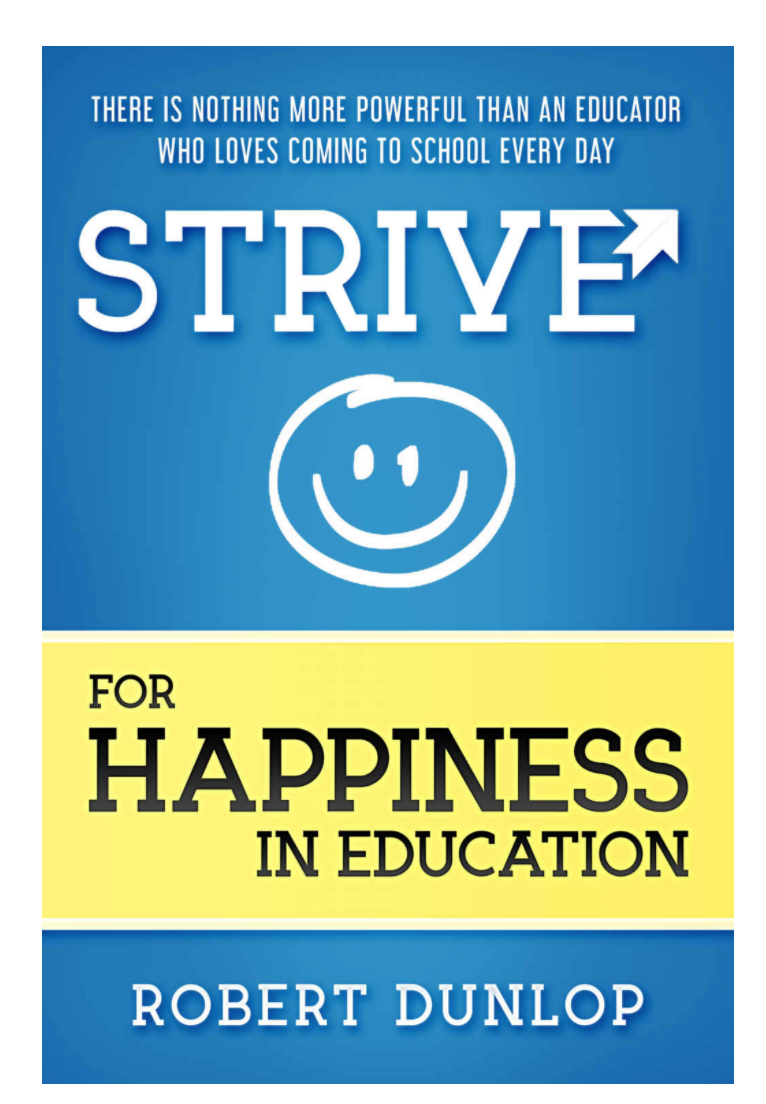
Robert Dunlop STRIVE—For Happiness in Education

This summer I joined my very first #BookCampPD book study. The book selected for this round was STRIVE for HAPPINESS in EDUCATION written by Robert Dunlop. The online conversation was facilitated by the educator enthusiast Meredith Johnson who continues to inspire so many teachers and leaders to keep learning through reading and connecting.
 

Dunlop dropped into our twitter chats and like his book STRIVE you could feel his positivity vibe coming through his posts and reflections. In the preface of his book, he shares his thoughts on happiness. “It is essential to note that happiness is not something that you find or achieve, it is something that you constantly strive for. There are always going to be ups and downs. You will face challenges, and you will find success. You will have good days and bad. You will have great classes and ones that take you to your tipping point. The key is to make happiness a priority in education. This is the root of a healthy, fulfilling, and truly impactful career.”

With many of us now contemplating our next steps for continuing a modified Distance Learning experience for our students due to the COVID19 Pandemic, finding happiness will be a priority for the fall. Using the letters in the word STRIVE Dunlop demonstrates through stories and other classroom experiences how one can choose happiness by purposefully striving to prioritize students, teams, routines, innovation, viability, and yes being that extraordinary educator. There are many simple replicable take-aways for both teachers and leaders and heartfelt reminders of why striving for happiness matters for educators. I would add especially during a time of crisis. Dunlop reminders the reader, “Each journey is unique. The key is to look for opportunities that will allow you to dial into finding more joy one adjustment at a time.”

Here are a few key ideas I want to implement to purposefully keep happiness at the forefront of teaching and learning with staff, students, and families.

Staff-Random Acts of Recognition: “We need more moments where we feel appreciated and recognized for our many talents and the extra time we invest in our students, school, and the profession as a whole.”


Students-Ask Questions: I shared this graphic in a previous post, but Dunlop had the same idea. “Ask questions that will promote conversation and give you an avenue to get to know them better.” #Relationships #Relationships #Relationships


Families--Prized Possessions: “Learning how to gain and maintain the trust of a parent community can have an extremely positive effect on your experience at a school.”


At the end of his book, Dunlop encourages the reader to “Be That Teacher” that will be remembered for years to come. I will make the assumption that includes all educators who work to support and serve our students and their families “Someone who is happy, passionate, caring, and kind. Someone who inspires and leads. Someone who wants to make the world a better place. Someone who is extraordinary in their eyes. Someone they will never forget. Seize the opportunity and be that teacher.” Our kids deserved that joy, that passion, that experience.

Wednesday, July 8, 2020

Healing Loneliness Together

Vivek H. Murthy, MD TOGETHER—The Healing Power of Human Connection in a Sometimes Lonely World


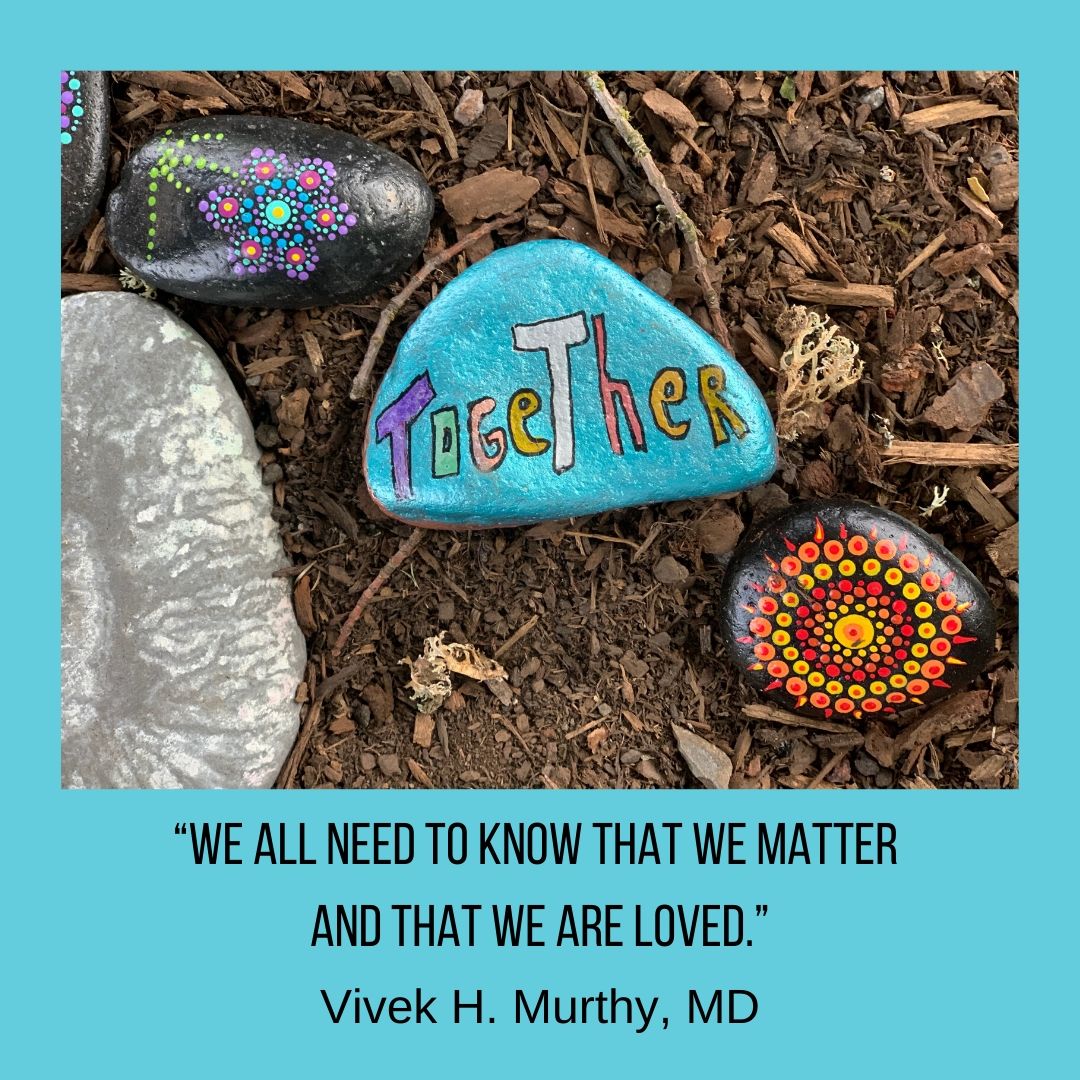
The soft-spoken voice of Dr. Vivek Murthy as he speaks on the topic of Loneliness is incredibly compelling. I first heard him speak with Dr. Brené Brown on her podcast Unlocking Us in late April, 2020. Dr. Brown is best known for sharing her research on vulnerability, empathy, and shame. Then later in early July, I listened to Dr. Murthy on the Next Big Idea Podcast with Dr. Susan Cain who wrote the book Quiet, a captivating book on how our society often undervalues introverts. In each of these reflective conversations and in his book Together, The Healing Power of Human Connection in a Sometimes Lonely World Dr. Murthy speaks of the prevalence of loneliness in our society and the adverse effects it has not only on our health but in the connections we have with each other.


As our nation and the whole world are transitioning into implementing the public health requirements of the COVID19 pandemic, isolation has become a necessity for our own personal safety, the health of our families, closed friends, neighbors, and those that are most susceptible to illness who live in our communities. Starting in late March of 2020 the streets became empty, non-essential businesses closed, personal dwellings became a refuge, and we all watched and literally cheered as only the essential workers traveled back and forth from work to home. The rest of us were all then were forced to experience our own version of isolation, disconnectedness, and yes often loneliness.

Although isolation is not loneliness and Dr. Murthy clarifies the difference. He shares, “Many people think of loneliness as isolation, but the difference between these two terms is substantial! Loneliness is the subjective feeling that you’re lacking the social connections you need. It can feel like being stranded, abandoned, or cut off from the people with whom you belong--even if you’re surrounded by other people. What’s missing when you’re lonely is the feeling of closeness, trust, and the affection of genuine friends, loved ones, and community” (p. 8). The powerful component of the book Together is how Dr. Murthy further defines loneliness through relatable stories of friends, family, patients, and community members. 


The stories of Virta and Mychele told by Dr. Murthy are similar to those we might find about people in our own communities who quietly go about their daily lives regularly unnoticed and nearly invisible. Virta becomes lonely after complications from illness and Mychele is a lonely widow after many years of a close-knit marriage. Both of these women wandered through each of their days slowly losing their former lifeline connections. It was not until others reached out to them with love and compassion did they slowly began to reappear out of isolation and start to heal. They both gained a new sense of belonging by regularly connecting with those around them and eventually finding a new purpose by serving others. It did not happen quickly nor without setbacks but they emerged to start living a different way. 


I was extremely touched by Dr. Murthy’s story about his maternal grandfather and his brother Vasana. He explains there are those who experience unimaginable pain when losing someone they are deeply connected to. For most people, the pain subsides over time, but for others, the experience can be life alternating. The story of these two brothers started with their shared life experiences of on-going hardships in their early childhood. Neglected, mistreated, hungry and homeless… “they took care of each other when it seemed that no one else would” (p. 40). This closeness continued into adulthood for these two and when Dr. Murthry’s grandfather died his brother Vasana quickly followed him in death. Although incredibly sad, Dr. Murthy reminds the reader that “While loneliness has the potential to kill, connection has even more potential to heal” (p. 51). 


Dr. Murthy shares about the power of healing with Derek’s story. To start the story it is important to note, not only are we in the middle of a world-wide pandemic, the Black Lives Matter social reform movement is gaining momentum and attention across our nation. The hearts and minds of people living in the United States are slowly leaning in towards a much-needed change in our society due to unjust, often brutal, and deadly, outcomes of people of color in our communities. 

Derek’s story begins with details of his childhood including how his father was a leader and former Grand Wizard of the Ku Klux Klan. Derek was homeschooled as a child and raised in a tight-knit extended family with their own sense of purpose and culture. With little, if any other life experience and beliefs other than what he was exposed to as a child he headed off to college. A brave task for any young adult heading away from home, but extremely difficult for Derek.


Dr. Murthy describes Derek as an inquisitive individual who wanted to not only connect with others in his new surroundings but wanted to understand and learn more about his college community. Realizing his background would be an area of contention for his new peers he hid this knowledge about his family from them. Eventually discovered he was “outed” publicly. Not only was Derek experiencing loneliness being away from home and family, but he was also now left without friends to support him through his college experience. A new type of deep loneliness emerged for Derek.


For many, this is where the story would end with no connections, no trust, and a lonely college experience. Fortunately for Derek, his story was different. “A few fellow students reached out to connect and have thoughtful conversations with him. Their willingness to listen and share with respect and compassion gradually changed Derek’s belief and help him realized how destructive his original values had been” (p. 68). Over time connections were developed, friendships created, and loneliness was not the outcome for Derek. I am wondering if the same approach today in light of the Black Lives Matter movement could follow this same path.


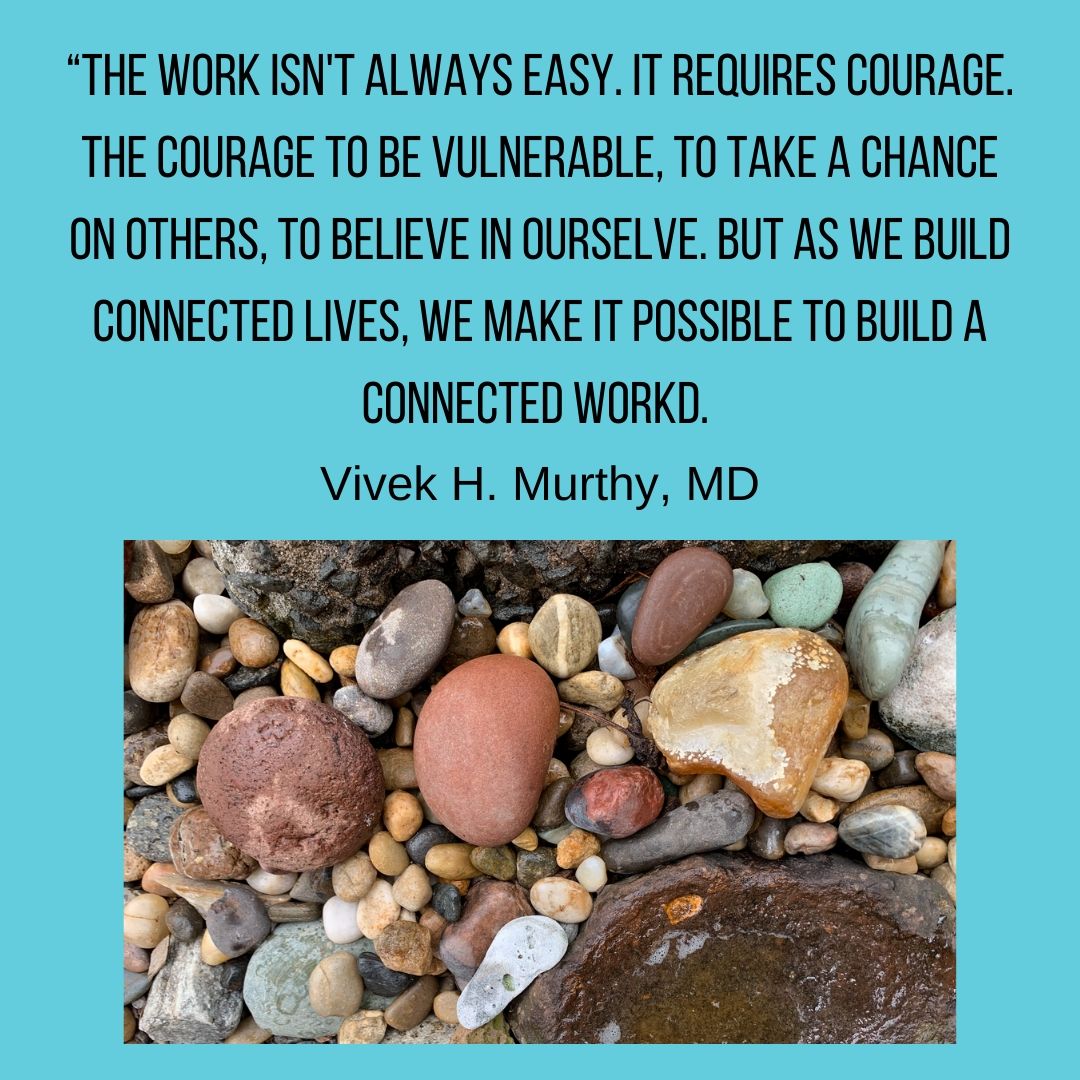
These are just a few of the stories Dr. Murthy shared on loneliness and the drive we all have as humans to connect even when faced with incredible diversity. During a pandemic, we are forced to stay in isolation, but the importance of continuing to reach out to others through kindness, compassion, and service is critical if we are all going to pull through this together. Hopefully with a renewed sense of the value of “connection in a sometimes lonely world.” The cure for loneliness does not occur in isolation but with the relationships, we purposefully cultivate with others.


Friday, July 3, 2020

“All learning is social and emotional.”

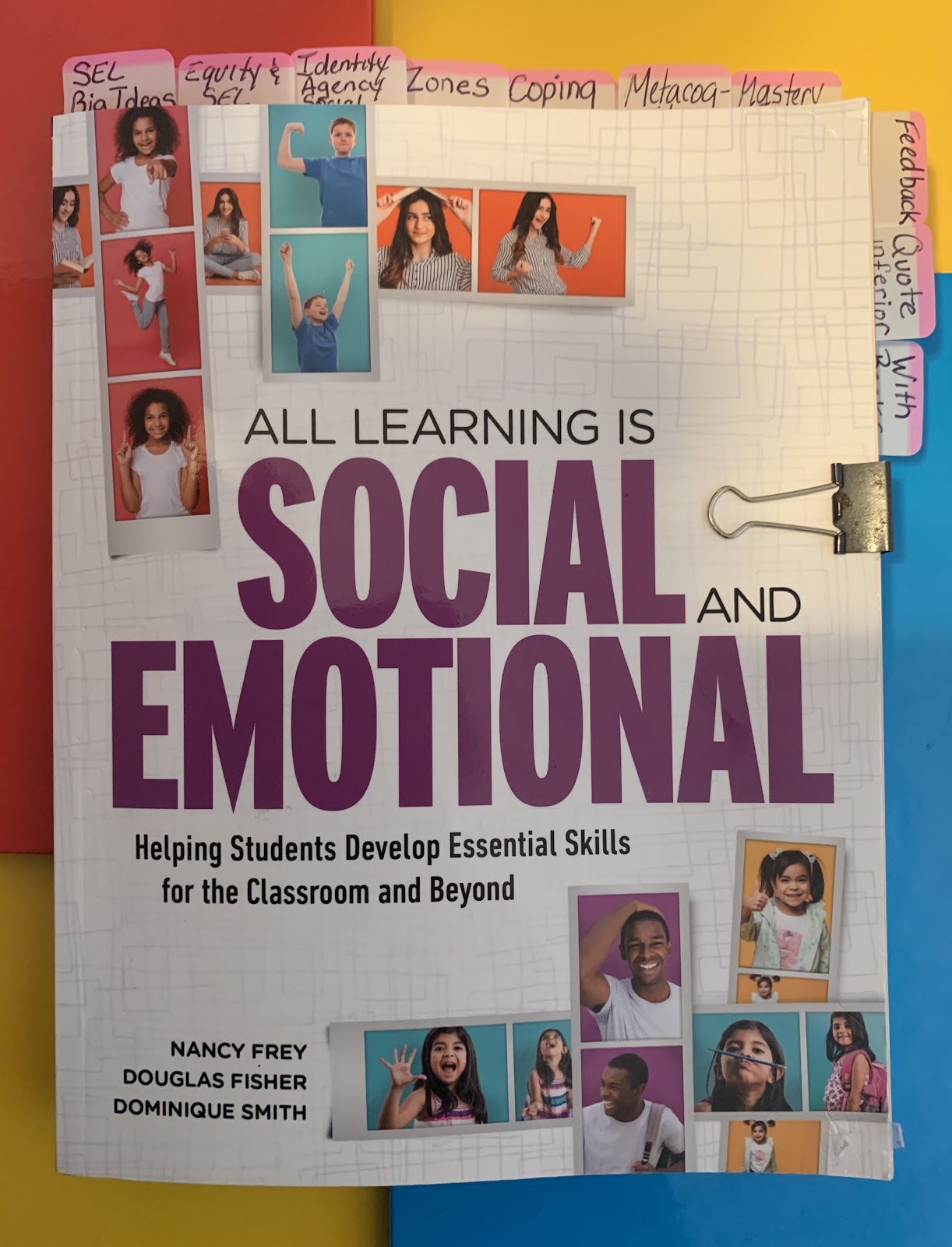
Nancy Frey, Douglas Fisher, Dominique Smith ALL LEARNING IS SOCIAL AND EMOTIONAL—Helping Students Develop Essential Skills for the Classroom and Beyond


I read this book based on two recent pivoting experiences. The first occurred when both Dr. Douglas Fisher and Dr. Nancy Frey engaged our administrative teams in professional learning. The sessions highlighted teacher clarity and how to deepen our implementation of instructional strategies that have the greatest impact and ultimately better outcomes for kids. The caveat here was they presented on different days, but in my notes, there was a quote they both shared...“All learning is social and emotional.” 


The second experienced happened as one of our administrative teams began to plan for what teaching and learning would look like in the Fall of 2020 with the health restrictions of COVID19. This group of dedicated leaders unanimously agreed to start with prioritizing the social and emotional (SEL) student-focused systems first before creating schedules, establishing routines, determining curriculum, etc. All of which are incredibly valuable...but we agreed during the Coronavirus Pandemic our school systems and instructional action steps would be more aligned strategically to support each student’s social and emotional health as a top priority.


Early in the book, the authors shared, “It’s important to stress that social and emotional learning is about more than developing kids who are nice to one another, cooperative in class and civically engage, SEL is an equity issue...It is crucial for schools to implement systems that develop students’ social and emotional skills so that they can carry, practice, and use these throughout their day, at home when the school day is over, and for the rest of their lives” (p. 12). This is our work.


The authors also remind teachers and leaders that successful implementation of SEL programs does not come from a curriculum, a program, or happens by chance. The social and emotional development of the children in our classrooms should occur daily and be intentionally embedded in all that we do. “Their social and emotional development is too important to be an add-on or an afterthought, too important to be left to chance” (p. 17). They organized SEL into five categories that can and should overlap and support each other including; identity and agency, emotional regulation, cognitive regulation, social skills, and public spirit. 


We started this work in our school over the past couple of years but not to the depth where we want to be...yet. One of the biggest lessons I learned as a leader was to change our school-wide schedule that prioritized addressing the social and emotional health of our students at the very beginning of the school day. Each class, each child, each teacher gathers in a community circle, where students experience what it feels like to be in an inclusive trusting setting.


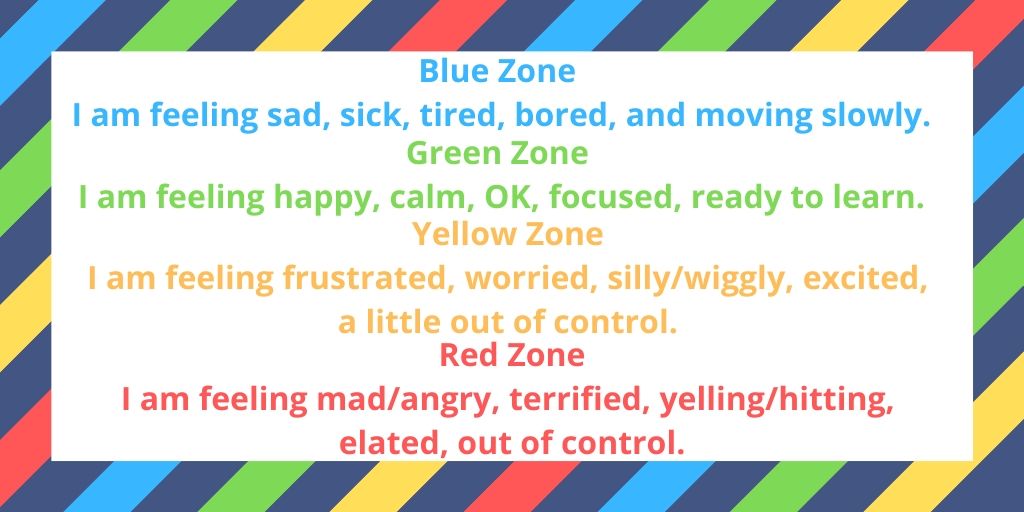
In these daily community circles, students are learning to “recognize, express, and regulate their emotions before they can be expected to interact with others” (p. 48) which helps them regulate their learning mindset for the day. In our school, we use the same Zones of Regulation Model the author’s referenced on page 50. 


Learning to not only recognize one’s own feelings but how to respond to those feelings is discuss and taught by their classroom teacher. Teachers also frequently use characters found in stories and through role-playing class scenarios to continue to develop their understanding of their own emotions and reactions as well as those of their peers. 


This past Spring during our on-line Distance Learning sessions with students each classroom teacher prioritized this practice. Students were given regular opportunities to identify, share, and use “their words” to express their feelings. After actively listening to each other similar to their morning circle routines, students offered suggestions and recommendations on what their peers could do at home to help them refocus or regulate their emotions. Student suggestions to their peers included taking a walk, getting outside, reading a book in a quiet corner, squeezing a squish ball, and on and on it went. 


There are many sections in this book that I intend to get back to once we are all back together. Fisher, Frey, and Smith also offered suggestions for restorative practices including questions to ask both the offender and the victim. Metacognition strategies were highlighted by the authors to foster through explicit instruction in order to provide students more opportunities to “think about their thinking.” They also included examples of how we can move students away from learned helplessness towards productive struggle in order to empower our students to leverage their own cognitive resources and skills. 


The last chapter of the book provided further ideas on how to purposefully plan for embedding SEL schoolwide. The ideas that most resonated with me and our school community Included building the capacity of others to increase understanding, collecting student, staff, and family data for decision-making, looking for patterns in the data with all stakeholders, and setting and monitoring goals were all important reminders. Although just as important to remember there are many effective SEL programs available but it’s not something you do in isolation but incorporated in all that you do as a cohesive learning community. 


Tuesday, June 30, 2020

Questions to Consider

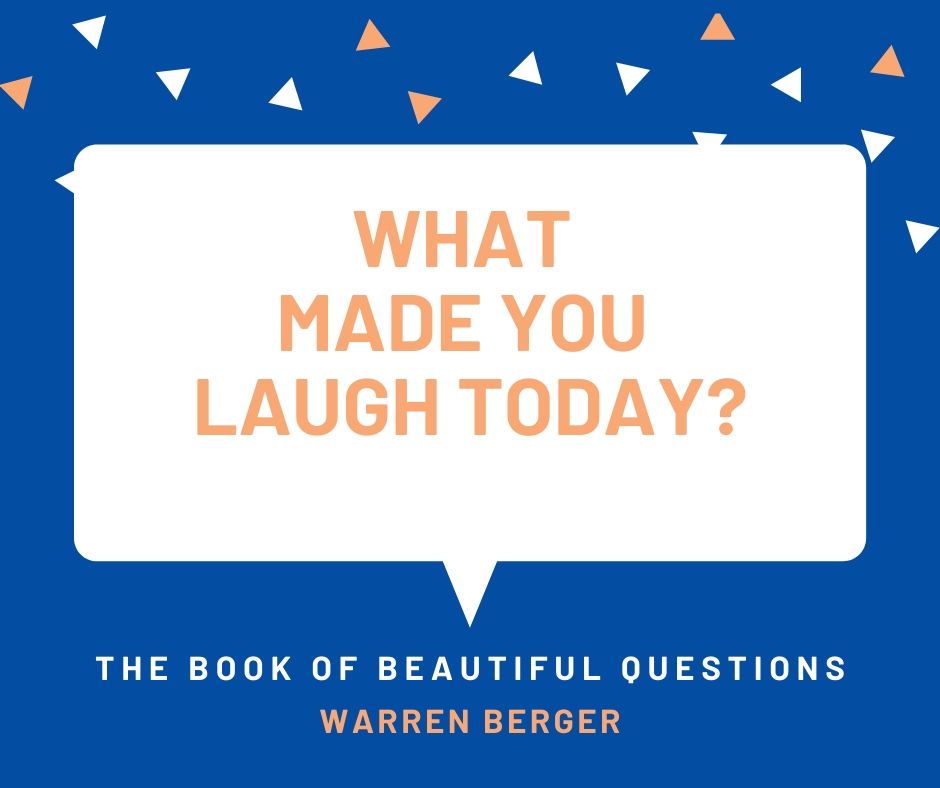
Warren Berger THE BOOK OF BEAUTIFUL QUESTIONS—The Powerful Questions That Will Help You DECIDE, CREATE, CONNECT, AND LEAD


I must admit The Book of Beautiful Questions written by author Warren Berger has been sitting on my to-read list for quite a while now. It was a gift from a thoughtful colleague but it never got to the top of my pile of books until I listen to Daniel Pink’s Pincast 3.09 on intellectual humility. In his message, Pink asked the listener “do you have a willingness to recognize what you think, what you believe might be wrong.” Admittedly...this is a difficult question for many of us to ask and more importantly to then reflect on.


As a school leader with multiple decisions to make I often ask myself and others many, many questions before heading in one direction, But are they the right questions to ask to get the full understanding of the changes we need/want to make? Warren states, “To improve our decision-making capabilities, we need to sharpen our critical thinking. And to do that we must arm ourselves with a set of critical questions--and be willing to consistently ask and thoughtfully consider the questions before rendering judgment” (p. 18). 


In The Book of Beautiful Questions, Warren focuses on questions for better decision-making, addresses questions for creativity and innovation, frames how questions can support us truly connecting with others, and gives the reader questions to consider to develop stronger leadership skills. I highly recommend that those that read the book do so with a pen and notebook in hand. As you read write down those questions that can be utilized with humility to learn more from others who you serve, support, and yes love.


The initial list I created while reading consisted of twenty questions. I thought I could challenge myself to ask these on a regular basis. Reality check...not truly feasible considering the amount. I narrowed down my list by highlighting one in each of Berger’s categories and then condensed the list even more with just three questions and added one bonus question that acts more like a directive for myself for a total of four questions to consistently use. I selected the following.


A question to ask myself more often for self-reflection. 
Am I looking to protect and defend or seek to understand?

A question to ask teachers to gain their perspective and insights. 
Can one response really give me their entire perspective? What else do I need to know?

A question to ask students who often just make me laugh with their honesty.
Am I giving students opportunities to answer open-ended questions to share their thinking? 

BONUS QUESTION
A question to put on my computer monitor in my office to get me up and out!
Am I taking the time to connect with students, staff, and families?

Warren hares, “The challenge of leading, in almost any area, is becoming more complex and demanding” (p.16). Leading in isolation should not be an option for any school or organization. “From an individual career standpoint, continued success will depend on having the ability to keep learning while updating and adapting what we already know. We must continually invest or reinvent the work we do every day. None of this is possible without constant questioning” (p.14). 


With humility, ask, listen, reflect, learn, and change, in order to grow.


Thursday, June 18, 2020

Only the Learner Learns

Zaretta Hammond CULTURALLY RESPONSIVE TEACHING & THE BRAIN —Promoting Authentic Engagement and Rigor Among Culturally and Linguistically Diverse Students

I’ve heard Zaretta Hammond speak at conferences, present at webinars, annotated her book Culturally Responsive Teaching & THE BRAIN two times as I methodically read and process each idea. I also listened to the power of her message as she read aloud her book through an audible app twice. Each time I came away with another nugget of evidence-informed research on how our “brains are wired for connection” relevant to our relentless pursuit of having each and every one of our students be independent learners as well as readers. 


Although my current reality is we are all in the middle of an unprecedented worldwide pandemic and I need to know what to do right now as a school leader to support learning in our virtual classrooms. How can we make learning equitable and accessible for each of our students now that they are no longer in school, but isolated with their families at home, in hotels, doubling up with relatives and other unknown settings? More importantly, with the limited amount of synchronous “screen” time we have with students during Distance Learning, how do we deepen their learning by including the cognitive aspects of learning as identified in Hammond’s book Culturally Responsive Teaching and the Brain?

Hammond gives us four practice areas for Culturally Responsive Teaching including awareness, learning partnerships, informational processing, and community building. All incredibly important, relevant, and valuable to build the confidence of each of our learners. Although in this unexpected time in our nation’s history, I feel an incredible sense of urgency to identify consistent evidence-based instructional strategies teachers can utilize collaboratively in the fall. More than likely schools across the country will still remain in some form of Distance Learning next year based on the health of the majority of the people living in their communities. Learning environments for our students could include limited seat time in the classroom, learning remotely from home, and/or a combination of both. No matter the format that is selected this uncharted experience will require plenty of relentless grace with a forward-thinking, we can do this mindset.

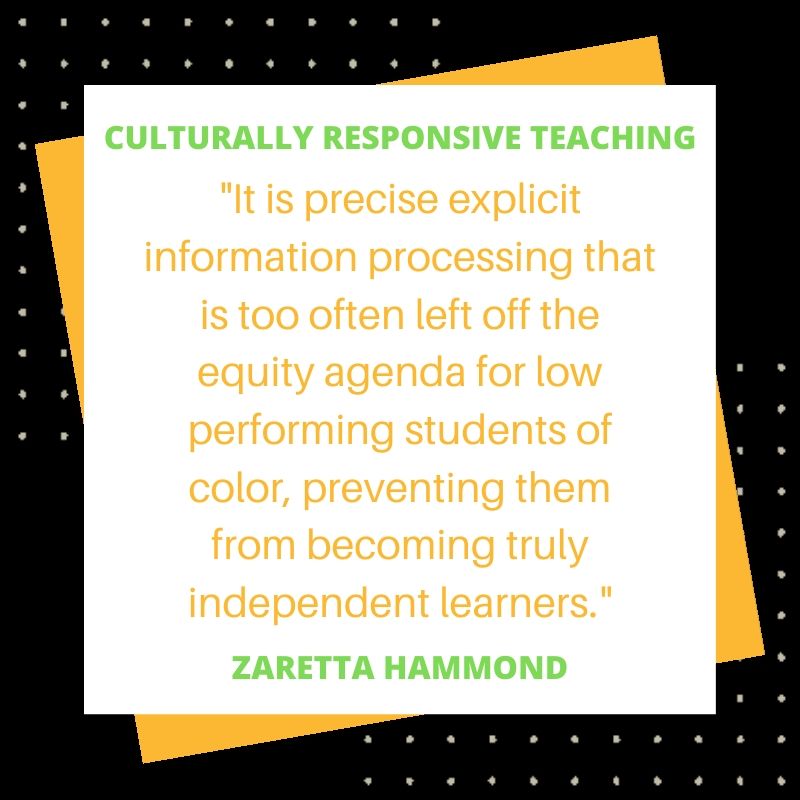
Hammon carefully reviews each of the three-stages recognized by cognitive sciences on how the brain processes information. She states, “The power of culturally responsive teaching to build underserved students’ intellective capacity rests in its focus on information processing...It is precisely explicit information processing that is too often left off the equity agenda for low performing students of color, preventing them from becoming truly independent learners” (p.124). 


She continues, ”As a culturally responsive teacher you should be planning instruction so that students move through the brain’s three stages of information processing--input, elaboration, and application” (p. 128). She implores teachers to consider these as essential components for every lesson, but should also include instructional strategies that help the student’s brain to not only process the information but to make it stick in their brain’s long term memory. The brief description of each stage and sample instructional strategies include:

    • Input - This stage helps students...focus on what you want their brains and minds to pay attention to. Here the information sits in the short term memory. “Think of this short term memory as a clipboard where you place temporary information” (p. 125).

      • Consider - a story, a poem, a quote, a puzzle, a problem, or a piece of music that will elicit emotion, a thought, or a question.

    • Elaboration - This stage helps students...make sense of what you just brought to their attention and to help them begin to better understand. “The brain moves the information from the clipboard of the short term memory on to the working memory”...“Think of the working memory as a workbench or tabletop” (p. 126). 

      • Consider - activities in a burst of short periods of time (5-20 min.) where students can practice, practice, practice what they learned. They are “kneading, massaging, and braiding together the material in order to make sense of it, and connect it to what the brain already knows” (p. 126).

    • Application - This stage helps students...apply what they have learned and to make it meaningful. Think of this as moving from the student’s tabletop to application with deliberate practice and real-life application.

      • Consider - “project-based learning or problem-based learning” opportunities not only for intentional practice now but “where it becomes part of our skillset, background knowledge, or conceptual understanding’ (p. 127).


As a culturally responsive teacher, Hammond offers “four macro-level instructional strategies that help students move through each stage” of learning” (p. 128-138). In my opinion, this is where the true joy of teaching and learning for both students and the teacher lives, grows, and thrives. It also has the ultimate potential to pass the baton of ownership of learning from the teacher to the student.

Ignite: Sparking the brain’s attention.
Chunk: Letting the brain take in bite-size pieces at a time.
Chew: Give the brain time to process and ponder.
Review: Give the brain a chance to apply what they now know.

Although in hearing Hammond speak it is critical to remember what Culturally Responsive Teaching is not. “Teachers need to interrogate their practice a little more robustly,” says Hammond. “It’s not an off the shelf program, it’s not two or three strategies. It is not plug and play.” To be more culturally responsive, consider gamifying with repetition, and connections. Consider it to be a social collaborative activity rather than a student sitting in isolation. Finally, storify it by creating a cohesive story that has relevance and meaning for the learner. (Cult of Pedagogy, Gonzalez & Hammon, Sept. 2017).

The question I continued to ask, Is any of this even possible during a pandemic without our students in our classrooms? In early May of 2020 Hammond address just this question on the Vrain Waves podcast. Using the analogy of the Apollo 13 space voyage. In this historic event, both the astronauts and those in the space command center had to puzzle through how to return to earth after a default of equipment during space flight. Working collaboratively they had to determine what resources the astronauts had on board the shuttle they could utilize in a different way in order to come home safely. The same applies to us as educators during a pandemic. Hammond suggests a resource to consider as we all navigate Distance Learning together is our parents and families. Converting our student’s homes into classrooms is not recommended, but we can develop a partnership with them on what learning should include for their students while at home.

What if…teachers and leaders prioritized relationships with parents? 

What if---teachers affirmed the parents are the teachers while at home?

What if...teachers and parents then co-planned lessons together? 

What if...teachers and parents become the co-collaborators of constructing learning activities with a happy medium of “the packet” with curiosity?


Hammond continues in the Vrain Waves podcast to remind the listener, learning pulls us all forward. She acknowledges the learning gaps that students are experiencing worldwide as we remain isolated. “Learning Gaps turn into Opportunity Gaps, that turn into Achievement Gaps.” Distance Learning is not the dragon” where the gold is right now is behind the challenge to get our students to be readers, be independent, and have curiosity. “Only the learner learns.” 


I am hopeful this unforeseen historical challenge will be a time for innovation and reinvention of what is possible. Hammond’s Culturally Responsive research and framework can act as our guide and a reminder of what the brain needs to learn and what impedes that growth. We are all in this together.

Friday, May 29, 2020

#WeGotThis


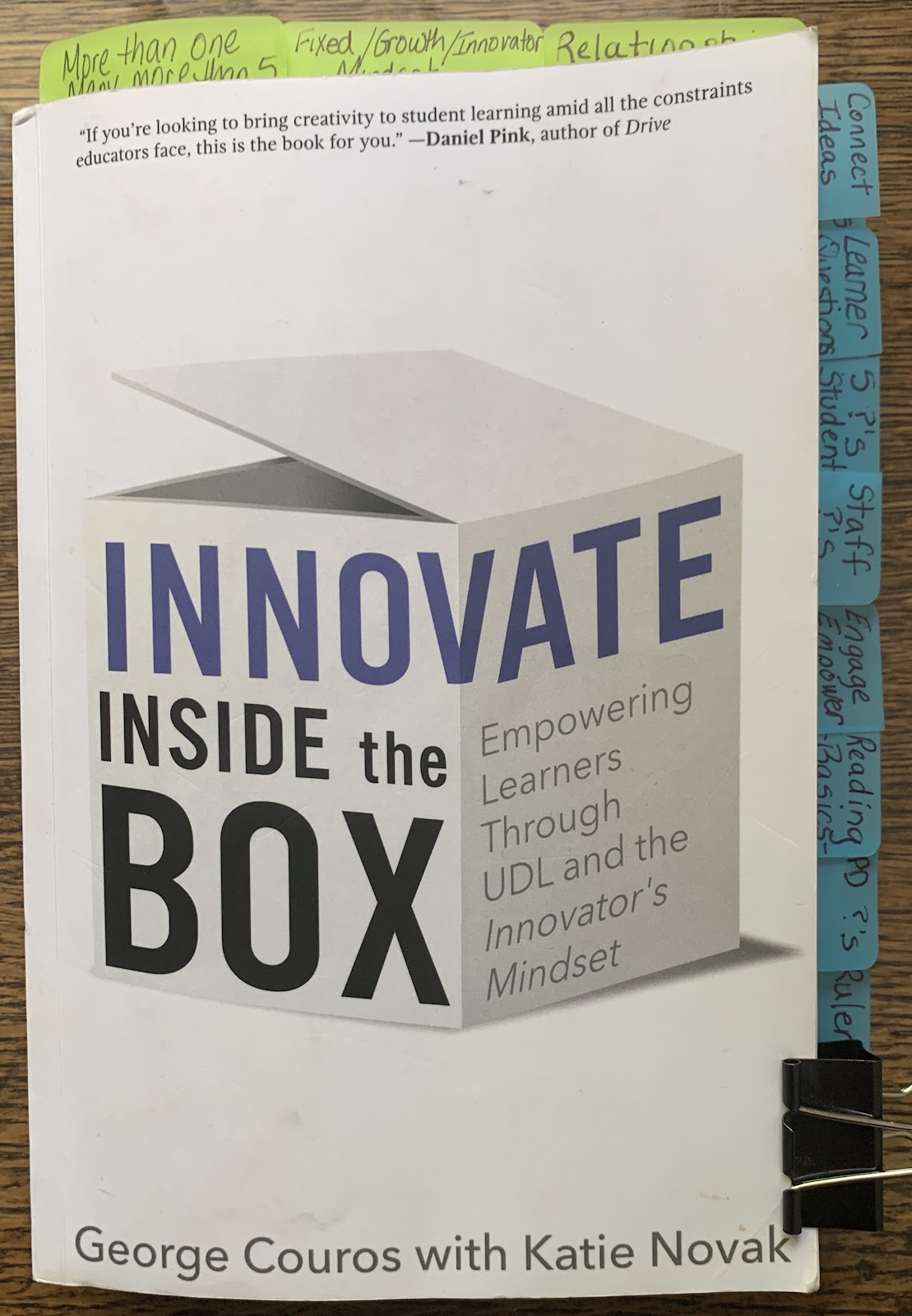
Geroge Couros with Katie Novak INNOVATE INSIDE the BOX—Empowering Learners Through UDL and the Innovator’s Mindset

Non-fiction has been my book of choice for as long as I can remember. On a rare occasion, when I read or listen to an audio story...I speed-read or fast-forward to the end of the book 99% of the time. I just get bored and want it to end. With the limited time I have to sit quietly and absorb the words in a text, I want it to be meaningful to me and to help me as an educator continue to learn and explore new ideas. George Couros and Katie Novak’s book Innovate Inside the Box did just that and pushed my thinking forward to being and becoming a better leader who still has a lot to learn.


The book has three parts. The first section focuses on the foundation of relationships, the learner, the master learner, and the learning experiences that have the greatest impact on all of us. The second section takes us back to the characteristics found in Couros’ first book The Innovator’s Mindset but adds the expertise of Novak’s experiences with Universal Design for Learning (UDL). Finally, the third section gives the reader a challenge to align with the “Change You Seek”. At the beginning and end of the book, the authors ask three questions. My hope is my personal reflections will propel another educator to read the book in order for even more of our students around the world to feel empowered on their own learning path.

Question One: What has challenged you?

I can’t get passed this one...yet. I am truly passionate about early literacy. Providing our students with the foundational skills needed for reading success now and as they transition into individual dreams and pursuits is what truly drives me. Teaching students to read and read well in order for them to make sense of their world in my opinion is a civil right each child deserves. As a leader in a turnaround school if I don’t make that a priority every single day more than once...my kids don’t move forward in a world that doesn’t wait for them to catch up. Where do these foundational skills fit into UDL?

Couros stated clearly early in the book, “Let me clarify something: Being an innovative school or teacher doesn’t mean you abandon the “basics,” it means you are focused on going much further than what only the basis could provide” (p.61). Yes! We are totally in alignment with this thinking. My challenge is creating a type of balance between the two, without accidentally creating a this then that mindset. Not insurmountable...but does tax the strength of one’s dendrites. 

Question Two: What has been reaffirmed?
Relationships are the core component of learning. Amen. Hand-clap. Head nod. Thank you to the authors for stating this over and over in a variety of valuable ways. These human connections are vital to educators in a world full of competitive distractions. These connections are not only what helps us understand our learners in order to engage them in the learning process...it’s a great way to “pass the baton” for them to take charge.

In my early literacy scenario, I am navigating Couros and Novak’s thoughts on moving from compliance (you are going to learn to read), towards their why or engagement (reading will help you learn), to ultimately (reading to connect or create something you value). The following example used in Innovate Inside the Box, helped me tremendously to clarify these connections.

“You will be better at speaking if you are good at listening.”
Your writing will probably benefit from reading the work of others” (p. 55).


Question three: What will you do moving forward?
Our district just adopted the UDL framework for lesson planning in order to reframe the learning experiences for each of our students. The teacher’s initial UDL training was rolled out just a few weeks into Distance Learning during the COVID19 pandemic. No commit..not my decision. And note to self...never do that again.

I know as the building lead learner I will be looked to for guidance, direction, and frankly mindset on how we move forward as a cohesive team for the students in our school. This is one of my greatest joys and biggest challenges. I continue to move two steps forward and one step back as a leader...but we are getting closer to our goals to have each of our students leave their elementary school years as not only a reader but a child who is excited about learning and also is developing the mindset their efforts really have an impact.

To move forward I want to make commitments to my teachers as lead learners in their classrooms, grade level teams, and our school community. I want to commit to providing “Multiple Means of Engagement” for all of us to take risks and fail forward both individually and as a collaborative team as we relentlessly pursue our path of equity by ensuring each student becomes a learner who reads and reads well for self-meaning. 

#WeGotThis #WeCanDoHardThings #ItsNotWhatYouDobutHowYouDoIt #TogetherWeSucceed