Friday, May 29, 2020

#WeGotThis


Geroge Couros with Katie Novak INNOVATE INSIDE the BOX—Empowering Learners Through UDL and the Innovator’s Mindset

Non-fiction has been my book of choice for as long as I can remember. On a rare occasion, when I read or listen to an audio story...I speed-read or fast-forward to the end of the book 99% of the time. I just get bored and want it to end. With the limited time I have to sit quietly and absorb the words in a text, I want it to be meaningful to me and to help me as an educator continue to learn and explore new ideas. George Couros and Katie Novak’s book Innovate Inside the Box did just that and pushed my thinking forward to being and becoming a better leader who still has a lot to learn.
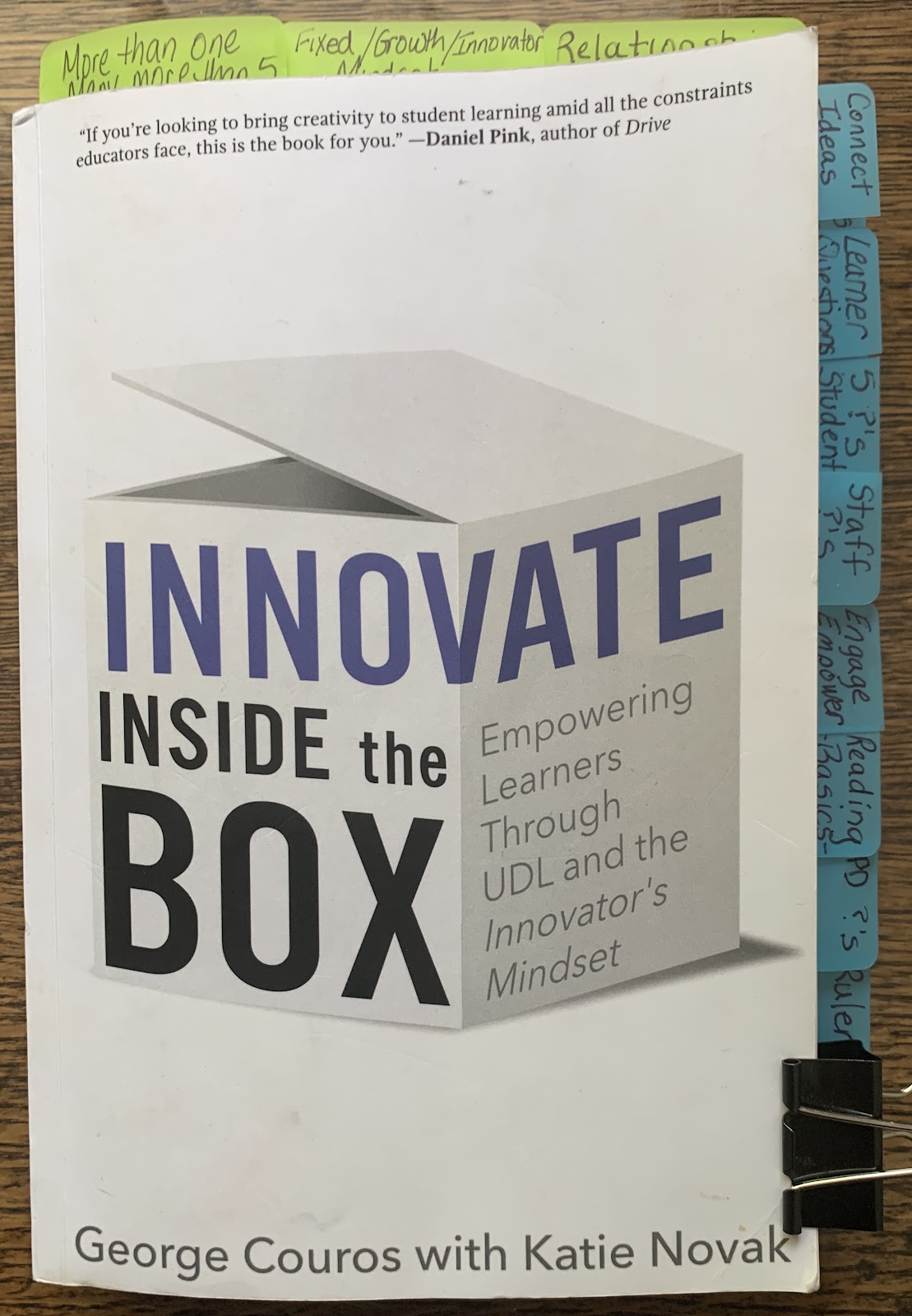


The book has three parts. The first section focuses on the foundation of relationships, the learner, the master learner, and the learning experiences that have the greatest impact on all of us. The second section takes us back to the characteristics found in Couros’ first book The Innovator’s Mindset but adds the expertise of Novak’s experiences with Universal Design for Learning (UDL). Finally, the third section gives the reader a challenge to align with the “Change You Seek”. At the beginning and end of the book, the authors ask three questions. My hope is my personal reflections will propel another educator to read the book in order for even more of our students around the world to feel empowered on their own learning path.

Question One: What has challenged you?

I can’t get passed this one...yet. I am truly passionate about early literacy. Providing our students with the foundational skills needed for reading success now and as they transition into individual dreams and pursuits is what truly drives me. Teaching students to read and read well in order for them to make sense of their world in my opinion is a civil right each child deserves. As a leader in a turnaround school if I don’t make that a priority every single day more than once...my kids don’t move forward in a world that doesn’t wait for them to catch up. Where do these foundational skills fit into UDL?

Couros stated clearly early in the book, “Let me clarify something: Being an innovative school or teacher doesn’t mean you abandon the “basics,” it means you are focused on going much further than what only the basis could provide” (p.61). Yes! We are totally in alignment with this thinking. My challenge is creating a type of balance between the two, without accidentally creating a this then that mindset. Not insurmountable...but does tax the strength of one’s dendrites. 

Question Two: What has been reaffirmed?
Relationships are the core component of learning. Amen. Hand-clap. Head nod. Thank you to the authors for stating this over and over in a variety of valuable ways. These human connections are vital to educators in a world full of competitive distractions. These connections are not only what helps us understand our learners in order to engage them in the learning process...it’s a great way to “pass the baton” for them to take charge.

In my early literacy scenario, I am navigating Couros and Novak’s thoughts on moving from compliance (you are going to learn to read), towards their why or engagement (reading will help you learn), to ultimately (reading to connect or create something you value). The following example used in Innovate Inside the Box, helped me tremendously to clarify these connections.

“You will be better at speaking if you are good at listening.”
Your writing will probably benefit from reading the work of others” (p. 55).


Question three: What will you do moving forward?
Our district just adopted the UDL framework for lesson planning in order to reframe the learning experiences for each of our students. The teacher’s initial UDL training was rolled out just a few weeks into Distance Learning during the COVID19 pandemic. No commit..not my decision. And note to self...never do that again.

I know as the building lead learner I will be looked to for guidance, direction, and frankly mindset on how we move forward as a cohesive team for the students in our school. This is one of my greatest joys and biggest challenges. I continue to move two steps forward and one step back as a leader...but we are getting closer to our goals to have each of our students leave their elementary school years as not only a reader but a child who is excited about learning and also is developing the mindset their efforts really have an impact.

To move forward I want to make commitments to my teachers as lead learners in their classrooms, grade level teams, and our school community. I want to commit to providing “Multiple Means of Engagement” for all of us to take risks and fail forward both individually and as a collaborative team as we relentlessly pursue our path of equity by ensuring each student becomes a learner who reads and reads well for self-meaning. 

#WeGotThis #WeCanDoHardThings #ItsNotWhatYouDobutHowYouDoIt #TogetherWeSucceed


Sunday, May 17, 2020

Assumptions


Malcolm Gladwell TALKING TO STRANGERS—What We Should Know About The People We Don’t Know

Assumptions. We all make them, and understanding why we create these thoughts in our heads, and yes sometimes the heart with strangers is made clear by author Malcolm Gladwell in his latest book Talking to Strangers. Here are the assumptions Gladwell referenced that gave me a reason to pause and rethink the assumptions I have made, and honesty here...still guilty of at times making.


“We think we can easily see into the hearts of others based on the flimsiest of clues. We jump at the chance to judge strangers(p. 50).

“You believe someone not because you have no doubts about them. Belief is not the absence of doubt. You believe someone because you don’t have enough doubts” (p. 78).

“If you don’t begin in a state of trust, you can’t have meaningful social encounters” (p. 104).

“Default to truth becomes an issue when we are forced to choose between two alternatives, one of which is likely and the other which is impossible to imagine” (p. 130). 

“I believed in you always until I couldn’t anymore...default to truth” (p. 131). 

“Transparency is a mythan idea we’ve picked up from watching too much television and reading too many novels where the hero’s ‘jaw dropped with astonishment’ or ‘eyes went wide with surprise’” (p. 162).

“Our strategies for dealing with strangers are deeply flawed, but they are also socially necessary….But the requirement of humanity means that we have to tolerate an enormous amount of error. That is the paradox of talking to strangers. We need to talk to them. But we are terrible at it” (p. 166).

“We need help with the mismatched strangersthe difficult cases” (p. 185).

“The fact that strangers are hard to understand doesn’t mean we shouldn’t try” (p. 260). 

“We will never know the whole truth. We have to be satisfied with something short of that” (p. 261).

“And that means that when you confront the stranger, you have to ask yourself where and when you’re confronting the strangerbecause those two things powerfully influence your interpretation of who that stranger is” (p. 285).

“Don’t look at the stranger and jump to conclusions. Look at the stranger’s world” (p. 296). 

“There is something about the idea of coupling--of the notion that a stranger’s behavior is tightly connected to place and context---that eludes us” (p. 311).

“We could start by no longer penalizing one another for defaulting to truth” (p. 342).

“There are clues to making sense of a stranger. But attending to them requires care and attention” ((p. 343). 

“And behind every one of those ideas are assumptions that too many of us shareand too few of us have ever bother to reconsider” (p. 345).

Gladwell makes each of these points through the retelling of relevant points with multiple historical misunderstood events from history and current events. Each of his poignant examples conveys the meaning of each of the quotes I have shared in succession from his book, Talking to Strangers. Although my thoughts into what I am experiencing today as a school leader, during the COVID-19 pandemic is connecting Gladwell’s thinking to what I am being asked to do to support our students and our teachers.

Moving forward through and past this pandemic I believe gives us a great opportunity to move beyond our assumptions to those we serve nearest our homes, community, and classrooms. We may not have the privilege of truly living their experiences, but we can certainly try to understand the world they are experiencing. Let’s give each other grace, care, and attention during this unprecedented time and skip our possible biased assumptions.

Monday, January 20, 2020

Lessons from Gus


Thomas C. Murray  Personal & AUTHENTIC—Designing Learning Experiences That Impact a Lifetime

What is it about reading stories with real people doing both ordinary and extraordinary acts of heartfelt service. The author of these events often carefully craft their words with ideas interwoven with a conviction and mindset that the reader can then replicate and apply them to who they are and what they too can do. Thomas C. Murray author of Personal & Authentic, Designing Learning Experiences That Impact a Life has this gift as a writer and storyteller as evident from the many narrative accounts he shares in his book, Personal & Authentic.

One of the most powerful stories Murray shared was a personal experience that occurred just moments after he left a busy airport at the peak of arrival and departures. Upon landing at his destination Murray was notified by friends and family he has just missed a round of violent gunfire at the same terminal he had just departed from. He had literally missed being in the crossfire as an unvoluntary bystander by mere minutes and was beyond shaken. Although physically safe himself, he had left behind more than one colleague and new acquaintance who had not yet caught their own flights and had remained in the destructive aftermath.

Murray like many of us understands this horrific event is occurring too often in our communities across the country but did not expect to experience it so closely. He was physically and emotionally shaken, and likely in a state of shock. Going through the motions of making his way home he unexpectedly heard an unknown stranger singing a gospel tune with a “deep southern male voice”. This compelling melody slowly gave Murray a much-needed sense of calmness and reassurance. Curious Murray then made his way over to this man who he later learned was a professional shoe shiner by the name of Gus. The song ended and Gus addressed Murry asking, “Can I help you today?” This simple gesture allowed Murray to stop, pause and collect himself and experience the unexpected. Murray shared, “I’ll admit, I sat there in awe. Those ten minutes with Gus caused me to reflect not just on education but on life itself” (p. 174).

Murray’s messages from each chapter in his book Personal & Authentic mirror the lessons he learned from his conversation with Gus. “These ‘Lessons from Gus’ give incredible insight into what being personal and authentic as educators are all about” (p. 175). The job Gus loved to do and did so every day with great enthusiasm was to polish, shine, and care for other people’s shoes in a noisy busy airport. Similar to the role of great teachers and leaders who teach, support, and care for children every day in complex school systems.

There are five important life lessons Murray walked away with during his brief encounter with Gus. The first and most important lesson is how we interact with those around us is incredibly important especially to those we serve. The education of a child begins, ends, and is filled with teachers and leaders. It is critical to remember, “Evey child that walks through our school doors in an opportunity. Make every interaction count” (p. 175). Your mindset matters and Gus modeled this with every interaction.

Next, Murray learned not only did Gus love to shine shoes, but he also loved his craft. He was passionate to do his best with every shoe every day. He knew he could make your shoes look their best with a bit of elbow grease. Murray reminded us of the value of being passionate about our work in education. “Let the love of your work so radiate that it inspires others to give their best. Be proud of what you do and the impact that you have” (p. 175).

Gus also made each detail matter as he polished Murray’s well-traveled shoes. “He exemplified a true customer service mindset” (p. 175). Gus believed he was the best and he prided himself in the details. Murray listed both personal examples as well as recommendations to “Make It Stick” from educators all across the country how we can “own our own actions and know they speak more than your words ever will” (p. 176). These details matter to our students, our teachers, and our families.


Gus absolutely loved serving others. Do we genuinely feel the same about where we head to work every day? Who do you spend your time with during these often unavoidable hectic wonderful days? Who do you choose to surround yourself with? We can hang out with Gus’s who inspire us to serve and support others or not. Murray challenges us to, “Surround yourself with positive people who have a can-do mentality and will lovingly push you to be better” (p. 176).

Finally, Murray reminds the reader to “Be Present” just as Gus did as he was polishing his shoes. “Gus made me feel like the most important customer in the world every moment we were together” (p. 176).  When we are surrounded by those we serve, remain focused on who we serve and why we do the work that we do. Murray quotes an educator I follow closely on social media and whose words and deeds mirror her actions. “In whatever you do, lead like you’re leaving your legacy. Every action and interaction that you have on a daily basis is something that people will carry forward for you when you leave” (p. 177), Jessica Cabeen, middle school principal, Minnesota.

“The work is hard, but our kids are worth it.
Be bold. Be fearless. Be proud. Be you.
Your story is not finished yet.”
Thomas C. Murray

Friday, December 27, 2019

Changing Students Relationship with Math


Jo Boaler Forward by Carol Dweck Mathematical Mindsets—Unleashing Students’POTENTIAL Through Creative Math, Inspiring Messages and INNOVATIVE TEACHING

I finally read Jo Boaler’s book Mathematical Mindsets. I’ve had it in my ‘to read pile’ for a couple of years now even though it was highly recommended to me by more than one educator. Carol Dweck wrote the Foreword and she shares, “Boaler is one of those rare and remarkable educators who not only know the secret of great teaching but also know how to give that gift to others.”


The book was indeed a treasure for me to read and an important reminder on the mathematical pathways we need to purposefully create for each of our students. Boaler reminded this reader, “Mathematics more than any other subject, has the power to crush students’ spirts…When students get the idea they cannot do math, they often maintain a negative relationship with mathematics throughout the rest of their lives” (p. x).

I want to enhance the experiences our students have with mathematics, and even more importantly frame their mindset so they embrace these opportunities rather than shying away from them. There are too many takeaways from the book to list here as you can see from the tabs in my personalized copy, but here are a few reminders that are just incredibly critical for all of to remember.

First, math is not just about numbers. It’s so much more than that. Mathematics is a mindset. “The new evidence from brain research tells us that everyone, with the right teaching and messages, can be successful in math…” (p. 4). In other words, how we teach and the messages we convey to our students while we are teaching matters...a lot. Starting with changing the way students feel about mistakes. “When we teach students that mistakes are positive, it has an incredibly liberating effect on them” (p. 15).

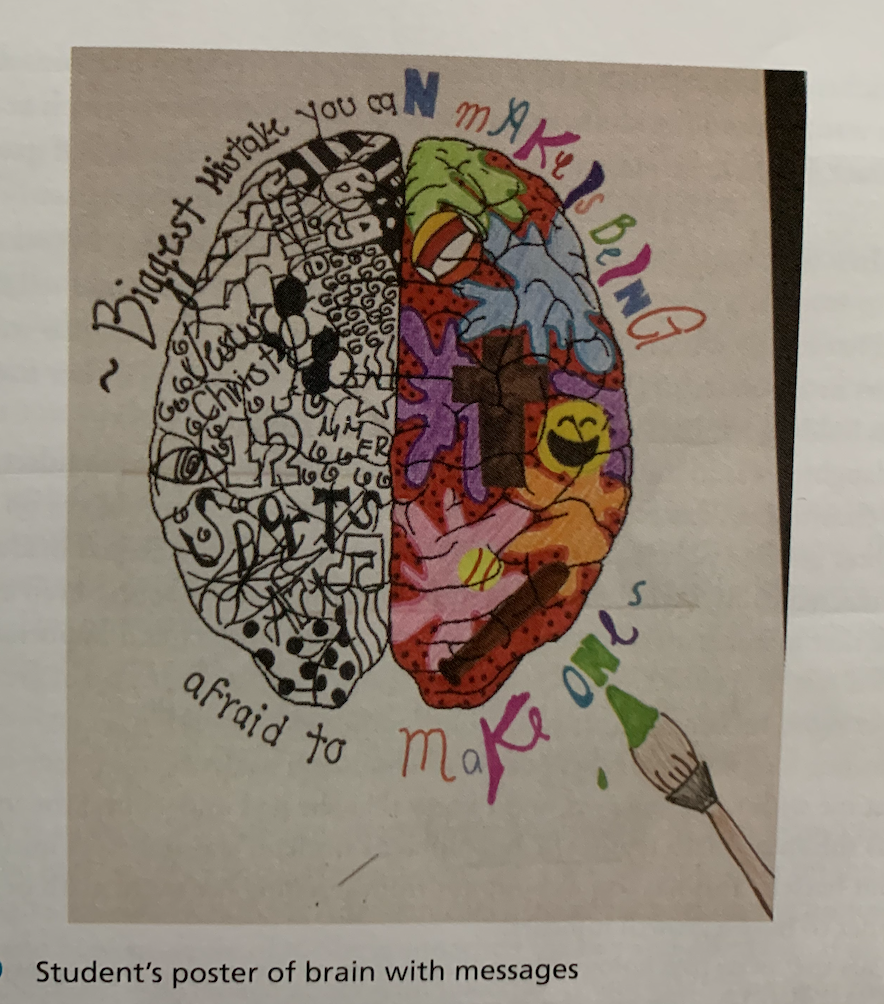
Boaler shared a teacher’s example of how she helped her students understand that mistakes are a way for the brain to make connections, learn, and growth...literally. Students were asked to take a perfectly smooth piece of paper, smash into a ball based on the frustrations they have when they make a mistake in math, smooth the paper back out, and draw colored lines where creases were created. She likened the scattered colored lines to the growth that occurs in the brain when a mistake was made. The students were then required to keep this piece of “brain art” into their math notebooks as a reminder of what happens to the neurons and dendrites in their brain when they make a mistake...they grow and connect.  One student’s brain art said, “Biggest mistake you can make is being afraid to make one” (p. 17). There is so much truth in this statement.


Next, Boaler reminds us a mathematical mindset is not a passive activity. Students must see their role as active participants, trying to understand and make sense of numbers and the patterns they create in the world around them. This productive struggle “number sense and mathematical mindsets develop together, and learning about ways to develop one helps the development of the other” (p. 36). Teaching students their disequilibrium of what they know and what they don’t know yet will be a constant theme while learning, but risk-taking and collaboration with others will be valued.

Moving away from redundant math facts and mindless homework “practice” into engaging relevant tasks that give students multiple opportunities to show what they know starts with how teachers facilitate student’s learning. Rather than walking the reader through an abstract explanation of math instruction, in chapter five she provides five examples from schools across the country who purposefully planned rich mathematical tasks and the impact it had on student motivation and engagement. Boaler states, “These are all cases that I have personally witness among groups of people and that have given me important insights into the nature of the teaching and tasks that bring about such learning opportunities” (p. 58).

The case studies demonstrate how teachers create mathematical excitement and offer critical insights into students discovering the openness of numbers, the power of visualization, making connections, and moving beyond memorization and speed of computation. I know this will be the go-to chapter for teachers because Boaler also shared how to strategically design tasks that create and encourage excitement about mathematics including thinking about how to...
  1. Encouraging multiple methods, pathways, and representations...more than one way.
  2. Encourage inquiry...What if?
  3. Ask before modeling...curiosity is a great motivator.
  4. Use visuals...make it tangible.
  5. Make it low floor and high ceiling...think accessibility for each student.
  6. Can students convince and reason to a partner or group...be skeptical.
Then, Boaler also bravely addresses equity. “All subjects extend to difficult levels; the reason so many people think math is the most difficult is the inaccessible way it is taught. We need to change the thinking around this if we are to open mathematics to many more people” (p. 96). Developing a mathematical mindset should be an opportunity provided to each student. To make math equitable Boaler recommends…
  1. Offering high-level content to all students.
  2. Changing mindsets on who can achieve in mathematics.
  3. Encouraging students to go deeper with their thinking and reasoning.
  4. Moving out of isolation into a collaborative setting.
  5. Providing more positive framing and encouragement to girls and students of color, and
  6. Forget homework…enough said.
Finally, there are times when I read a book and I am so overwhelmed with the ideas and content, but this was not the case with Mathematical Mindsets. I felt a sense of relief when I read the final chapter because Boaler provided a pathway on where to start to support all students developing an appreciation for mathematics. “In this chapter I will provide a set of teaching ideas, drawing from throughout the book, that can help you create and maintain a growth mindset mathematics classroom” (p. 171).

As Boaler’s subtitle states, “unleashing students’ potential through creative math, inspiring messages and innovative teaching” is an opportunity we should all prioritize for our students as learners now and as they continue to learn.

Friday, November 29, 2019

A Duck & An Eagle


Mac Anderson, You Can’t Send a Duck to Eagle School—And Other Simple Truths of Leadership

Mac Anderson’s book, You Can’t Send A Duct to Eagle School was recommended to me by a school leader whose pursuit for equity in education mirrors their daily leadership actions. At first glance, it appears to be a simple text that could be quickly read in one sitting. That was my intent, but after reading “the duck to eagle school” mini-lesson in Anderson’s introduction I realized this first important leadership lesson would be one of many valuable exercises for my personal reflection as a learning leader.

Anderson’s insights are not necessarily written for school leadership, but they certainly can be interpreted that way. Here are the lessons I want to take with me and apply to my own school leadership journey. 


“You can’t send a duck to eagle school...You can’t teach someone to smile; you can’t teach someone to want to serve; you can’t teach personality. What we can do, however, is hire people who have these qualities...Am I hiring a duck thinking they will become an eagle?” (p. VI).
Caring and feelings drive action; the other stuff is just a tool. The bottom line is that the really hard stuff is the soft stuff: it’s the feeling of your employees and customers. That, in the end, is your competitive advantage” (p. 14).
“Simply put, when you have integrity, your words and your deeds match up.” John C. Maxwell says, Integrity is not what we do so as much as who we are. And who we are, in turn, determines what we do” (p. 43).
“One of your greatest responsibilities as a leader is to enable your people to be all they can be. Many times, the push with a little encouragement is all they need” (p. 68)
“...turn up your fun-o-meter! Having fun with your team creates a magical bond like nothing else can do” (p. 78).
“...the difference in a good leader versus a great leader is one word---humility. A great leader is never afraid to poke fun at himself and is always first to give all the due credit to others?” (p. 86).
Teamwork is the ability to work together towards a common vision...It is the fuel that allows common people to attain uncommon results.” (p. 107)


In the last chapter, Anderson provides one of the strongest examples of leadership from the author of The One Minute Manager, Ken Blanchard. Anderson shares the story of visiting Blanchard’s home. At the end of a late evening, Blanchard literally jumps up and excuses himself for at least 20 minutes. Anderson later finds out Blanchard made a late phone call to wish a long-time part-time employee a happy 85th birthday. “Ken saw an opportunity to serve and to thank his people. He doesn’t do it because it’s expected of him; he does it because he truly cares. It comes from his heart, and his people love him for being the servant leader that he is” (p. 119).

A true leader leans forward to be of service to others, not because they get to but because they really want to.

Monday, November 11, 2019

Are We Leading with an Equity Lens? Are We?

Douglas Fisher, Nancy Frey, John Almarode, Karen Flories & Dave Nagel
PLC+—Better Decisions and Greater Impact by Design


In 2011, and again in 2012 I had the opportunity to attend a two-day conference with Richard “Rick” DuFour and his co-presenter and wide Rebecca DuFour. It was early in my administrative career and I remember at the time just being memorized during both sessions. Not only were they a dynamic speaking duo, their message on Professional Learning Communities forever transformed my thinking of teaching and learning.

Moving forward with this new understanding I facilitated regularly scheduled PLCs. I was diligent in using the essential questions of a PLC to guide teacher's conversations. Looking back it was an incredible journey with teachers and teacher leaders. We dug deep into standards, assessments, interventions, and extensions of learning. I loved the process, every minute of it, but as I proceeded something was nagging at my thinking. 

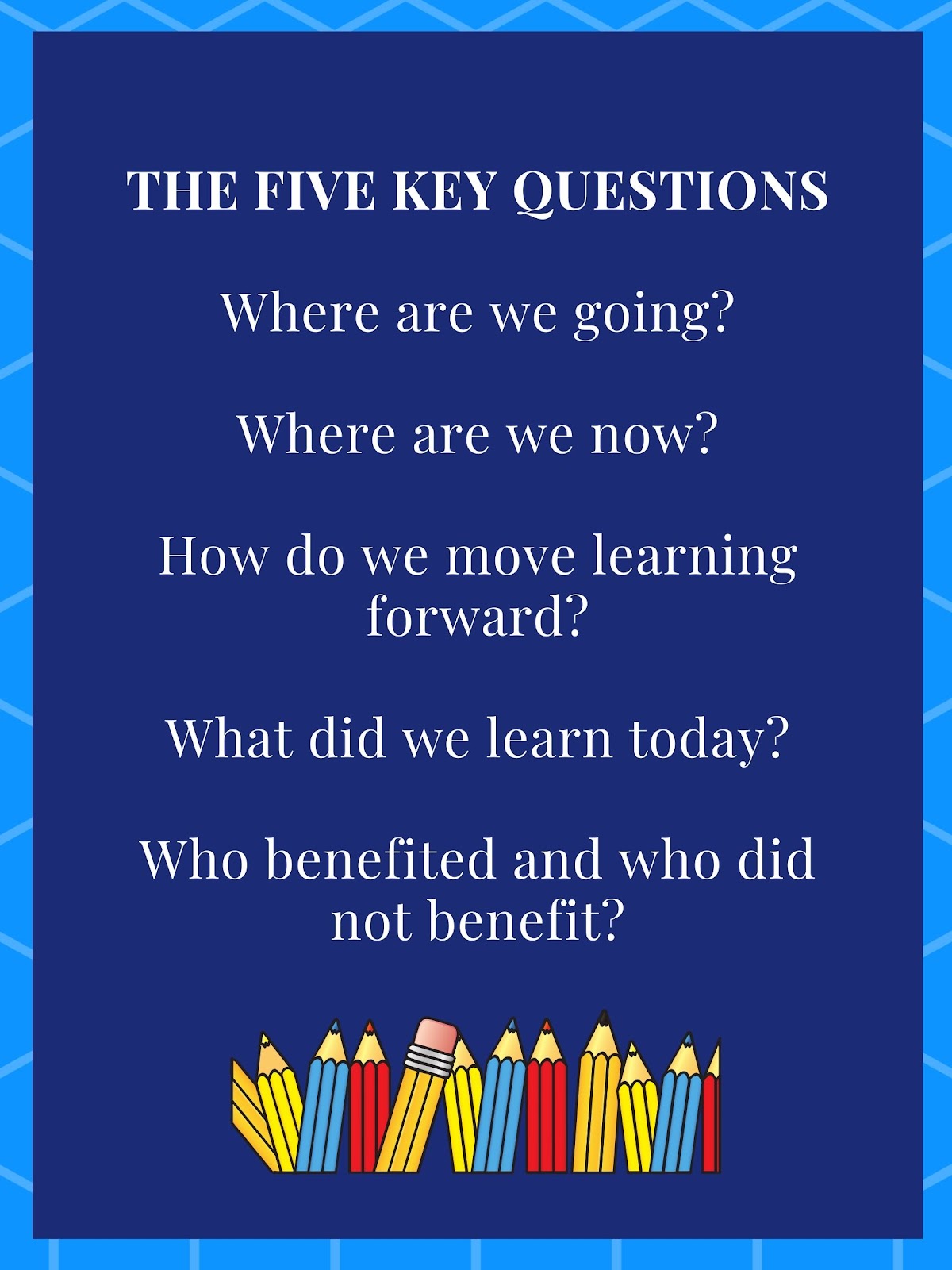
Simply put, where was the conversation around instruction and the effectiveness it had on our students...each of them? In the book, PLC+ Fisher, Frey, Almarode, Flories, and Nagel have answered that question and reframed the original essential questions of a PLC. These new PLC+ questions include not only the impact of instruction but include fundamental values so the learning needs of students AND teachers are purposefully included.


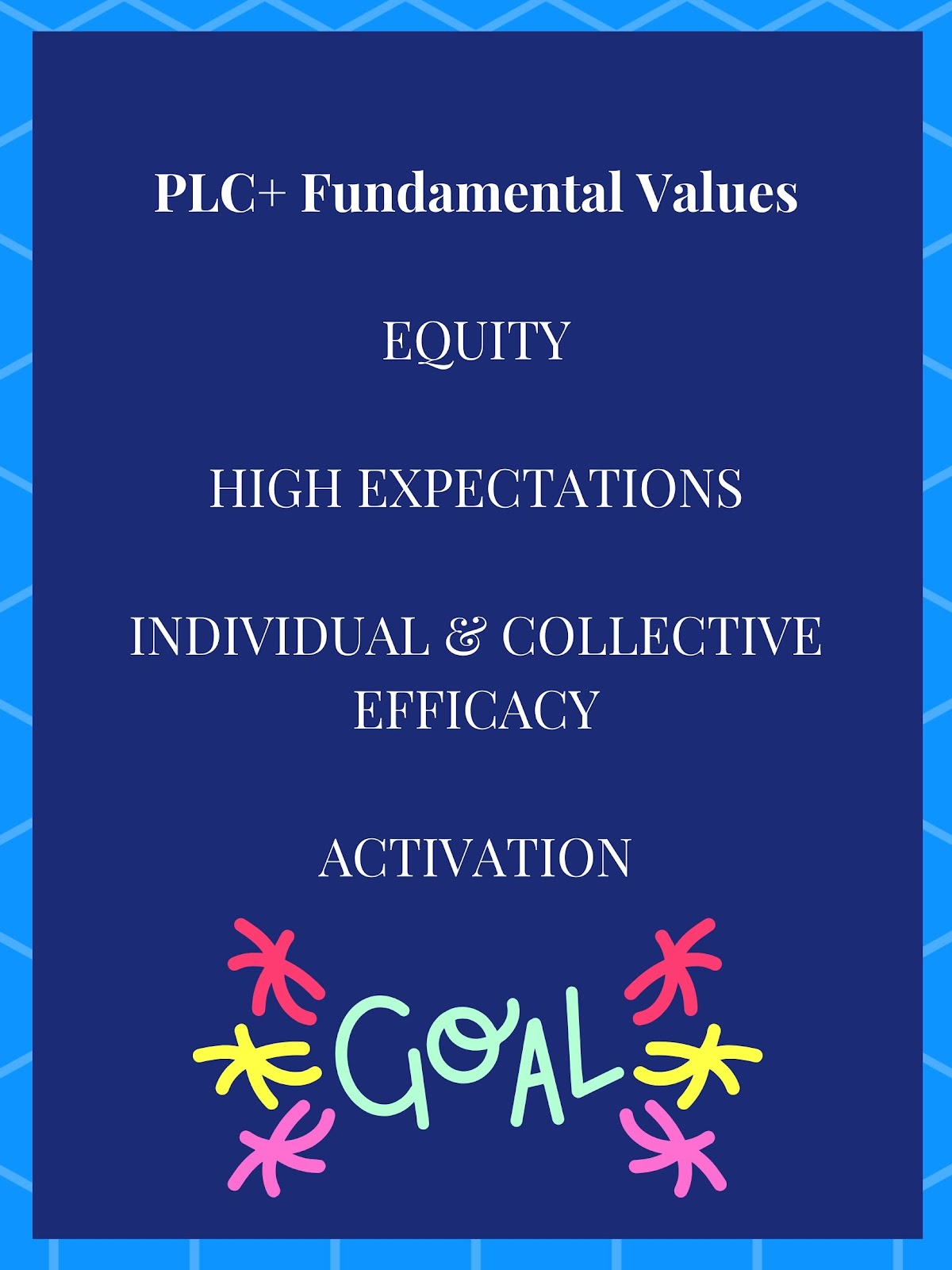
The authors state, “PLC+ provides a framework for the planning and implementation of student learning as well as our own professional learning….The plus emphasizes not only the learning that we want to occur in students but also the teaching and learning component for ourselves as educators. This has been missing from past PLC structures. So, the plus in the PLC+ is you” (p. 8-9).  In addition, each of these new PLC questions is accompanied by “fundamental values” for every PLC+ conversation.


These fundamental values are what I am really excited about as a practitioner who leads PLCs in our school community...analyzing our learning design process with an equity lens. Are we developing and evolving our mindsets in order to established high expectations for each of our students? Are we growing and learning as educators while monitoring and evaluating our instructional impact? Are we focused on moving towards our goals which critical conversations in a culture of trust rather than blame? Are we identifying evidence-based practices that support and values culturally responsive teaching approach to each of our students? Are we?

Our PLCs can not fully respond to a loud YES to each of those questions...yet. And it is such a close yet for a team of educators who are incredibly invested in this collaborative framework. The authors remind the reader in the last chapter, “We never finish” (p. 180). Whew! This statement was an important reminder these questions and values are an “iterative process.” 


Thursday, August 22, 2019

Thanks, Melissa

National Council of Teachers of Mathematics PRINCIPLES TO ACTIONS—Ensuring Mathematical Success for All

When a student says, "I love to read," I instantly smile. When a student says, "I love math," I stop, literally and sometimes abruptly ask, "Why do you love math? So then I lean in and listen, really listen to their responses. Their experiences are telling a new story at our school, and it is more than exciting. It is hopeful. Let me back up a bit.

Two years ago, I was given the book Principles to Action, Ensuring Mathematical Success for All by a consultant now colleague. The authors included nine researchers from the National Council of Teachers in Mathematics. The text is just 117 pages long and includes summaries for guiding principles of school mathematics including; teaching and learning, access and equity, curriculum, tools and technology, assessment, and professionalism (p.5). "It's overarching message is that effective teaching is the non-negotiable core that ensures that all students learn mathematics at high levels and such teaching requires a range of actions at the state or provincial, district, school and classroom levels" (p. 4).


For two years, teachers and I have continued to reexamine our practices and beliefs about teaching and learning mathematics through ongoing professional learning. Our coach and guide frequently used Principles to Actions as a reference tool to not only examine relevant research but to bring to life the teacher moves that are needed to intentionally shift instructional practices for a more student-centered approach. 

The heart of the book's content is in the Effective Teaching and Learning section. In this portion of the book, the researchers share, "Eight Mathematics Teaching Practices provide a framework for strengthening the teaching and learning of mathematics...which represent a core set of high-leverage practices and essential teaching skills to promote deep learning of mathematics" (p. 9-10). Each of these practices has been a game-changer for students and teachers in our school. Observing students persist through "productive struggle" while using "mathematical representations" on "tasks that promote reasoning and problem solving" is well, almost magical.


Although It may be magical, it is not easy. Note the image above from my copy found on page 10. I have highlighted, "Build procedure fluency from conceptual understanding." Moving away from handing out the traditional math facts worksheets for automaticity and mastery first, and then engaging "students in making connections among mathematical representation to deepen understanding" was a big switch. The change did not happen right away, but as our understanding grew, our practices evolved. Over time we learned, "A rush to fluency, however, undermines students' confidence and interest in mathematics and is considered a cause of mathematics anxiety" (Ashcraft 2002; Ramirez et al. 2013). #Truth

Also addressed in the "Essential Elements" section of Principals in Action beginning on page 11 is the unproductive and productive beliefs about access and equity in mathematics. The beliefs that have had the most significant impact at our school have included:

  • Each student's Mathematics ability is a function of opportunity, experience, and effort.
  • Each student is capable of participating and achieving.
  • Each student deserves support to achieve at the highest level.
  • Each student receives differentiated support.
  • Each student is capable of making sense of and persevering in solving challenging mathematics problems and should be expected to do so.
In our continuum of growth in implementing more evidence-based instructional practices, we are moving away from the general term "all" students to becoming more specific about "each" of our students. In my opinion, this is where a mindset begins to change for teachers and leaders. When you personalize this statement, you tend to reflect inward and reexamine unproductive beliefs than can negatively impact learning or "limit student access to important mathematics content and practice" (p. 63). 

Finally, I must confess it took me two years to finally pick up the book and read it in its entirety. Oh, what I missed on my journey to be and become a better leader who supports teacher leaders in mathematics. My wish is for others who are trying to lead and learn will take the time to absorb the books content to impact learning for each of their students.