Thursday, July 13, 2023

MTSS for EACH Student

 Amy McCart - Dawn Miller LEADING EQUITY-BASED MTSS for All Students.


I completed my teaching degree in 1999. The opportunities I have experienced as a teacher, instructional coach, and school leader have been incredible. I will continue to contribute my love of teaching students how to read AND supporting teachers with the knowledge and skills to be reading teachers with my earliest experiences. We created equitable student-focused systems, attended target professional development, and created outcome agreements so each student would grow, thrive, and excel as a reader. Looking back, we were at the earliest stages of creating an MTSS or Multi-Tiered Systems of Support System. 


ChatGPT quickly summarized the book this way. 


“Leading Equity-Based MTSS for All Students" by McCart and Miller provides a comprehensive guide for educational leaders to implement a Multi-Tiered System of Support (MTSS) focusing on equity. The book emphasizes the importance of addressing and eliminating systemic barriers to learning and achievement while promoting inclusive practices for all students. It offers practical strategies and tools for leaders to develop a culture of equity, create a collaborative MTSS team, implement evidence-based interventions, and monitor progress through data-driven decision-making. With a strong emphasis on equity, the book equips leaders with the knowledge and skills necessary to ensure that all students, regardless of their background or abilities, have equitable access to high-quality education and opportunities for success.”


So whether you are new to your position, are new to a school community, or need new thinking to guide you and your school team to create equitable outcomes for each of your students, Leading Equity-Bases MTSS gives you a guide for your transformation. The authors share, “Together with them, we devised and honed the practices that ultimately defined our Schoolwide Integrated Framework for Transformation (SWIFT) Education Center’s approach to equity-based MTSS” (p. Xi). The best part is that the resources and more referenced in the book are available online at the SWIFT Education Center


The authors also remind school leaders of the importance of the language we can use to project their mindset and belief about teaching and learning. When structuring your tiered instructional systems for decision-making, McCart and Mill suggest rather than using the terms ‘Title I instructional supports’ or ‘special education instructional supports,' make categories for skill areas students have not yet acquired. “Teams select instruction and support to meet identified skill needs, not based on other student characteristics” (p. 68). 


In addition, getting to the heart of equity, a school leader has an incredible responsibility to continually use data during your school’s transformation. The authors provide data routines “to be used across the entire system” for school-wide, grade-level, and classroom student-focused decisions (p. 93). While organizing, processing, and acting on your data for universal, additional, or intensified support, utilize essential questions to plan and “continuously strengthen first instruction in academic, behavioral, and social-emotional domains” (p. 96). 


These are just of few examples of the deep implementation practices found in the research in Leading Equity-Based MTSS. McCart and Miller also provide insights through ‘field trip” vignettes from practitioners currently engaged in the work. The book closes with Dawn’s why.


Dawn’s Why MTTS

“We benefit from those who have put 

evidence-based practices in our hands. 

It is up to us to never doubt

that we can figure out 

how to make it work in our system
—we have to dig deep, lean on each other,
and maintain focus on what matters.
We got this.”

Wednesday, July 5, 2023

A School Leaders Impact

 Janet Clinton, Dylan Wiliam, Jenni Donohoo, Michael Fullan, Zaretta Hammond, Peter M. DeWitt, Douglas Fisher, Nancy, Frey, Dominique Smith, Laura Link, Sugata Mitra, and Jim Knight, Edited by John Hattie & Raymond Smith 10 MINDFRAMES for LEADERS The VISIBLE LEARNING Approach to School Success


What has been stated repeatedly by leading practitioners and researchers in education is what we as leaders choose to do matters immensely for our students and the teachers we have the opportunity to serve and support. They advocate for the laser focus needed on the essential components of teaching and learning while reminding us to cancel the relentless noise of multiple distractors.


This is our work. 


10 Mindframes for Leaders provides the key insights and actions for school leaders to pursue and engage. “Mindframes are our Why. They represent an internal set of beliefs we hold near and dear to our hearts.” The Visible Learning strategies and process are the How to our Why. And What refers to the result—the outcomes we intend to accomplish or the evidence of our collective impact on student progress and achievement.


One Mindframe is featured in each of the ten chapters, authored by a treasure of educational leaders. The chapter starts with a relatable school vignette, followed by a detailed description of the Mindframe, factors from the “Visible Learning” research supporting the Mindframe, and where a school leader can start. The end of the chapter features a  checklist with exercises you can work on independently or in collaboration with a school leadership team. 


The power of one’s impact as a school leader is stated repeatedly in the title of each chapter. The word “I” starts each chapter, but considering the power of collective action, the reader/leader could collectively use “We.” 


“I am an evaluator of my impact on teacher/student learning.”—Janet Clinton

“I see assessments as informing my impact and next steps.”—Dylan Wiliam 

“I collaborate with my peers and my teacher about my conceptions of progress and my impact.” —Jenni Donohoo

“I am a change agent and believe all teachers/students can improve.”—Michael Fullan

“I strive for challenge rather than merely ‘doing my best’.”—Zaretta Hammond

I give and help students/teachers understand feedback, and I interpret and act on feedback given to me.”—Peter M. DeWitt 

“I engage as much in dialogue as in monologue.”—Douglas Fisher, Nancy Frey, and Dominique Smith 

I explicitly inform teachers/students what successful impact looks like from the outset.”—Laura Link 

“I build relationships and trust so that learning can occur in a place where it is safe to make mistakes and learn from others.”—Sugata Mitra

“I focus on learning and the language of learning.”—Jim Knight 


Leaders can align a Mindframe to where greater understanding is needed for success in our schools. For example, chapter one evaluates your impact on teacher/student learning. The author of this chapter, Clinton defines evaluative thinking as “a cognitive process; it is a way of being” (p.14).  Leaders who think evaluatively engage in open questioning with an effective size of 0.48 to “improve the current status during the process of leading teaching and learning” (p. 15). Using authentic questions allows leaders to learn what teachers know and do not know…yet. 


“Effective school leaders 

talk about their Mindframes and their beliefs 

and prove them through 

their practices and skills.” 


Clinton provides the reader with five core evaluative questions for school leaders. These authentic questions are strategic and utilized to generate the teacher’s thinking on student learning, evidence-based interventions, seeking evidence, monitoring impact, and considering others’ perspectives. Most importantly, the center of the student’s learning is at the heart of each question.


“The focus of evaluative thinking, 

in the context of schools, 

always has learning at its core.” 


Mindframes—your internal set of beliefs about your role as a school leader—determine the high-impact leadership practices you chose to implement” (bc). 


“It’s not what you do, 

it’s how you think about what you do.”


Choose well. 


Monday, May 22, 2023

Opportunities to Flourish in School and Life


Bryan Goodwin - Kristin Rouleau The New Classroom Instruction THAT WORKS The Best Research-Based Strategies for Increasing Student Achievement


I recently listened to a presentation on the critical elements of math instruction.

The presenter projected an Instructional Progression that demonstrated a teaching and learning responsibility framework for math. The progression began with Sensemaking, followed by the Gradual Release of Responsibility Framework. A question that lingered for me during the session was, What does current research tell us about the teaching strategies that have the greatest impact on learning, and when and how do you embed them during this instructional structure? 


The answer to my question came while reading, The New Classroom Instruction THAT WORKS, The Best Research-Based Strategies for Increasing Student Achievement, by Bryan Goodwin and Kristin Rouleau and co-published by ASCD and McREL International. Carefully analyzing new evidence-informed research, the authors identified strategies “shown, scientifically, to support better learning for diverse students” (p. 7). Guiding principles are highlighted on effectively applying the 14 teaching strategies, organized into six phases of learning. “Each chapter offers a brief overview of the phase and the cognitive science behind it, then shares the teaching strategies aligned with that phase of learning. For each strategy, we offer guiding principles from research and practical tips for applying it into your classroom” (p. 9-10). 


The book highlights two helpful visuals. The first aligns each learning phase with the research-based teaching strategies (Figure 1.1), The second second image provides an instructional pathway using the strategies for instructional design and delivery for either declarative or procedural knowledge (Figure 7.2). ASCD offers more insights and additional resources about The New Classroom Instruction THAT WORKS, including a list of each teaching strategy and a study guide. McREL published Discovery Education, A Planning Guide for The Six Phases of Learning, featuring the graphic image below.


The authors caution and remind the reader, “These strategies are, of course, most likely to stick when you build them into the design and delivery of every lesson and unit of study. Doing so will also help you integrate these strategies together into a powerful ‘bundle’ of proven teaching techniques and effective learning opportunities for students…Few, if any, were stand-alone strategies. Rather, they were incorporated into a large set of strategies that, together, had powerful effects on student learning” (p. 136). 


“When you bring evidence-based practices into your classroom, you can achieve the purpose that drew you into the noble profession: changing students’ lives by ensuring they have opportunities to flourish in school and life.”


Sunday, April 23, 2023

Heading Upstream

 Dan Heath UPSTREAM The Quest To Solve Problems Before They Happen

Heading upstream. Working smarter, not harder. It makes sense, but often in the moment, we are blinded by the urgency in front of us. In Dan Heath’s recent book, Upstream, The Quest to Solve Problems Before They Happen, he reminds us of the parable of two men saving several children who are floundering in the water as they arrive one after the other from the swift current upstream. Near exhaustion, one man leaves, leaving the other in a panic, realizing he will now be alone in his rescuing efforts. When asked why his buddy is leaving, his friend answers, “I’m going upstream to tackle the guy who is throwing all these kids in the water.” 


OpenAI summarizes Upstream in this way. “Heath argues that many of the biggest problems we face as individuals, organizations, and society as a whole could be avoided or minimized if we focused on taking proactive measures upstream.” His goal is to encourage us to shift our efforts upstream “to prevent problems before they happen '' rather than “react, react, react” after the fact.  As a school leader, it makes sense. Much of our work involves systems thinking. Rather than having a fifth grader leave our school community as a non-reader, we create foundational teaching and learning systems to avoid that inequity from happening. 


I summarized Heath’s Upstream ideas in this way to organize my thinking and next steps. It starts with owning my own mindset. Some days are tough. We may not have created the challenge, but we can shift our thinking toward equitable outcomes. 


What often makes me smile, is the solution is usually not as complex as it appears. Leaning in, listening to others, and gaining a deeper perspective, the path to a solution for students and staff can simply be a “move your chair” adjustment. Providing ongoing professional development for teachers and adjusting the schedule to include community circle time for students moves us upstream. A bonus, it allocates time for the commitments we have prioritized.


The effects of the pandemic are still lingering for our students and staff. As educators, we have our theories, but the aftermath is real and leading us to a new normal. Change is complex, indeed, with no quick fixes, but if we accept it as an opportunity, we can move forward in a new way using what we now know and can do. Distributing 550+ Chromebooks in just a few days changed the outcome for students, eased the ‘suffering’ of parents, produced a different teaching and learning system we didn’t even know was possible, and moved us all upstream. 


Looking back, we realized, “We can do hard things.” Although without reflection, the struggle goes unappreciated and devalued. Instead of going back to what we have always done, our course remains the same, and feedback from students, teachers, staff, and families becomes our tool to continue to learn and prioritize our commitments, goals, and values in a new and better way.


Monday, February 27, 2023

Contributions to the Science of Reading

 The Reading League Journal Multidisciplinary Contributions To The Science of Reading Volume 4 Issue 1 January/February 2023


This week, I received an unexpected gift as a principal, two snow days in a row, snuggled up next to a weekend! For those in education, you know what this means, rest and time. Whether it's mental health or numbness on the couch with ultimate control of the remote, your day is now a reprieve from the sense of urgency. 


That’s the first day. On the second day, you pick up speed and realize your list of to-dos is waiting and will not go away. So you dive in. My inbox held more than 100 items, with many needing immediate attention while just a few required a simple click of the archive stroke, immediately reducing the load. Knowing inbox zero is a myth (putting them into folders for another time doesn’t count), I narrowed it down to 17 urgent items that won't go away until responses are received. Which ultimately left me time to do what I love: read!


My rambling story has a point. I picked up the January/February 2023 The Reading League Journal, Multidisciplinary Contributions to the Science of Reading. I heard imaginary laughter, but I remained intrigued by each published article. Editor Emily Solari, Ph.D., encouraged readers to expand their knowledge of the many fields that contribute to the science of reading. 


As is my habit, I started from back to front. Many articles interested me and added to my understanding of the science of reading, but there were three favorites. Elana Gordon’s account, There’s Still Time: A Science of Reading Journey, was genuinely inspiring. Balanced literacy has been a pillar of instruction for many years, and asking teachers to make pedagogical shifts is difficult. Building teacher capacity is an investment in our future and will take time, but the alternative is no longer an option.” Knowing better and doing better for students requires a learning mindset, which Gordon demonstrates.


After reading, The  Best Practices for Improving Language and Literacy Outcomes for English Learners by NCIL (National Center on Improving Literacy), I made a mentai list of colleagues who would find it insightful too. The article opens with, “ As classrooms across the United States are becoming more diverse, it is critical that educators are able to successfully address the unique language and learning needs of English learners and provide efficient and high-quality support when gaps in achievement are identified.” 


NCIL then shares the research findings of instructional practices highly recommended for teachers to use and implement in their classrooms to support ELs to “acquire the language and literacy skills needed to succeed academically.” All students, especially our language learners, should receive the following:

  • Comprehensive, evidence-based language and literacy instruction as part of their core curriculum (PA, phonics, vocabulary, oral reading fluency, comprehension, and writing).

  • Carefully choose academic vocabulary that is revisited through a variety of activities. 

  • “Educators should provide ELs with opportunities to build content knowledge and language competence in tandem (Baker et al., 2014). Integrating reading, writing, speaking, and listening as they are learning.

  • Structured writing instruction should be a regular structured priority with multiple opportunities to “develop written language skills.”

  • For those students who struggle daily, small-group intervention teacher-directed instruction can provide scaffolds that make learning easier for ELs.

  • A student’s home language, prior knowledge, and cultural and linguistic knowledge are assets to be utilized as an area of strength for ELs. 


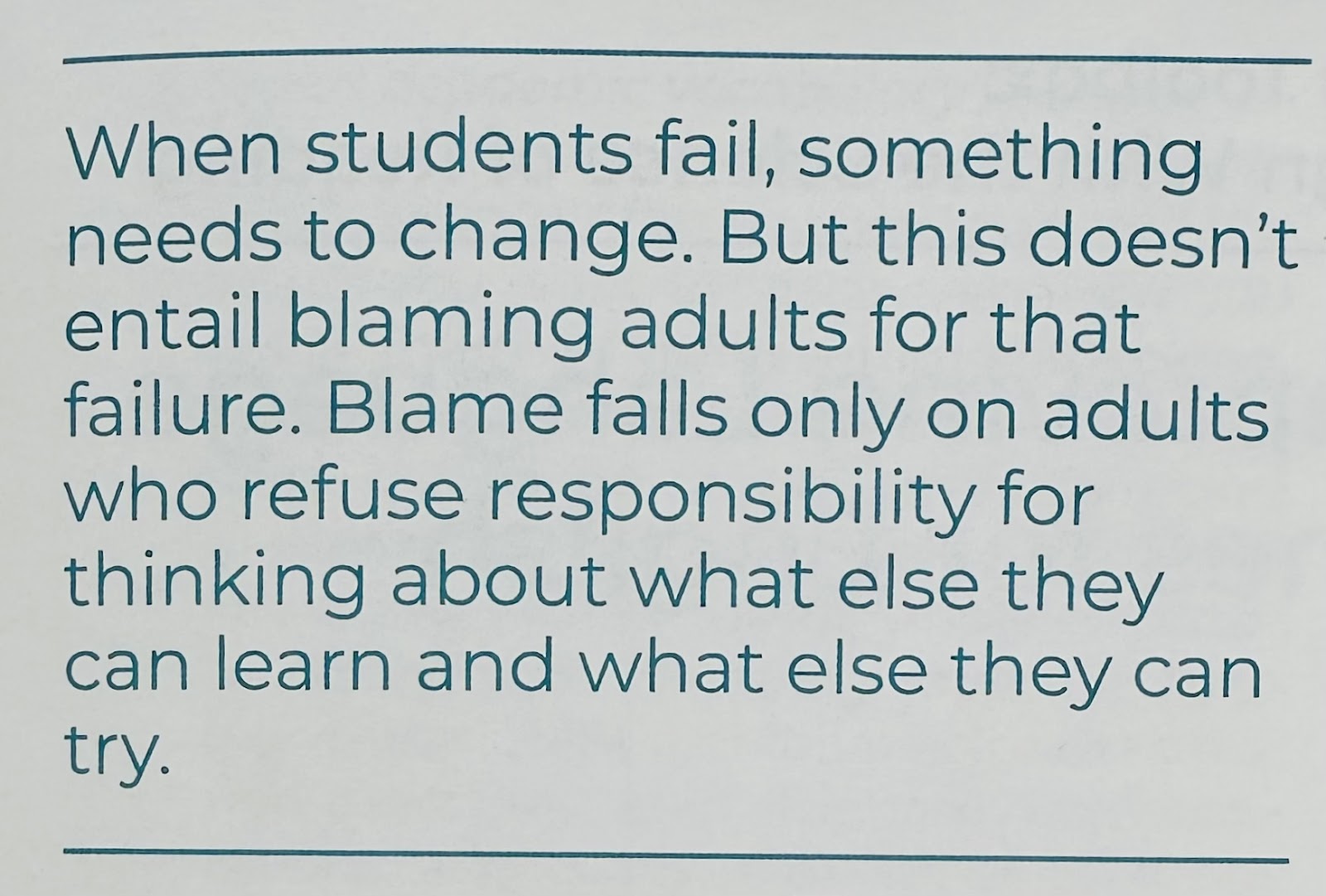
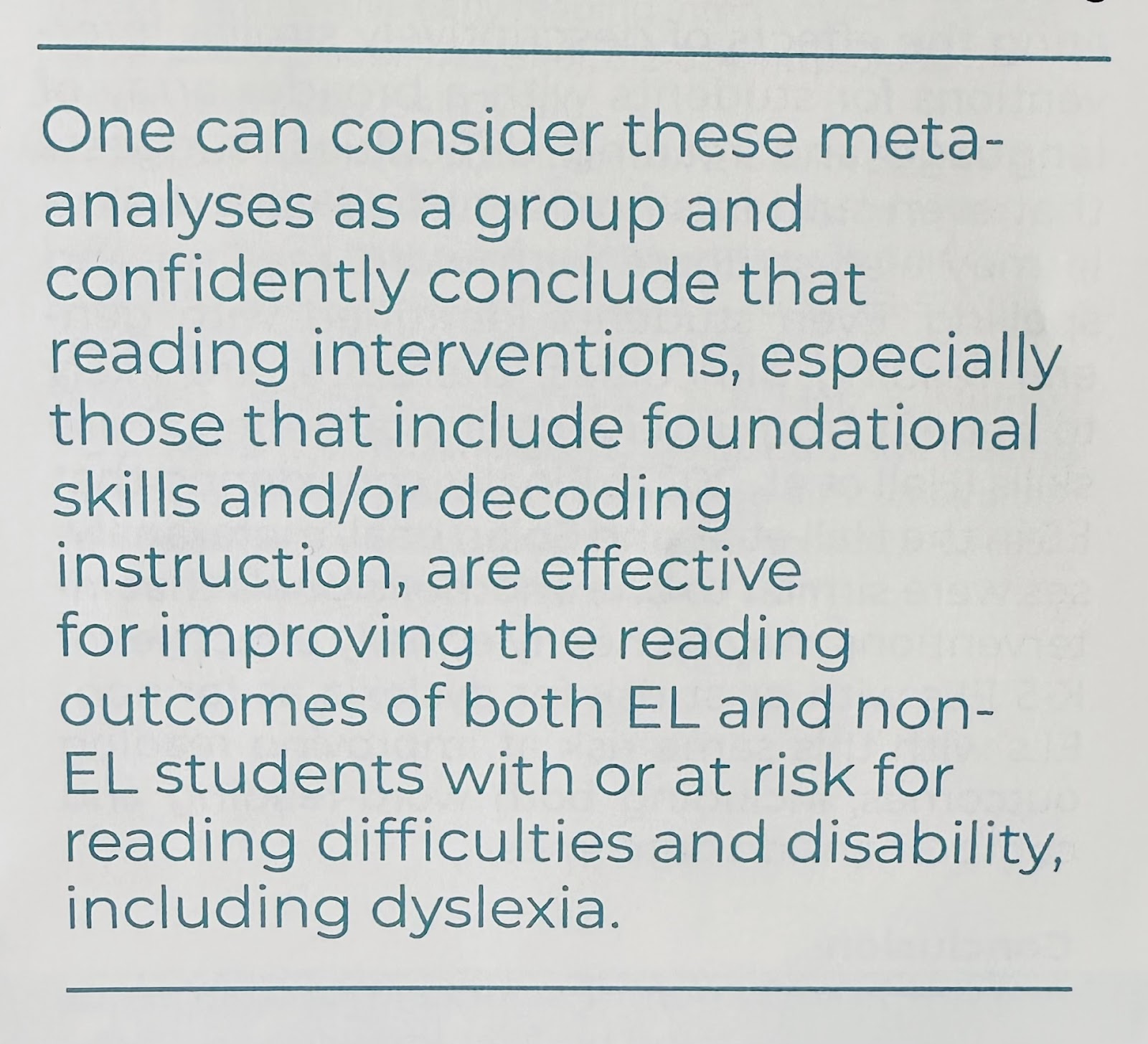
Lastly, I reviewed “Moving the Science of Reading Forward: A Review of Two Recent Meta-Analyses of Reading Intervention Research. The details are intricate and might require repeated readings to absorb, but it brought me back to my dissertation days and made me realize my EdD coursework was worthy. “The purpose of a systematic review is to understand the amount and quality of existing research on a topic, look for patterns across studies, and identify areas where more research is needed.” “As with any branch of science, the science of reading is not a fixed body of knowledge. Rather, researchers continue to break new ground such that ‘the accrual of scientific knowledge related to reading is ever evolving.’”


Solari closes the journal’s introduction with, “We hope you enjoy this special issue of The Reading League Journal. Happy reading!” I would agree after reading each article, and I felt more optimistic about where educators are headed as we learn more about the Science of Reading.


Sunday, January 29, 2023

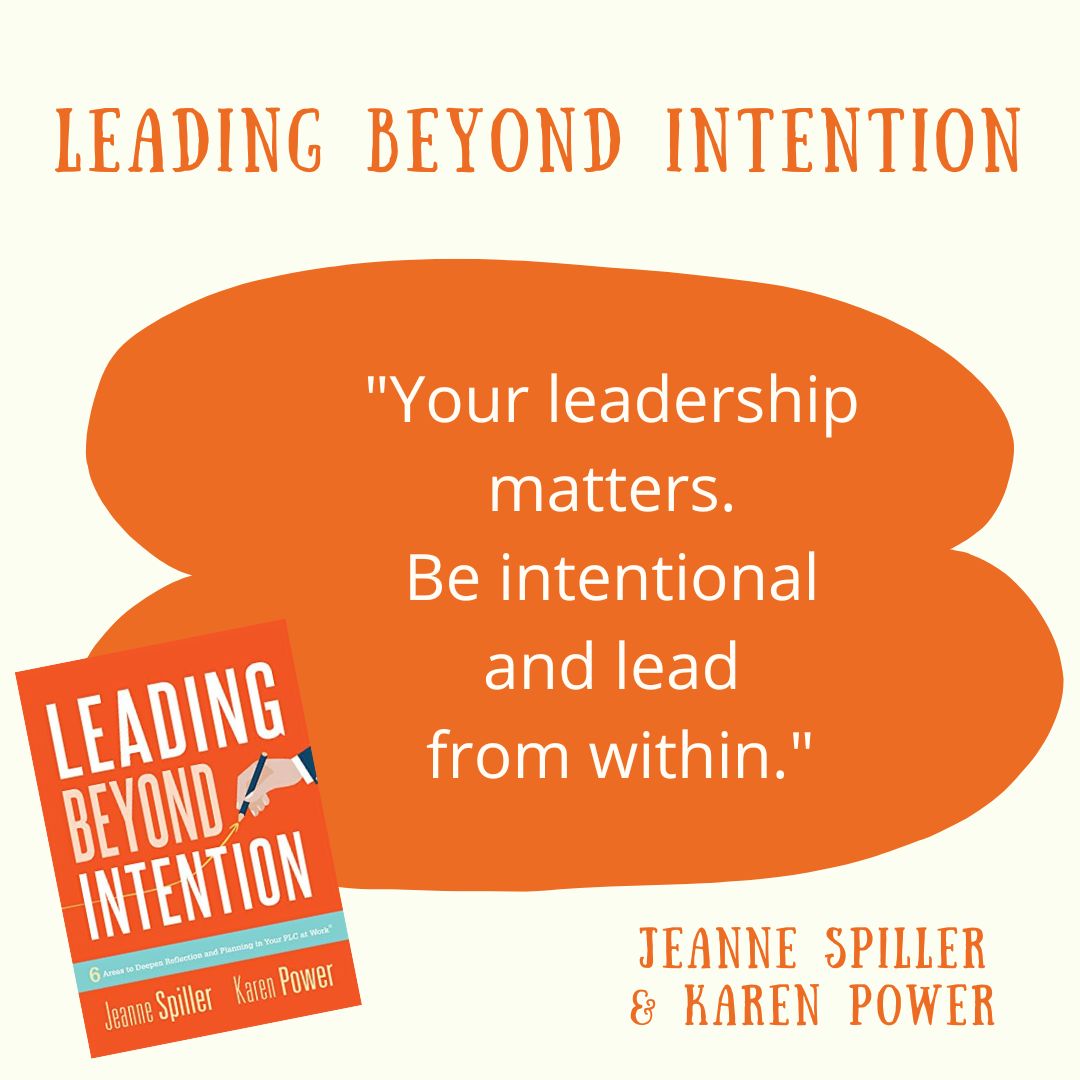
Deepening Your PLC Leadership Reflections

 Jeanne Spiller & Karen Power LEADING BEYOND INTENTION 6 Areas to Deepen Reflection and Planning in Your PLC at Work

A few years back, my sister-in-law came for a visit to our beautiful new school. Admiring the light-infused windows and open shared spaces were a few of the highlights of our tour, but the real excitement occurred in our conversation. During her visit, teachers were on sight and working in clusters throughout the school. It was a non-student day, and she wanted to know what they were all working on so intentionally. 


It was then I began our ongoing Professional Learning Community conversation. I outlined the four essential questions of a PLC our teachers meticulously navigated to measure and monitor the impact of their instruction on student learning. What they did was critical to the process, but more importantly, how they navigated each step together was enthusiastically changing our school culture.


I remember the excitement of learning about the PLC cycle as a school leader and going through the process with teachers. I made more than a few missteps in my enthusiasm. The book I wish I had in hand was  Leading Beyond Intention, 6 Areas to Deepen Reflection and Planning in Your PLC at Work by Jeanne Spiler and Karen Power. Following their recommended approach would have greatly benefited my understanding and implementation of a PLC.


Spiller and Power remind the reader to; “Carefully consider how aligned your efforts are to what you truly believe and want to accomplish,” starting with bravely leading from within. “Brave leaders pay attention to what is happening in their schools and address it directly and honestly,“ “encourage constructive dissent and healthy debate,” and “listen more effectively and truly make connections.” Brave leaders,“Reflect carefully on the conversations and decisions you make throughout the day” and understand “you will not make everyone happy.” Still, the need to “get comfortable with leading change and getting messy” is instrumental to your school's growth as leaders and implementers of the PLC process. 


Asking strategic questions as a leader can unlock greater understanding and underutilized pathways. “The right question can be a catalyst for powerful reflection, problem-solving, and ultimately change. Learning to ask questions that will elicit self-exploration and unlock potential will help strengthen your practice as a leader and help set up others for success. Using questions demonstrates you are curious and want to know more about the situation and that you, the leader, seek to understand  the teacher’s challenge, problem, or concern.” Coaching through inquiry as a leader with those you serve and support is an intentional practice of leaders implementing change effectively. 


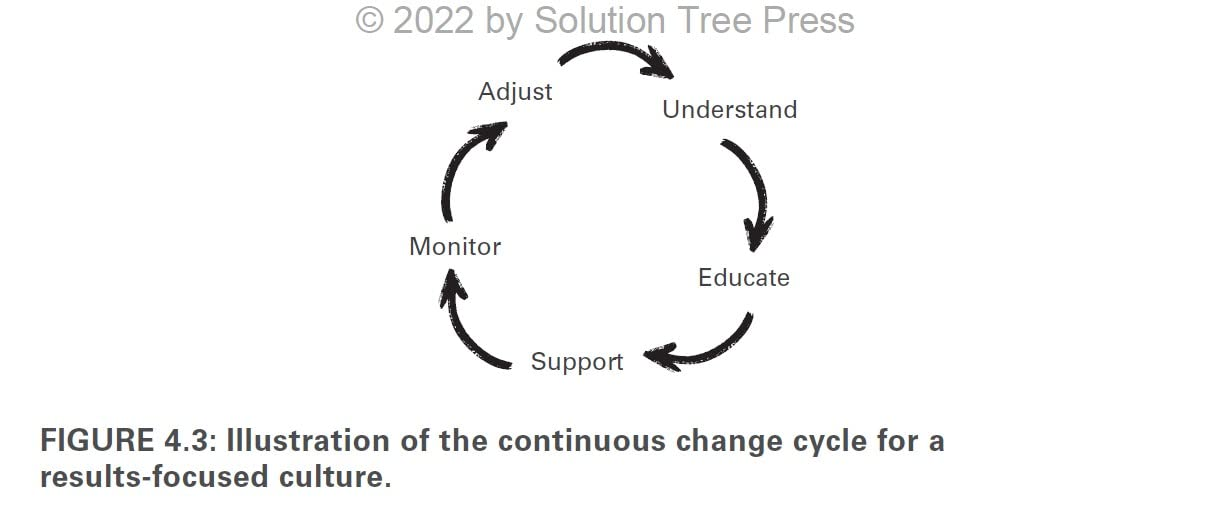
The authors share how using data to guide these conversations holds us all accountable for the equitable outcomes needed for each student. We can collectively have the best intentions, and cycle through the essential questions, but if there is no evidence of student learning, we have lost our way. “Understanding your staff’s current level of knowledge skill and will provide opportunities to develop, share, and empower expertise within your system.” Diving into what authors Spiller and Power refer to as “ the continuous change cycle for results-focused culture” is foundational the a highly effective PLC.


What makes Leading Beyond Intention meaningful to school leaders is the multiple caveats of experiences and lessons learned from schools and districts who continue to navigate their school improvement journey. Each of these school stories highlights the value of,’ leading from within to build strong accountability practices, deepening the PLC process as you take the time to build a shared understanding of the purpose of the work, and intentionally create opportunities for both skill and will to develop.” 


The story of my sister-in-law continues. Shortly after she left my state to travel back home to her family and school community she enthusiastically shared what she had seen and heard. It was at that time they began their own PLC story and slowly over time built great momentum to facilitate the change that needed to occur in their school and classrooms for a “result-focused culture.” Just recently I received a text from her where she excitedly shared their school was recently recognized as a Model PLC School. My heart soars! I was thrilled for her, the teachers, the principal and most importantly their students!  


“Leadership is hard, Really hard. Grueling, exhausting, bewildering, and complicated, just to name a few of the descriptive words that come to mind. On the flip side, it is also rewarding, worthwhile, necessary, and valuable.” Leading Beyond Intention is a recommend read for leaders who want to enrich their reflections for planning as you develop and refine your own Professional Learning Community practices. 


Monday, January 2, 2023

Captain D. Michael Abrashoff It’s Your Ship Management Techniques from the Best Damn Ship in the Navy


There is something about walking into a generously stocked bookstore. When you enter, take in the view of rows and walls of print, and wander about, it is an experience worth savoring. I imagine we all have our favorite sections that we unconsciously gravitate towards. My path includes books with lessons learned and experiences shared with those in leadership positions. I find them compelling and inspiring, and they often provide ideas to consider in my leadership journey. 


With multiple leadership books lining the shelves, I frequently seek guidance from close colleagues on what to read next. They rarely disappoint. Although, their recommendations sometimes are surprising, as was the case with It’s Your Ship, written by Captain D. Michael Abrashoff, former commander of USS Benfold. I know absolutely nothing about leadership in the United States military, but I was encouraged to study Abrashoff’s example and insights into my role as a school leader. 


“Exceptional leaders have always been rare, but they can be made as well as born, and the Benfold story is a case in point…The book's structure narrates episodes in Benfold’s two-year voyage through the unchartered water of leadership and is organized around the lessons learned. A chapter is given to each one: Lead by example; listen aggressively; communicate purpose and meaning; create a climate of trust; look for results, not salutes; take calculated risks; go beyond standard procedures; build up your people’s confidence; generate unity; and improve everyone’s quality of life as much as possible” (p. 5). Three of his universal leadership insights strongly stood out for me. 


My strategy while reading was every time I read the word Benfold, I mentally replaced it with the name of our school. It was simply uncanny how often it made sense. Abrashoff shared an important early leadership lesson. “When I took command of Benfold, I realized that no one, including me, is capable of making every decision. I would have to train my people to think and make judgments on their own. Empowering means defining the parameters in which people are allowed to operate and then setting them free” (p. 27). For my first insight, I found this to be profoundly true in our school community. When shared, leadership empowers teachers and staff to unleash their potential to learn, grow, and lead!


As he progressed in his role as Captain of the Benfold, he made a pivotal decision that solidified my second universal leadership insight. He stated, “I decided that my job was to listen aggressively and to pick up every good idea the crew had for improving the ship’s operation…After all, the people who do the nuts-and-bolts work on a ship constantly see things that officers don’t. It seemed to me only prudent for the captain to work hard at seeing the ship through the crew’s eyes: (p. 55). Yes, a school leader leans in, listens attentively, and builds connections that link you rather than widen a potential divide. It takes time you have little of, but it provides incredible insights into the strengths of staff. 


Abrashoff also relentlessly focused on the bottom line aligning with my last insight. “I was determined to turn the ship into an institution of continual learning, which entailed a systematic and methodical analysis of what worked and what didn’t” (p.104). Utilizing evidence-informed research and applying it to your daily teaching and learning practices is necessary as a school leader to ensure equitable outcomes for each student. Although one step forward often includes one step back as we incorporate new strategies into our routines. Abrashoff understood this, too, as a valuable leadership lesson. “I worked hard to create a climate that encouraged quixotic pursuits and celebrated the freedom to fail. I never once reprimanded a sailor for attempting to solve a problem or reach a goal. I wanted my people to feel empowered so they could think autonomously” (p. 105-106). 


Nine years ago, I was given the challenge to lead as a turnaround principal. I entered a school community where morale was low and student outcomes were even lower. Now I understand likening this to commanding a ship capable of defending our country in war does not compare. But when I read Captain Abrashoff’s following words and deeply felt the similarities between our experiences. “Previously, people were fighting to get off the ship. Now they were fighting to stay aboard. That kind of desire translates into performance. I am absolutely convinced that with good leadership, freedom does not weaken discipline–it strengthens it. Free people have a powerful incentive not to screw up” (p. 73).