Thursday, July 29, 2021

Infinite MIndset

 Simon Sinek THE INFINITE GAME


Simon Sinek’s book Start With Why changed how we move forward with our shared leadership framework at our school. We have learned to begin our decision-making conversations with the relevancy of why they positively impact students. We then proceed to the how and what that would look like and feel like for students. It has been an incredible component of our turnaround school improvement initiative. Leaning into Sinek’s newest findings in The Infinite Game, the goal was to continue to refine our pursuit of equitable outcomes for students. Balancing our accountability for student achievement as we plan forward with a relentless vision of each child being and becoming a learner who reads is an agreed-upon worthy pursuit for our team. 


“If there are at least two players, a game exists,” and Sinek defines and describes these two types of games, a Finite Game and Infinite Game. The Finite Game celebrates the end by declaring a winner who followed the rules, earned the most points, thus winning the game. The Infinite Game never stops as rules continue to evolve with no declared winner as they build a legacy together. While reading, I envisioned my role as a school leader with the reality of the tug and pull of having to play both games. The Finite Game includes being accountable for student achievement of the summative end-of-year state testing. At the same time participating in the never-ending Infinite Game of developing students who read well and often (p.3). 


When considering our mindset in each game, Sinek offers these insights. We don’t always get to choose whether a game is finite or infinite, and we get to decide if we want to join the game. If we do decide to join, we can always choose a finite or invite mindset. A leader who wants to adopt an infinite mindset must advance a just cause, build a trusting team, study your worthy rivals, prepare for existential flexibility, and demonstrate the courage to lead (p. 24-25). 


I could rewrite Sinek’s statement to reflect my role as a school leader. 


“A finite minder leader used the company’s performance to demonstrate the value of their own career. 

An infinite indeed leader uses their career to enhance the long-term value of the company” (p. 19).

to

A finite minder leader used the school’s performance to demonstrate the value of their achievement

An infinite-minded leader uses their achievement to enhance the long-term value of each student. 


A school leader who wants to adopt an infinite mindset can advance their just cause of each student becoming a skilled reader by; 

building trusting instructional teams, 

studying worthy school rivals (You kids are doing better than mine. What are you doing?”),

demonstrate flexibility as you continue to learn how to meet each of your learner’s needs,

and be vulnerable by showing the courage to lead. 
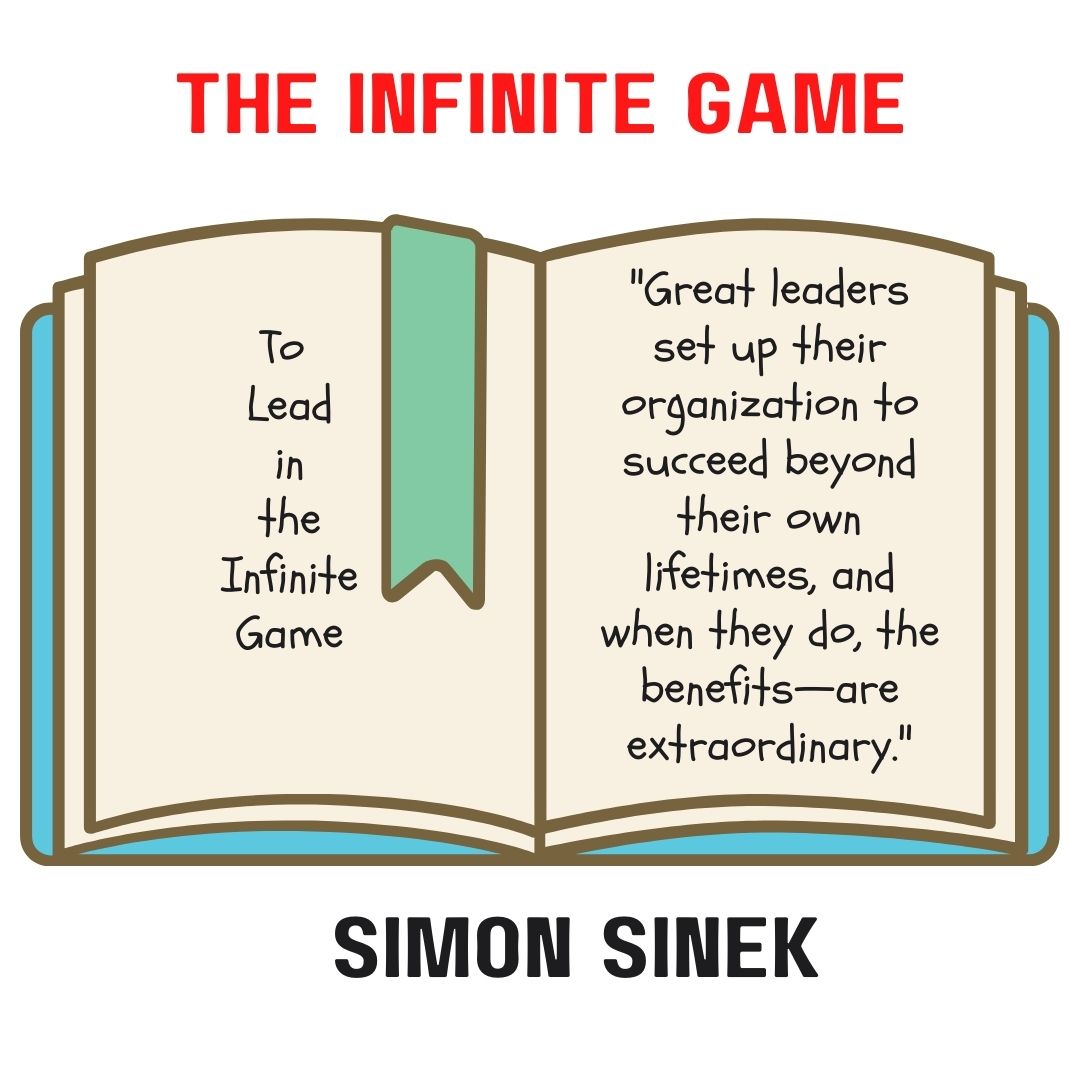
Great school leaders set up their school communities to succeed beyond their lifetimes, and when they do, the benefits to students (and staff)—are extraordinary. 


Sunday, July 25, 2021

Most Powerful Question in Education

 Karin Chenoweth districts that succeed—breaking the correlation between race, poverty, and achievement  

It’s happening in school districts across our country, and it’s inspiring. District and school leaders are breaking “the correlation between students’ backgrounds and achievement. That is to say, they all serve students of color and students from low-income backgrounds, and they are all high achieving or rapidly improving” (p. 129). In Karin Chenoweth’s book, districts that succeed, breaking the correlation between race, poverty, and achievement, she revisits the school improvement stories of districts in Illinois, Ohio, Oklahoma, Delaware, and New York featured in her previous publications. Chenoweth follows up with these districts with even greater detail on “what about them makes them more effective than other similar districts” (p. 129).  


Their stories often begin with a district leader’s relentless focus and belief in making all of ‘our kids’ smarter. Chenoweth recognizes the value of these passionate educators and describes what distinguishes their successful districts from other communities. She references American educator, author, and pioneer of successful school research, Ronald Edmonds. To create a school and district culture where “it is incumbent on all personnel to be instructional and effective for all pupils” (p. 130). In other words, all school and district staff has a collective responsibility aligned with accountability to provide implicit instruction to each of the students they serve. Not as an individual effort, but collectively and collaboratively, their mission moves forward in tandem with a belief mindset. 


Chenoweth’s reference to relevant research on school improvement requires strategic leadership, decision-making processes, and secure systems as critical components to get each of our kids smarter (p. 140). In the story of Chicago, Illinois, Chenoweth shared the findings of the UChicago Consortium’s ten-year study of school improvement. The results list five essential elements, including partnering with families, creating a supportive learning environment with high academic expectations, engaging and challenging instruction, influential leaders, and collaborative teachers (p. 45-46). It is essential to note the Consortium research also emphasized principals as the “drivers of school improvement” and how they“played a key role for improving student learning outcomes” (p. 46-67). 


These stories can be a reminder and example of what is needed to ensure equitable outcomes for each student in our school’s communities for district and school leaders. 


“Kids can get smarter.
We can all get smarter.
We just have to muster the will to do so.”

(p. 152)


We can all improve by continually seeking out each other’s areas of strength and asking what Chenoweth refers to as the most powerful question in education.


“Your kids are doing better than mine; what are you doing?”


Monday, July 12, 2021

Equity And A Coach

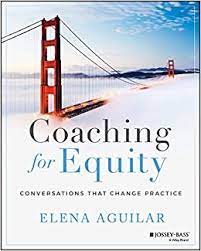
 Elena Aguilar COACHING FOR EQUITY—Conversations That Change Practice


Confession. Usually, towards the end of a book, no matter how fabulous and informative it may be, my attention wanes, and my copious note-taking diminishes. Not this time! Author Elena Aguilar shares perspective and insights of one educator’s understanding with a thoughtful yet persistent equity coach at their side in the last few chapters of Coaching For Equity. This example of an equity-focused conversation demonstrates each of the phases of transformational coaching. It is a gripping, and unfortunately, sometimes a familiar account of the inequities a child of color can experience while attending school. The coach and teacher dialog is inspiring as you follow the steps they purposefully and, yes, sometimes painstakingly take to change their instructional practices to ensure equitable outcomes for each student. Your heart aches, hides, and then soars knowing the equity dialog with both the sender and receiver takes bravery, commitment, and determination.


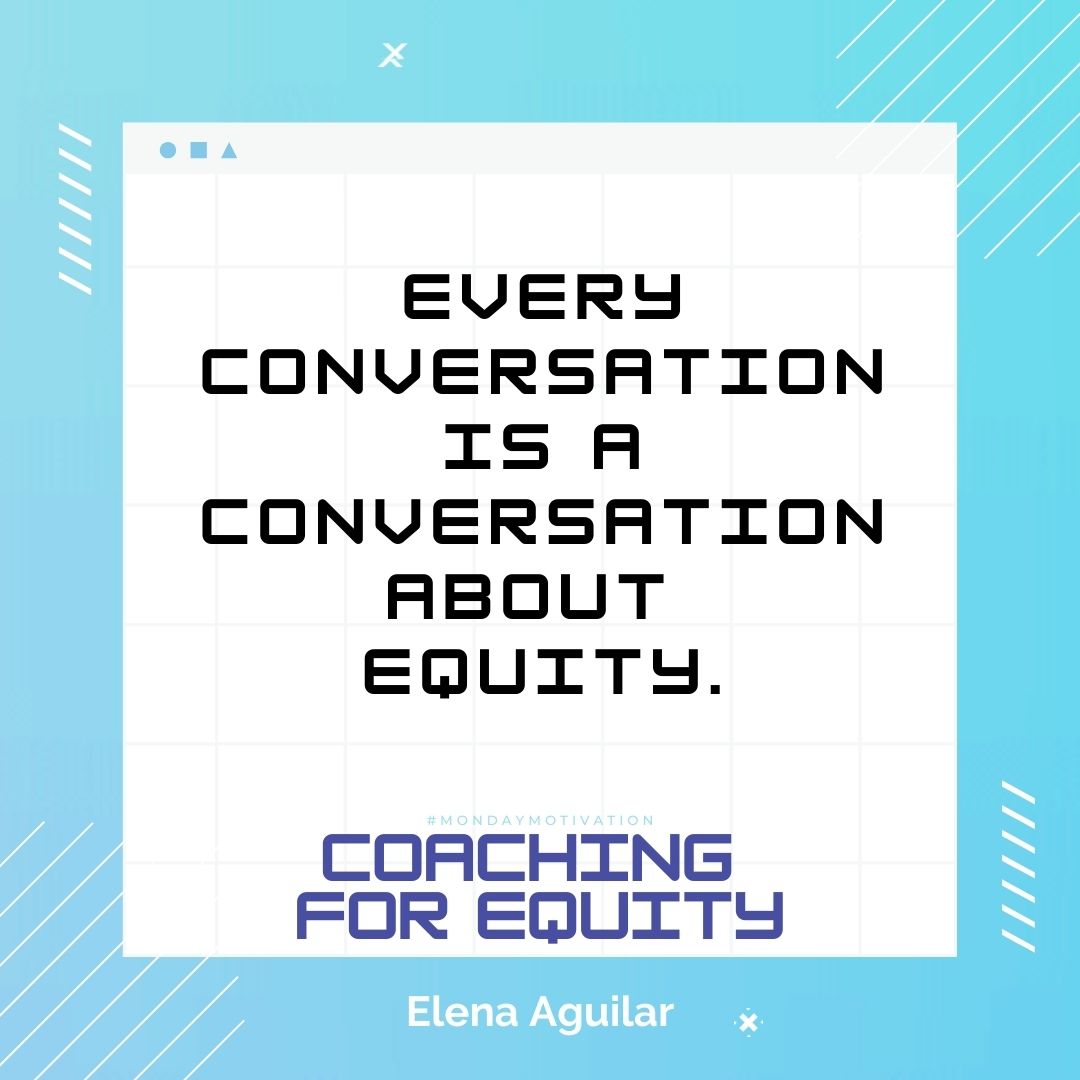
Going back to the book’s initial chapters, Aguilar shares, “Every conversation Is a conversation about equity….regardless of the demographics of the school” (p. 9). “Who we are matters tremendously in our ability to coach and lead for equity. How we show up is a critical variable in our ability to transform schools. And how we show up, is most closely within our sphere of control, which is why it’s worth focusing on if we aspire to contribute to equity in schools” (p. 4). Each student matters and each student needs a teacher as an advocate in their ability to grow as learners. Aguilar’s coaching for equity framework guides educators on how to “focus on and prioritize changing actions and behaviors” (p. 37) with transformational coaching conversations. 


Aguilar states, “In order to coach for equity, there is an expansive set of abilities that you need. These abilities include a set of knowledge. Amongst other things, you need to know how to work with adult learners, how to recognize inequities in the classroom, and how to understand emotions. You also need a set of skills, including how to use a wide array of Transformative Coaching tools, how to coach around belief, and how to coach using the four Phases of transformation coaching. You need will: a deep commitment to interrupting inequities and a profound sense of purpose. Capacity is necessary to coach for equity--time and resources. You need cultural competence; a set of skills and knowledge to understand your own identity and the identities of others, and to navigate difference. Finally, you need emotional intelligence; self-awareness, the ability to navigate your own emotions, as well as an ability to recognize the emotions of others and to navigate their emotions'' (p. 10-11). 


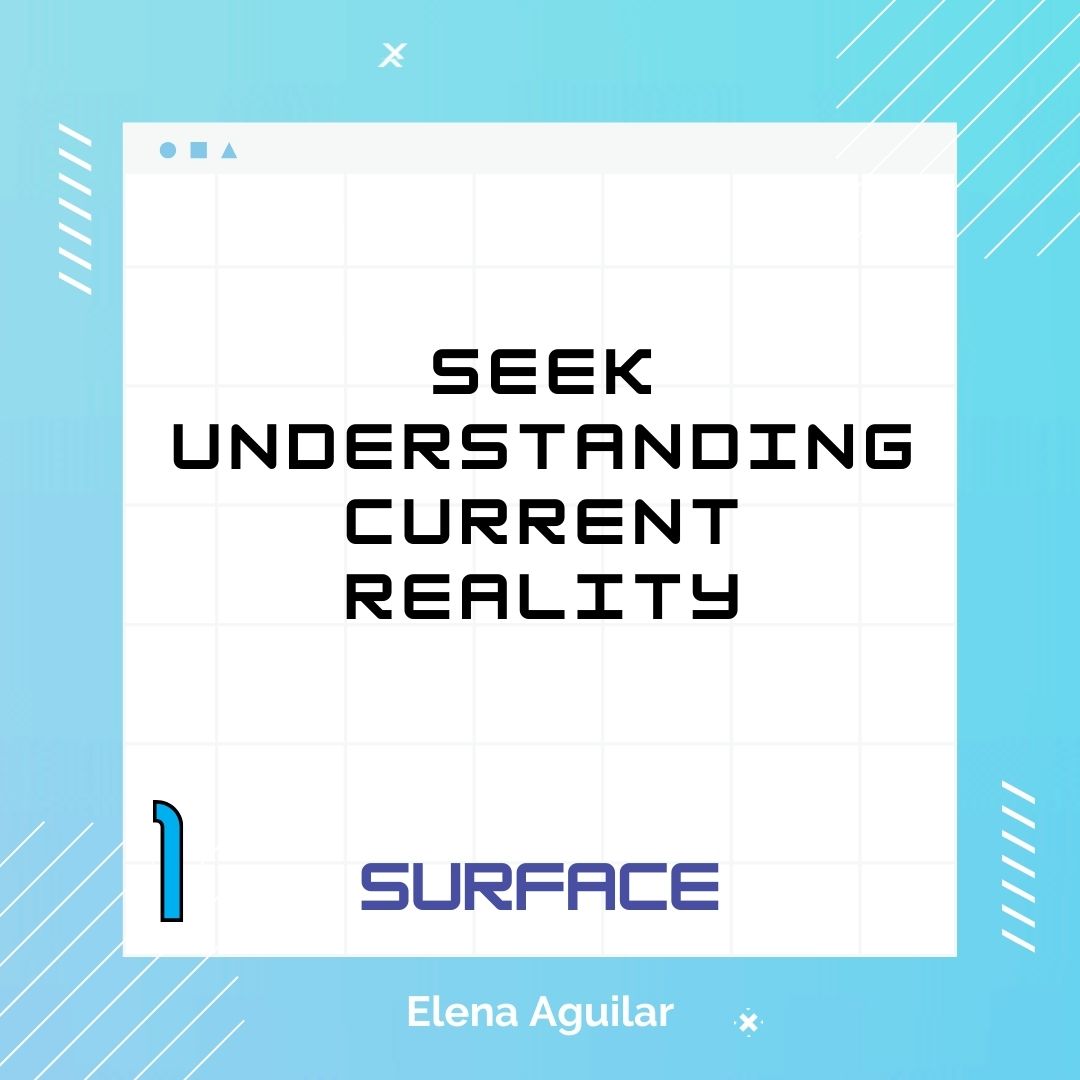
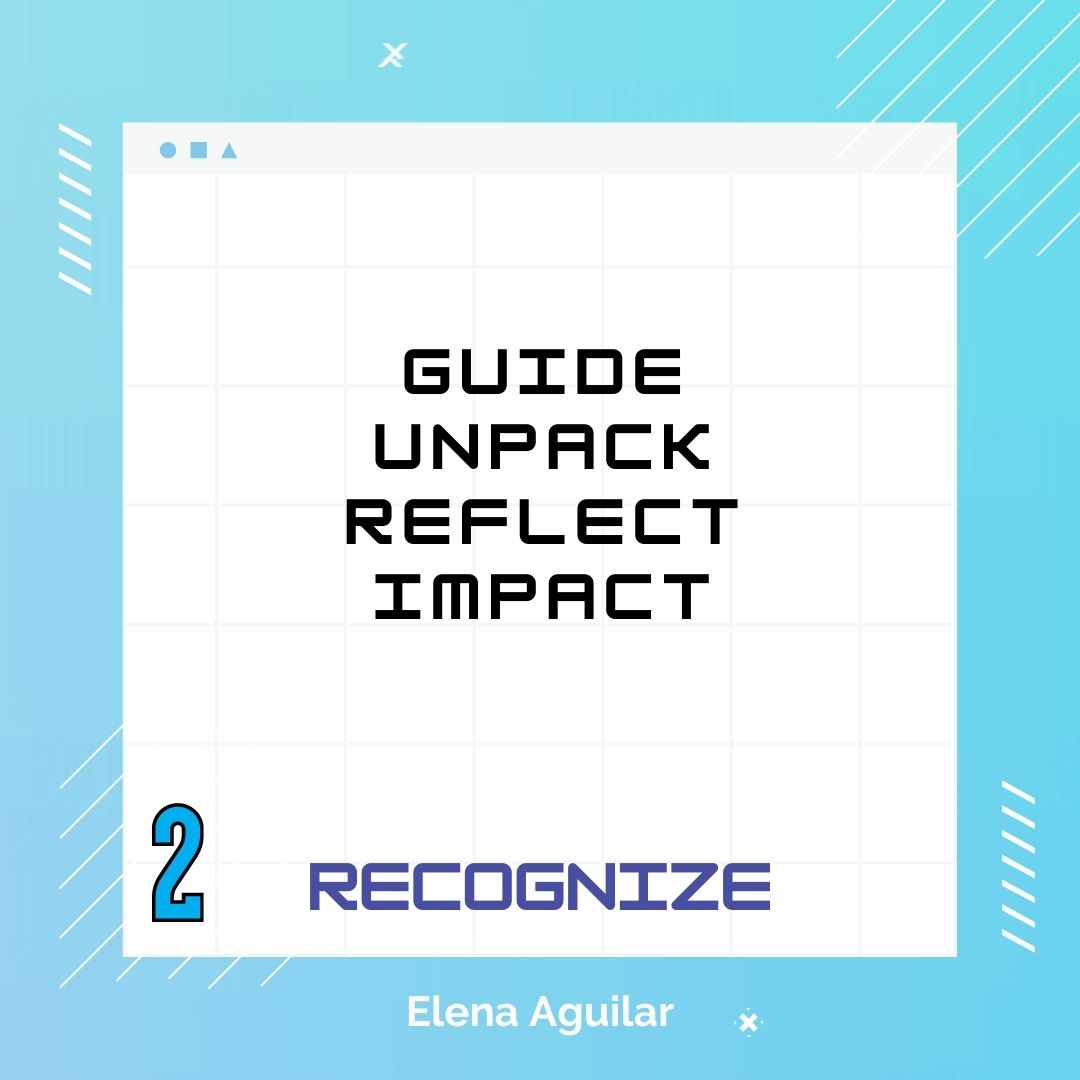
Coaching for equity is an art. Aguilar’s book provides four phases of Transformational Coaching. “These four phases describe the process regardless of what lane of Transformational Coaching we’re in--whether we’re coaching teams, coaching for emotional resilience, focusing on coaching for equity, or providing prescriptive instructional coaching” (p. 40). W


Coaching with compassion to “center the humanity of others,” with curiosity, “suspending our judgments and opinions,” to make connections, and “face our fears” with courage” and with purpose “to create a world characterized by justice, equity, and liberation. “The journey is the destination” (p. 45-46). 


Tuesday, June 29, 2021

I Am My Story

Trudy T. Arriaga, Stacie L. Stanley & Delores B. Lindsey LEADING WHILE FEMALE—A Culturally Proficient Response for Gender Equity


I read Leading While Female by Arriaga, Stanley, and Lindsey with a group of women leaders from all over the county. They offered personal takeaways from the book, including their work and life experiences that propelled them forward in their careers as educators. Each of their diverse educational pathways was an excellent reminder of, “My story is myself, and I am my story.”


The authors shared their educational journeys in the book. “Our intention is to tell stories of women educators who have confronted barriers and are continuing to confront and overcome them today to fill the talent and gender gap created by systemwide inequities” (p. 21). “Discovering and exposing inequities must be the critical first steps in devising equitable educational practices...Rather than responding with anger or defensiveness, we must realize that although we educators today didn’t cause the inequities, the historical societal and educational forces deliver these inequities to our doorsteps to be addressed now. (Lindsey, 2018, p. 36). Remember, our children are watching and learning from us as leaders.


The authors offer a Conceptual Framework for Culturally Proficient Practices for Gender Equity,  “To ensure equitable opportunities, access, and inclusion for all demographic groups into an education environment” (p. 38). The framework was developed as a tool to “provide an equity lens for examining the work of female and male education leaders within the educational environment they work” (p. 40) to inform and improve teaching and learning practices. 


The framework includes identifying and assessing Cultural Proficiency barriers or negative social constructs and institutional impediments to inform guiding principles or positive core values of equity. To manage the continuum of unhealthy and healthy practices and adapt essential elements of cultural competence or professional values and behaviors towards cultural proficiency as we institutionalize develop our organization’s equity plans.


It was helpful for me to study intersectionality as a way to “understand that women as a group are not monocultural” (p. 83). We all hold multiple identities, and woven together makes us who we are and essential in our story. “Yet intersectionality serves to impede the attainment and success of women of color and all women in executive leadership roles due to intersectionality of race and gender as well as aspects of language, social class, and faith” (p. 84). 


The authors offer questions for women in education with leadership positions. Do my actions reflect my values? Am I responsive to stereotypes? Am I mentoring other women for leadership positions? Am I stepping on or holding up their ‘crowns’? Leading While Female is a wealth of “resources for breaking down the barriers and leading the way for future generations of women leaders” (back cover). “Let’s invite one another in” (Michele Obama). 


Thursday, March 25, 2021

#WeGotThis


 Cornelius Minor WE GOT THIS—Equity, Access, and the Quest to Be Who Our Students Need Us to Be 

When a teacher you wholeheartedly respect because of their consistent student-focused approach to learning you continue to glean from them has a request...you figure out a way to make it happen. This was how I was introduced to Cornelius Minor, author of We Got This. Minor was featured as the keynote speaker at our state literacy association conference that was to be held virtually as we all continued to navigate the teaching restrictions due to the COVID19 health crises.


After registering this teacher, another enthusiastic teacher, and myself to attend the conference, I found funds to purchase Minor’s book for all three of us. Diving into what draws and interests teachers is a responsibility, in my opinion, of a learning school principal. As I begin to research and discover more about Minor, I found this two-minute youtube introductory video that held my immediate attention. The clip introduced the first chapter in his book, “Begin by Listening.” 


Minor’s message on listening to our kids is simple yet incredibly profound and sadly often missing in schools. He outlines in chapter one what to pay attention to and what to listen for to better understanding what students are really communicating to us. His recommendations on how teachers can then respond to what they are saying with tips for creating purposeful lessons that truly speak to your student’s needs. Brilliantly he made a Listening to Kids Organizer template for teachers (and I’ll add leaders) because “how we listen, and what we do with what we hear matter” (p. 22). 


Each of his proceeding chapters relentlessly focuses on disrupting the status quo and creating an inclusive classroom culture by thinking deeply about the students in front of you and identifying what’s working for them and what you need to change or approach differently, and how to do your homework to make a plan for that change to come to life. Showing kids, you hear them, and “Creating a space where kids feel safe means that we must create a space where we share power. One can let go of power without letting go of control” (p. 75). 


I am excited about the plans the teacher I referenced is already putting into action AND sharing with his grade-level colleagues. In an email, he stated, “I found it very helpful to complete and process figure 2.2: Thinking About the Kids in My Classroom...I plan on sharing figure 2.2 with X and X and start some grade-level work around it.” Later in the ongoing email thread, he wrote, “I just finished chapter 3 and am starting to work on figure 3.1 (Questions That Help Guide Change), then onto figures 3.2 (An Informal Research Template) and 3.3 (A Guide for Planning Change Quickly). A learner, a teacher-leader, an advocate on a “quest” for who his students need him to be. Just beyond inspiring...


In his epilogue, Minor closed with the following that left me feeling optimistic about our work. 

“The work can be hard, but the steps are simple.

We set our goals, we learn, and we put that learning to use.

We stop regularly to reflect.

Knowing that big things don’t change overnight, we take inventory of the small things that have changed. We name them, and we celebrate them.

Then we make the necessary adjustments so that the work can continue. This will require effective study and teaching to drive us. This will require imagination to guide us. This will require love to keep us.

We got this.”


Agree, for, with, because of each of our unique, powerful, and courageous students.


Tuesday, February 16, 2021

Reflect, Focus, Connect, & Care While Leading

 Kate Barker, Kourtney Ferrua, & Rachael George PRINCIPALed—The Educator’s Survival Guide


Several years ago, I attended a national principal’s conference. Wandering away from the standard provided lunch for attendees, I ventured outside for fresh air and time to process multiple presentations. Walking the streets of an unfamiliar city, I ran into Kate, Kourtney, and Rachael. All of us are Oregon administrators and have attended similar conferences in our home state and were familiar with one another. Always warm and gracious, they invited me to lunch with them.


Listening to their banter back and forth and even finishing each other's sentences as they spoke of sessions they attended, I must admit I was a little awe-struck. I vividly remember wanting to take out my note-taking journal during lunch but knew it would have been awkward amidst a warm meal and tight quarters. Gratefully, their wisdom and insights they shared over lunch are what I found in their book PRINCIPALed The book is written in four parts; Reflect, Focus, Connect and Care, and impressively with high praise from the well-respected researcher, John Hattie. 


If you are a principal new to the role or with several years of experience, the book is a go-to guide and resource for professional growth or for planning purposeful next steps. Chapter by chapter you will smile as you relive their personal stories and daily antics only a principal would understand. There are questions to consider to help you stretch your growth and potential as a leader. The book will inspire you to be and become the principal who continues to not only survive but thrive in a way that prioritizes students, staff, and your community. Here are some of my favorite insights.


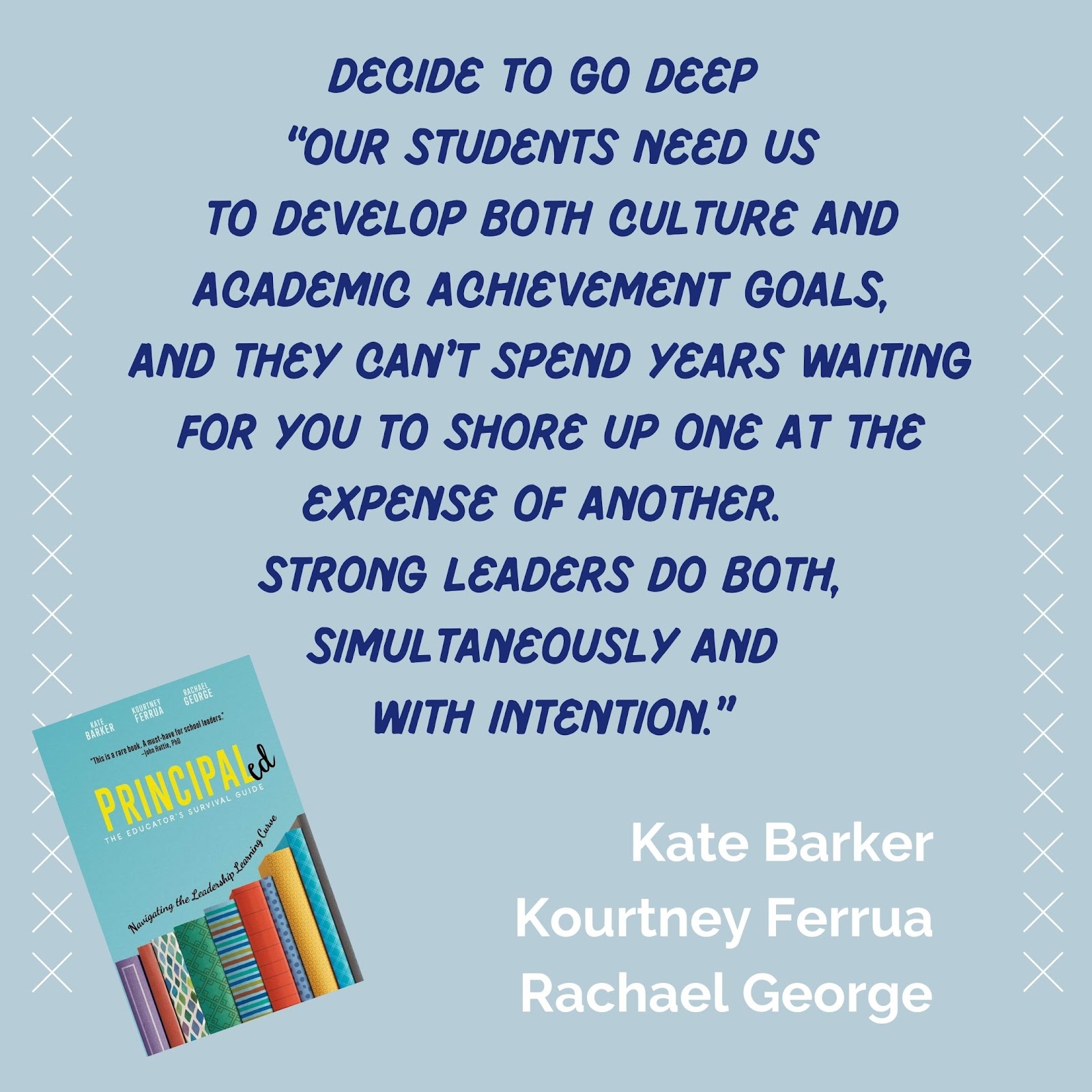
Rachael reminds principals to focus and engage in a deep dive into the school’s data with all staff starting “at the thirty-thousand level, and we look at the overall health of the school” and then “dive back into subgroup data” (p, 61-63). “Our students need us to develop both culture and academic achievement goals, and they can’t spend years waiting for you to shore up one at the expense of another. Strong leaders do both, simultaneously and with intention.”


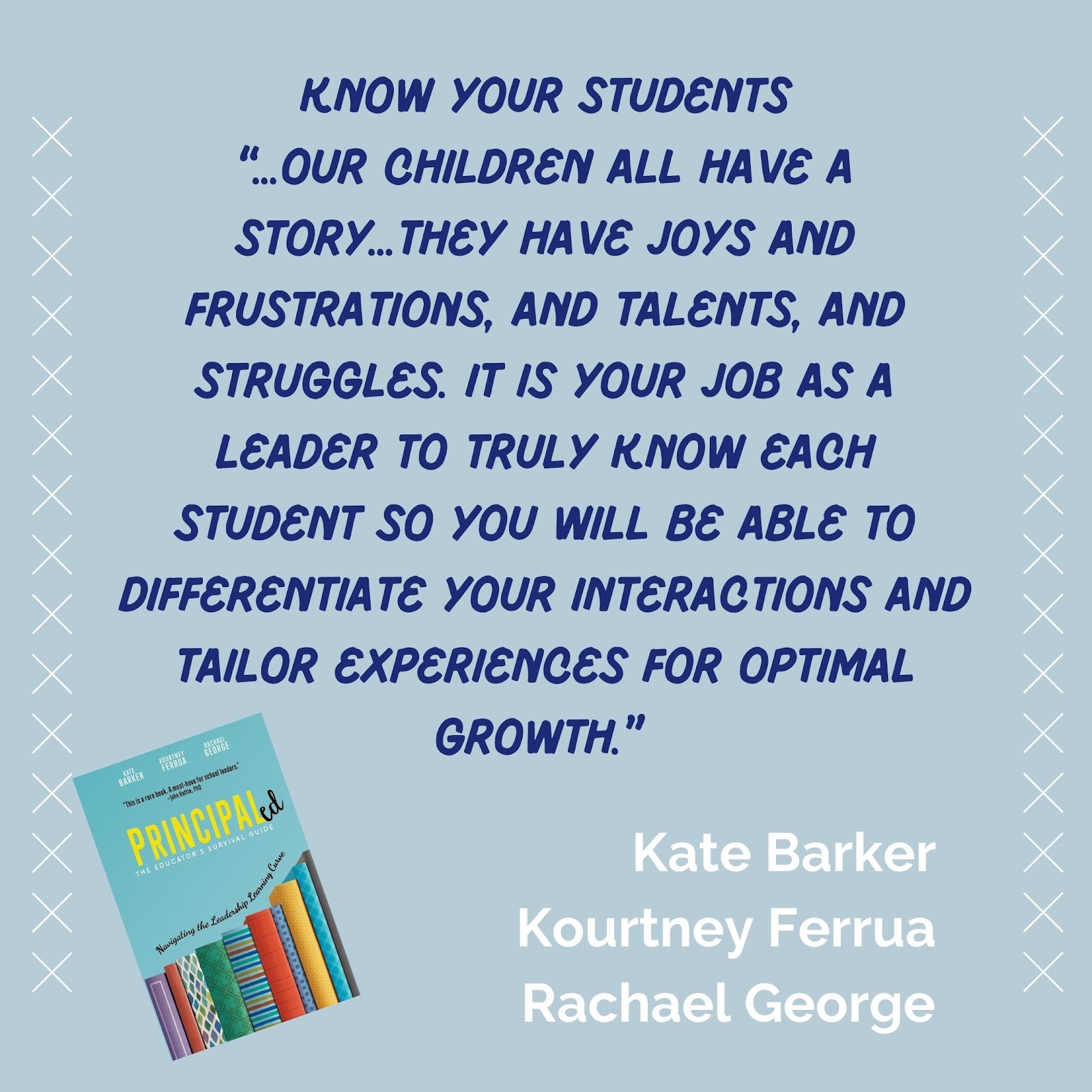
Kate encourages principals to constantly connect with students, each with their own story. At her school, “We encourage all our staff to focus on two students per week and spend a few minutes asking them questions that give insights into their world.” In staff meetings, they share the highlights of their conversations while participants view the child’s photo (p. 101). 


Kourtney motivates principals to create systems to sustain our relentless focus on learning. She reminds principals our actions large or small should be purposeful and as a reminder of the goals, we have jointly developed. For example, Kourtney shared. “Everyday part of my routine is to email out the staff absences. One email, every day. I decided to take advantage of that daily point of contact to add a month of instructional focus and weekly reflection” (p. 150). Brillant!


Finally, in the last chapter, the authors remind the reader, “We all know that we could stay busy in our office with the door shut for eight hours every day. Resist the urge! One of the most important strategies that will improve almost every facet of your job is visibility. People need to see you. They need to know that you care enough to show up and see them in their environment” (p. 201). Our role and responsibility are never easy, but it is always worth our relentless effort.


Sunday, January 3, 2021

Helga Kindness

Houston Kraft DEEP KINDNESS—A Revolutionary Guide For The Way We Think, Talk, And Act In Kindness

Houston Kraft is a champion, writer, and author of Kindness. Not the Confetti Kindness found on “products and posts” with positive intent accomplished simply and quickly. Kraft prompts us to think deeper about Kindness. ”What if we talked about Kindness in a way that honored how hard it is? What if we taught the skills that support the challenge and messy work of Deep Kindness in our lives?” (p.11). What if we talk about the type of Deep Kindness that requires hard work, practice, and mindfulness. What if we talk about Helga Kindness?


In his book, Deep Kindness, Kraft shares Helga’s story. Kraft’s met his new energetic ‘airplane friend’ while traveling. During their introductory conversation, the subject of Kindness quickly emerged. With tears in her eyes, Helga began, “There is nothing more important in the world than kindness.” Just three years prior, in a busy, crowded airport, three-thousand people simply walked past her for over two hours while she sobbed in utter grief after learning of the death of her father. At one of the darkest and loneliest moments in her life, “Not a single person stopped to help” (p. 5). Looking back, Helga recognized what she now understands from her experience, “Kindness isn’t normal” (p. 6).


Kraft explains, “There is nothing inherently wrong with Confetti Kindness, but there is a more profound category of care that the world desperately needs” (p. 12). Kraft proposes the language of Deep Kindness. He moves beyond the simple definition to a much richer understanding of the actions required to “creating a Kinder world” (inside cover). “The practice of Deep Kindness doesn’t happen just because we believe in Kindness. It ‘s something to strive toward, and a skill set that has infinite room for improvement” (p. 13). I never want to forget Hela’s experience because it has the potential to mirror a student’s experience in the playground, halls, and classrooms in our schools. 


Deep Kindness requires empathy and perspective-taking, resilience, courage, and forgiveness (p. 12-14).


Mentally I am walking the halls of our school and classrooms, and I can see the confetti of Kindness sprinkled in hallways and on bulletin boards. When I envision them, they still make me smile and are reminders of the countless acts of genuine and heartfelt intent to sprinkle kindness at school. Although I now have a sense of urgency for advocating for teaching and developing a substantial understanding of Deep Kindness and the positive impact it can potentially have on all of us.