- Embrace Complexity!
- Pursue Scientific Literacy!
- Read More Diligently!
- Get the Whole Story!
- Set Personal Beliefs Aside!
- Beware of the Placebo Effect!
- Get Out of Your Comfort Zone!
- Remember Your Students Are Not Rats!
- Watch Out for Sparse Evidence: One Finding Does Not a Theory Make!
- Correlation vs. Causation: Know the Difference!
- Ind What Is, Not Just What Isn’t!
- Curb Your Enthusiasm for Generalizations!
- Don’t Assume Studies on Adults Will Apply to School-Age Children!
- Remember That True in the Lab Isn’t Necessarily True in the Classroom!
- Be a Critical Consumer of Information!If
- It Sounds Too Good to be True, It Probably Is!
- Avoid Bandwagonitis!
Tuesday, July 28, 2020
NEUROMYTHS
Sunday, July 26, 2020
What I Use To Do, But Now I Know Better
- Sharing, posting, and referring to learning targets/objectives with students.
- Checking for understanding and giving specific feedback to students.
- Adjusting instruction including providing interventions for students.
- Discuss the importance of addressing our student’s social and emotional health before we begin instruction?
- Talk about the value of creating a school culture where students feel included and valued for their strengths?
- Bring up on-going teacher collaboration to purposefully plan for student-driven learning experiences?
Wednesday, July 15, 2020
Read. Read. Read.
Monday, July 13, 2020
Choose Happiness
Wednesday, July 8, 2020
Healing Loneliness Together
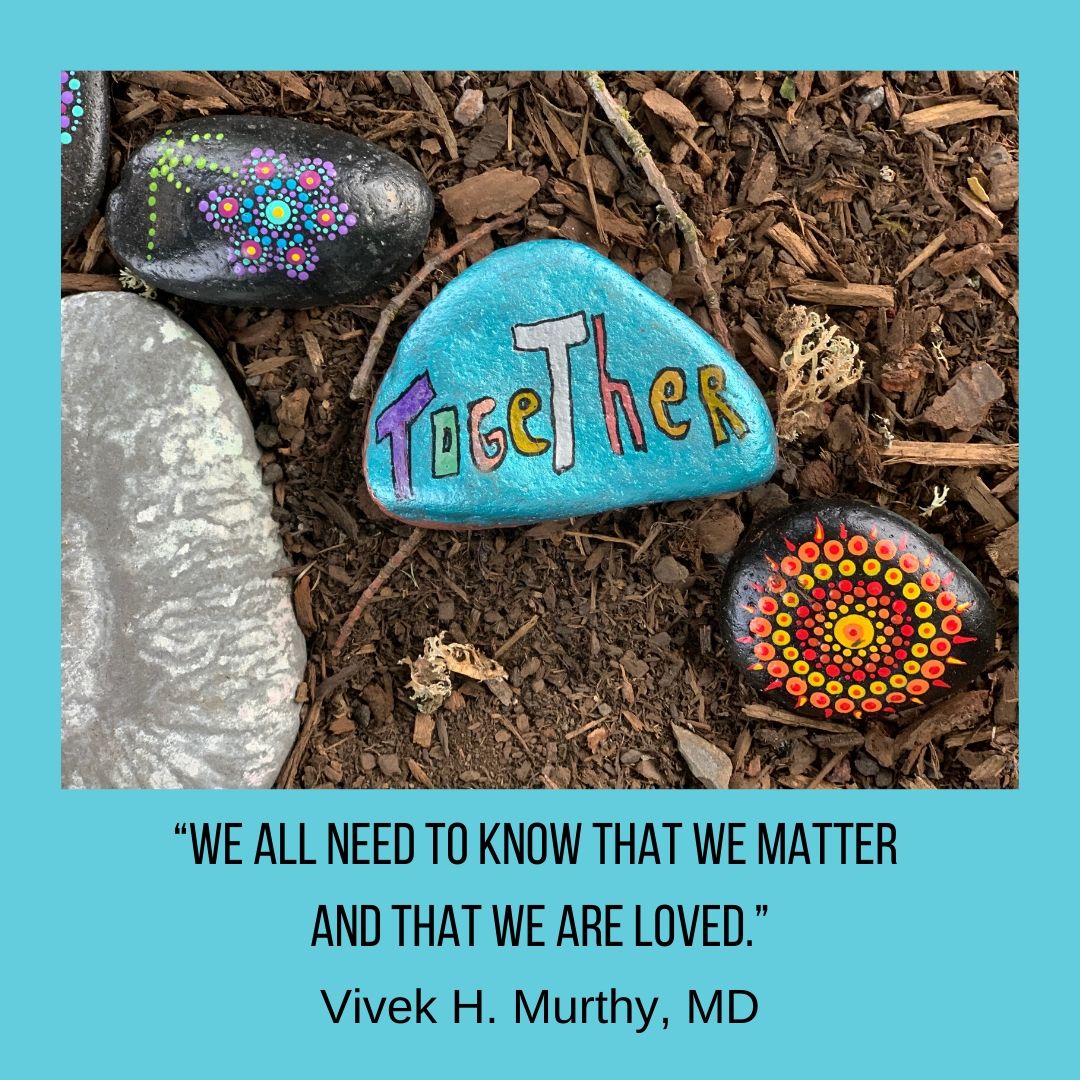
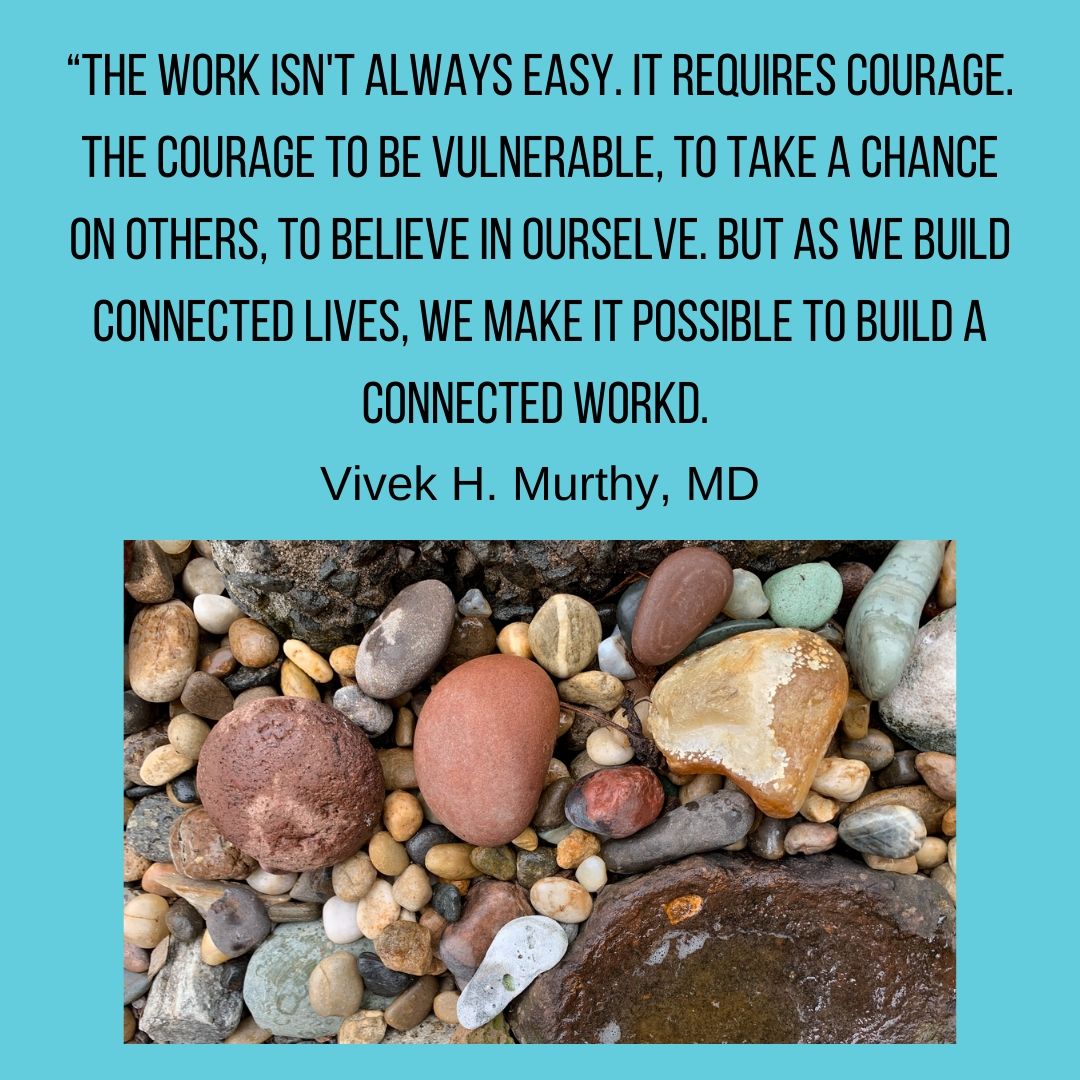
Vivek H. Murthy, MD TOGETHER—The Healing Power of Human Connection in a Sometimes Lonely World
The soft-spoken voice of Dr. Vivek Murthy as he speaks on the topic of Loneliness is incredibly compelling. I first heard him speak with Dr. Brené Brown on her podcast Unlocking Us in late April, 2020. Dr. Brown is best known for sharing her research on vulnerability, empathy, and shame. Then later in early July, I listened to Dr. Murthy on the Next Big Idea Podcast with Dr. Susan Cain who wrote the book Quiet, a captivating book on how our society often undervalues introverts. In each of these reflective conversations and in his book Together, The Healing Power of Human Connection in a Sometimes Lonely World Dr. Murthy speaks of the prevalence of loneliness in our society and the adverse effects it has not only on our health but in the connections we have with each other.
Although isolation is not loneliness and Dr. Murthy clarifies the difference. He shares, “Many people think of loneliness as isolation, but the difference between these two terms is substantial! Loneliness is the subjective feeling that you’re lacking the social connections you need. It can feel like being stranded, abandoned, or cut off from the people with whom you belong--even if you’re surrounded by other people. What’s missing when you’re lonely is the feeling of closeness, trust, and the affection of genuine friends, loved ones, and community” (p. 8). The powerful component of the book Together is how Dr. Murthy further defines loneliness through relatable stories of friends, family, patients, and community members.
The stories of Virta and Mychele told by Dr. Murthy are similar to those we might find about people in our own communities who quietly go about their daily lives regularly unnoticed and nearly invisible. Virta becomes lonely after complications from illness and Mychele is a lonely widow after many years of a close-knit marriage. Both of these women wandered through each of their days slowly losing their former lifeline connections. It was not until others reached out to them with love and compassion did they slowly began to reappear out of isolation and start to heal. They both gained a new sense of belonging by regularly connecting with those around them and eventually finding a new purpose by serving others. It did not happen quickly nor without setbacks but they emerged to start living a different way.
I was extremely touched by Dr. Murthy’s story about his maternal grandfather and his brother Vasana. He explains there are those who experience unimaginable pain when losing someone they are deeply connected to. For most people, the pain subsides over time, but for others, the experience can be life alternating. The story of these two brothers started with their shared life experiences of on-going hardships in their early childhood. Neglected, mistreated, hungry and homeless… “they took care of each other when it seemed that no one else would” (p. 40). This closeness continued into adulthood for these two and when Dr. Murthry’s grandfather died his brother Vasana quickly followed him in death. Although incredibly sad, Dr. Murthy reminds the reader that “While loneliness has the potential to kill, connection has even more potential to heal” (p. 51).
Dr. Murthy shares about the power of healing with Derek’s story. To start the story it is important to note, not only are we in the middle of a world-wide pandemic, the Black Lives Matter social reform movement is gaining momentum and attention across our nation. The hearts and minds of people living in the United States are slowly leaning in towards a much-needed change in our society due to unjust, often brutal, and deadly, outcomes of people of color in our communities.
Derek’s story begins with details of his childhood including how his father was a leader and former Grand Wizard of the Ku Klux Klan. Derek was homeschooled as a child and raised in a tight-knit extended family with their own sense of purpose and culture. With little, if any other life experience and beliefs other than what he was exposed to as a child he headed off to college. A brave task for any young adult heading away from home, but extremely difficult for Derek.
Dr. Murthy describes Derek as an inquisitive individual who wanted to not only connect with others in his new surroundings but wanted to understand and learn more about his college community. Realizing his background would be an area of contention for his new peers he hid this knowledge about his family from them. Eventually discovered he was “outed” publicly. Not only was Derek experiencing loneliness being away from home and family, but he was also now left without friends to support him through his college experience. A new type of deep loneliness emerged for Derek.
For many, this is where the story would end with no connections, no trust, and a lonely college experience. Fortunately for Derek, his story was different. “A few fellow students reached out to connect and have thoughtful conversations with him. Their willingness to listen and share with respect and compassion gradually changed Derek’s belief and help him realized how destructive his original values had been” (p. 68). Over time connections were developed, friendships created, and loneliness was not the outcome for Derek. I am wondering if the same approach today in light of the Black Lives Matter movement could follow this same path.
These are just a few of the stories Dr. Murthy shared on loneliness and the drive we all have as humans to connect even when faced with incredible diversity. During a pandemic, we are forced to stay in isolation, but the importance of continuing to reach out to others through kindness, compassion, and service is critical if we are all going to pull through this together. Hopefully with a renewed sense of the value of “connection in a sometimes lonely world.” The cure for loneliness does not occur in isolation but with the relationships, we purposefully cultivate with others.
Friday, July 3, 2020
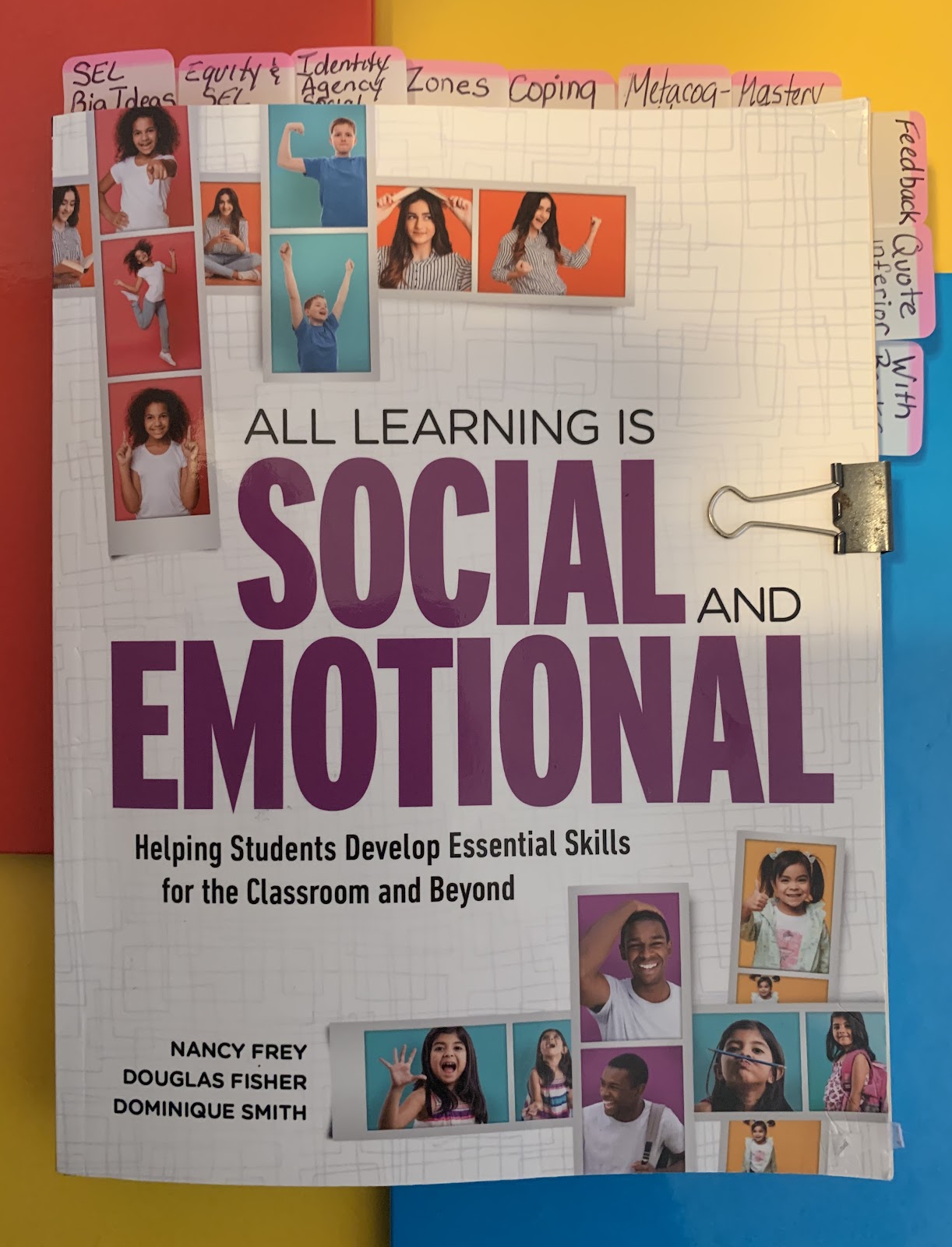
“All learning is social and emotional.”
Nancy Frey, Douglas Fisher, Dominique Smith ALL LEARNING IS SOCIAL AND EMOTIONAL—Helping Students Develop Essential Skills for the Classroom and Beyond
I read this book based on two recent pivoting experiences. The first occurred when both Dr. Douglas Fisher and Dr. Nancy Frey engaged our administrative teams in professional learning. The sessions highlighted teacher clarity and how to deepen our implementation of instructional strategies that have the greatest impact and ultimately better outcomes for kids. The caveat here was they presented on different days, but in my notes, there was a quote they both shared...“All learning is social and emotional.”
The second experienced happened as one of our administrative teams began to plan for what teaching and learning would look like in the Fall of 2020 with the health restrictions of COVID19. This group of dedicated leaders unanimously agreed to start with prioritizing the social and emotional (SEL) student-focused systems first before creating schedules, establishing routines, determining curriculum, etc. All of which are incredibly valuable...but we agreed during the Coronavirus Pandemic our school systems and instructional action steps would be more aligned strategically to support each student’s social and emotional health as a top priority.
Early in the book, the authors shared, “It’s important to stress that social and emotional learning is about more than developing kids who are nice to one another, cooperative in class and civically engage, SEL is an equity issue...It is crucial for schools to implement systems that develop students’ social and emotional skills so that they can carry, practice, and use these throughout their day, at home when the school day is over, and for the rest of their lives” (p. 12). This is our work.
The authors also remind teachers and leaders that successful implementation of SEL programs does not come from a curriculum, a program, or happens by chance. The social and emotional development of the children in our classrooms should occur daily and be intentionally embedded in all that we do. “Their social and emotional development is too important to be an add-on or an afterthought, too important to be left to chance” (p. 17). They organized SEL into five categories that can and should overlap and support each other including; identity and agency, emotional regulation, cognitive regulation, social skills, and public spirit.
We started this work in our school over the past couple of years but not to the depth where we want to be...yet. One of the biggest lessons I learned as a leader was to change our school-wide schedule that prioritized addressing the social and emotional health of our students at the very beginning of the school day. Each class, each child, each teacher gathers in a community circle, where students experience what it feels like to be in an inclusive trusting setting.
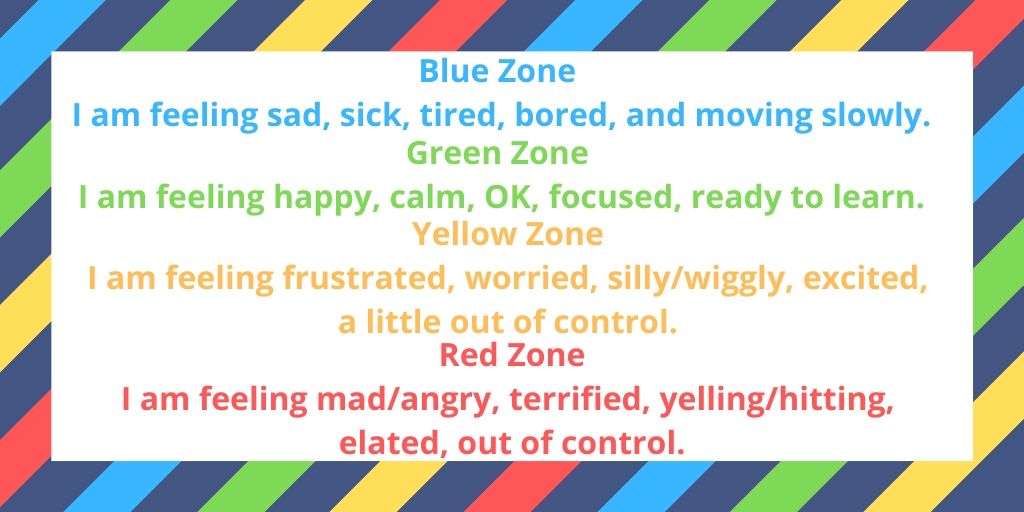
In these daily community circles, students are learning to “recognize, express, and regulate their emotions before they can be expected to interact with others” (p. 48) which helps them regulate their learning mindset for the day. In our school, we use the same Zones of Regulation Model the author’s referenced on page 50.
Learning to not only recognize one’s own feelings but how to respond to those feelings is discuss and taught by their classroom teacher. Teachers also frequently use characters found in stories and through role-playing class scenarios to continue to develop their understanding of their own emotions and reactions as well as those of their peers.
This past Spring during our on-line Distance Learning sessions with students each classroom teacher prioritized this practice. Students were given regular opportunities to identify, share, and use “their words” to express their feelings. After actively listening to each other similar to their morning circle routines, students offered suggestions and recommendations on what their peers could do at home to help them refocus or regulate their emotions. Student suggestions to their peers included taking a walk, getting outside, reading a book in a quiet corner, squeezing a squish ball, and on and on it went.
There are many sections in this book that I intend to get back to once we are all back together. Fisher, Frey, and Smith also offered suggestions for restorative practices including questions to ask both the offender and the victim. Metacognition strategies were highlighted by the authors to foster through explicit instruction in order to provide students more opportunities to “think about their thinking.” They also included examples of how we can move students away from learned helplessness towards productive struggle in order to empower our students to leverage their own cognitive resources and skills.
The last chapter of the book provided further ideas on how to purposefully plan for embedding SEL schoolwide. The ideas that most resonated with me and our school community Included building the capacity of others to increase understanding, collecting student, staff, and family data for decision-making, looking for patterns in the data with all stakeholders, and setting and monitoring goals were all important reminders. Although just as important to remember there are many effective SEL programs available but it’s not something you do in isolation but incorporated in all that you do as a cohesive learning community.
Tuesday, June 30, 2020
Questions to Consider
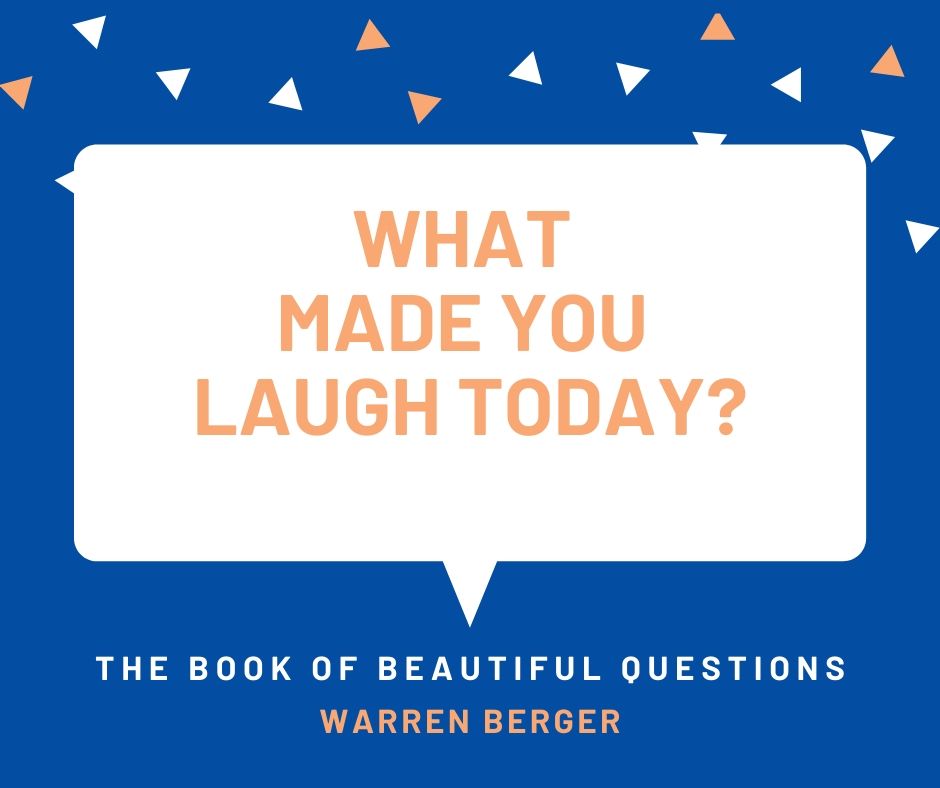
Warren Berger THE BOOK OF BEAUTIFUL QUESTIONS—The Powerful Questions That Will Help You DECIDE, CREATE, CONNECT, AND LEAD
As a school leader with multiple decisions to make I often ask myself and others many, many questions before heading in one direction, But are they the right questions to ask to get the full understanding of the changes we need/want to make? Warren states, “To improve our decision-making capabilities, we need to sharpen our critical thinking. And to do that we must arm ourselves with a set of critical questions--and be willing to consistently ask and thoughtfully consider the questions before rendering judgment” (p. 18).
In The Book of Beautiful Questions, Warren focuses on questions for better decision-making, addresses questions for creativity and innovation, frames how questions can support us truly connecting with others, and gives the reader questions to consider to develop stronger leadership skills. I highly recommend that those that read the book do so with a pen and notebook in hand. As you read write down those questions that can be utilized with humility to learn more from others who you serve, support, and yes love.
The initial list I created while reading consisted of twenty questions. I thought I could challenge myself to ask these on a regular basis. Reality check...not truly feasible considering the amount. I narrowed down my list by highlighting one in each of Berger’s categories and then condensed the list even more with just three questions and added one bonus question that acts more like a directive for myself for a total of four questions to consistently use. I selected the following.
Warren hares, “The challenge of leading, in almost any area, is becoming more complex and demanding” (p.16). Leading in isolation should not be an option for any school or organization. “From an individual career standpoint, continued success will depend on having the ability to keep learning while updating and adapting what we already know. We must continually invest or reinvent the work we do every day. None of this is possible without constant questioning” (p.14).